





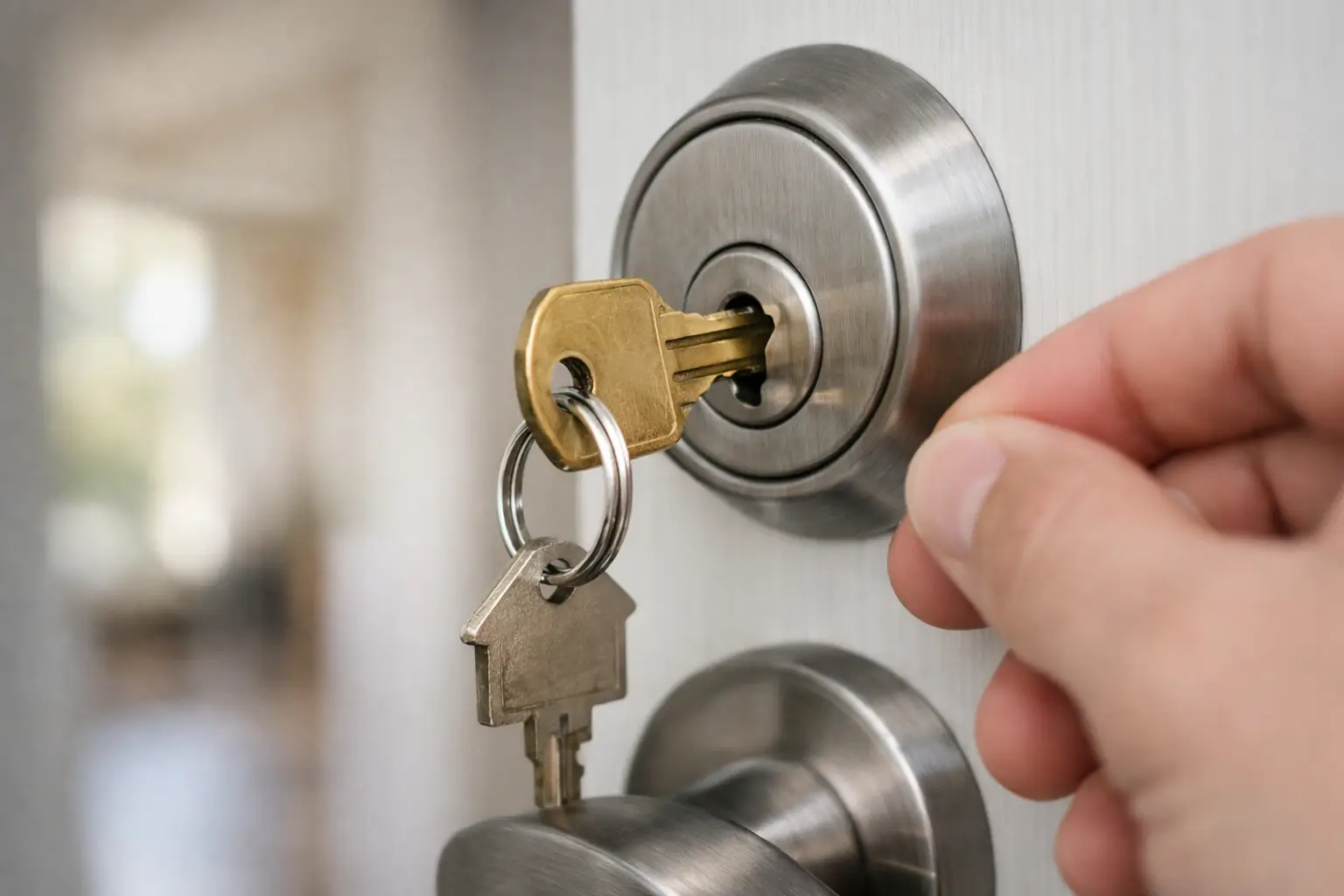
You turn the key once, feel resistance, and suddenly it will not move in or out. If you are asking why is my key stuck, the safest answer is this: something inside the lock, key, or door alignment is no longer working the way it should. That can be a minor issue, or it can turn into a broken key, damaged cylinder, or full lockout if you force it.
A stuck key is frustrating because it often happens when you are already in a rush - outside your home, trying to close your shop, or sitting in your car with the engine off and no clear next step. The good news is that many stuck-key situations have a clear cause. The better news is that the wrong move is usually easy to avoid once you know what is happening.
Why is my key stuck? The most common causes
In most cases, a key gets stuck because of wear, damage, dirt, misalignment, or cold weather. Locks are precise mechanical parts. Even a small shift can stop the pins, wafers, or cylinder from moving properly.
One common cause is a worn key. Over time, the ridges on a house key, office key, or vehicle key can round off. The key may still enter the lock, but it may stop matching the internal parts cleanly enough to turn back or release smoothly. If you have been noticing that the key only works when you jiggle it just right, wear may be the issue.
Another frequent problem is a worn or failing lock cylinder. Inside the lock, tiny components move in sequence when the correct key is inserted. If those parts are dirty, bent, worn down, or starting to seize, the key can get trapped. This is common in older residential locks, heavily used commercial doors, and car ignitions that have seen years of daily use.
Door alignment is another major factor. If your door has shifted because of swelling, settling, loose hinges, or frame movement, the lock can bind under pressure. In that case, the key may feel stuck because the bolt and strike are not lining up properly. You are not just turning a key - you are fighting pressure from the door itself.
Cold and moisture also matter in BC, especially during freezing weather or after extended rain. Moisture can work its way into the lock and affect movement inside the cylinder. In automotive situations, ignition or door locks can also stiffen up in lower temperatures.
Then there is simple debris. Dust, pocket lint, grime, and old lubricant build up over time. It does not take much contamination to interfere with the internal movement of a lock.
What to do first when your key is stuck
Start by staying gentle. If the key feels trapped, forcing it is the fastest way to turn a repair into a bigger problem. A bent key can snap. A damaged lock can seize completely.
Try to determine whether the key is stuck in the neutral position, partially turned, or fully turned. That matters. A key that is slightly turned may need to be returned to its exact removal position before it can come out. If it is in a door lock, lightly push or pull the door while easing the key back. If alignment is the issue, changing the door pressure can help release it.
If the lock is in a home or commercial door, check whether the deadbolt or latch is under tension. A door that is pressing tightly against the frame may hold the key in place. Relieving that pressure sometimes solves the problem without any repair at all.
If the key is in a car ignition, make sure the vehicle is fully in park. On many vehicles, the ignition key will not release unless the gear selector is properly set. Also check whether the steering wheel is locked hard to one side. A steering lock can trap the key until the wheel is moved slightly while the key is gently turned.
What not to do
Do not yank the key with pliers unless you are dealing with a broken fragment that is already loose and visible. Pulling too hard can snap the blade and leave part of it inside the lock.
Do not keep twisting harder if the key will not move. If the lock cylinder is failing internally, extra force can make it worse fast.
Do not spray just any oil into the lock. Household oils can attract more dirt and gum up the mechanism over time. If lubrication is appropriate, it should be the right type and used carefully.
Do not assume the problem is only the key. Many people keep using a worn key in a worn lock until both fail at once. If the key has been sticking for weeks, the lock likely needs attention too.
When the problem is the key itself
Sometimes the answer to why is my key stuck has less to do with the lock and more to do with the key you are using. If the key is visibly bent, cracked, chipped, or worn thin, stop using it. Even if you manage to remove it, putting it back in can leave you with a broken piece trapped inside.
Copied keys can also cause trouble. A duplicate made from an already worn key may not match the original cuts accurately enough. It might work some of the time, then bind at the worst possible moment. This comes up often with rental units, office doors, and older vehicle keys.
If you have a spare key that is in better condition, compare them. Obvious wear on your main key is a sign that replacement should happen sooner, not later.
When the lock is the real issue
A failing lock often gives warning signs before the key gets stuck completely. The key may start dragging. You may need to jiggle it more than usual. The cylinder may feel rough, loose, or inconsistent from one use to the next.
Residential locks can wear out from age, weather exposure, or repeated use. Commercial locks often fail because of heavy traffic and constant opening and closing. Automotive locks and ignitions can develop their own issues from wear, debris, and steering column problems.
The trade-off is simple. If the problem is minor, a locksmith may be able to service or repair the lock. If internal parts are too worn or damaged, replacement is the better long-term fix. Trying to stretch a failing lock a few more months often leads to an after-hours lockout.
Why is my key stuck in my car?
Automotive key problems deserve extra care because modern vehicles can involve the ignition, steering lock, transmission interlock, and in some cases electronic key systems. A key may get stuck because the ignition cylinder is worn, the steering wheel is under pressure, the car is not fully in park, or the key blade itself is damaged.
In older vehicles, ignition cylinders commonly wear down after years of use. In newer vehicles, the issue can be more specific and less obvious. The key may not release because one linked component is not reading the correct position.
This is one reason drivers should avoid forcing a stuck car key. Ignition repairs are usually more involved than a standard door lock repair, and damage can escalate quickly.
When you should call a locksmith right away
If the key will not move with light pressure, if it feels like it might snap, or if the lock is your only way in or out, it is time to call a locksmith. The same applies if your business door will not secure properly, your tenant cannot access the unit, or your vehicle key is trapped in the ignition.
Fast service matters in these situations because delay can create a security issue, a safety issue, or both. A trained locksmith can identify whether the problem is alignment, wear, contamination, a broken component, or the wrong key entirely. More importantly, they can remove the key without creating more damage in many cases.
For property managers and business owners, a stuck key is not just an inconvenience. It can interrupt operations, affect tenant access, and leave a property unsecured. For homeowners and drivers, it can leave you stranded at the worst time. That is why 24/7 response matters.
Can a stuck key problem be prevented?
Often, yes. If your key has started sticking even occasionally, that is your early warning. Replacing worn keys, servicing stiff locks, correcting door alignment, and dealing with loose hardware early can prevent a complete failure later.
It also helps to pay attention to patterns. If the lock only sticks during wet weather, that points to moisture or swelling. If it sticks only when you pull the door shut tightly, alignment may be the issue. If your car key gets trapped only after parking on an angle or turning the wheel hard, the ignition or steering lock may be involved.
Small symptoms are easier and cheaper to deal with than emergency failures.
If your key is stuck and you are not sure whether the issue is the lock, the door, or the key itself, the safest move is to stop forcing it and get it checked before it turns into a broken key or a full lockout. NOW LOCKSMITH handles residential, commercial, and automotive lock problems across Vancouver and the Lower Mainland, and sometimes the quickest way forward is simply getting the right help on-site before the damage gets worse.