



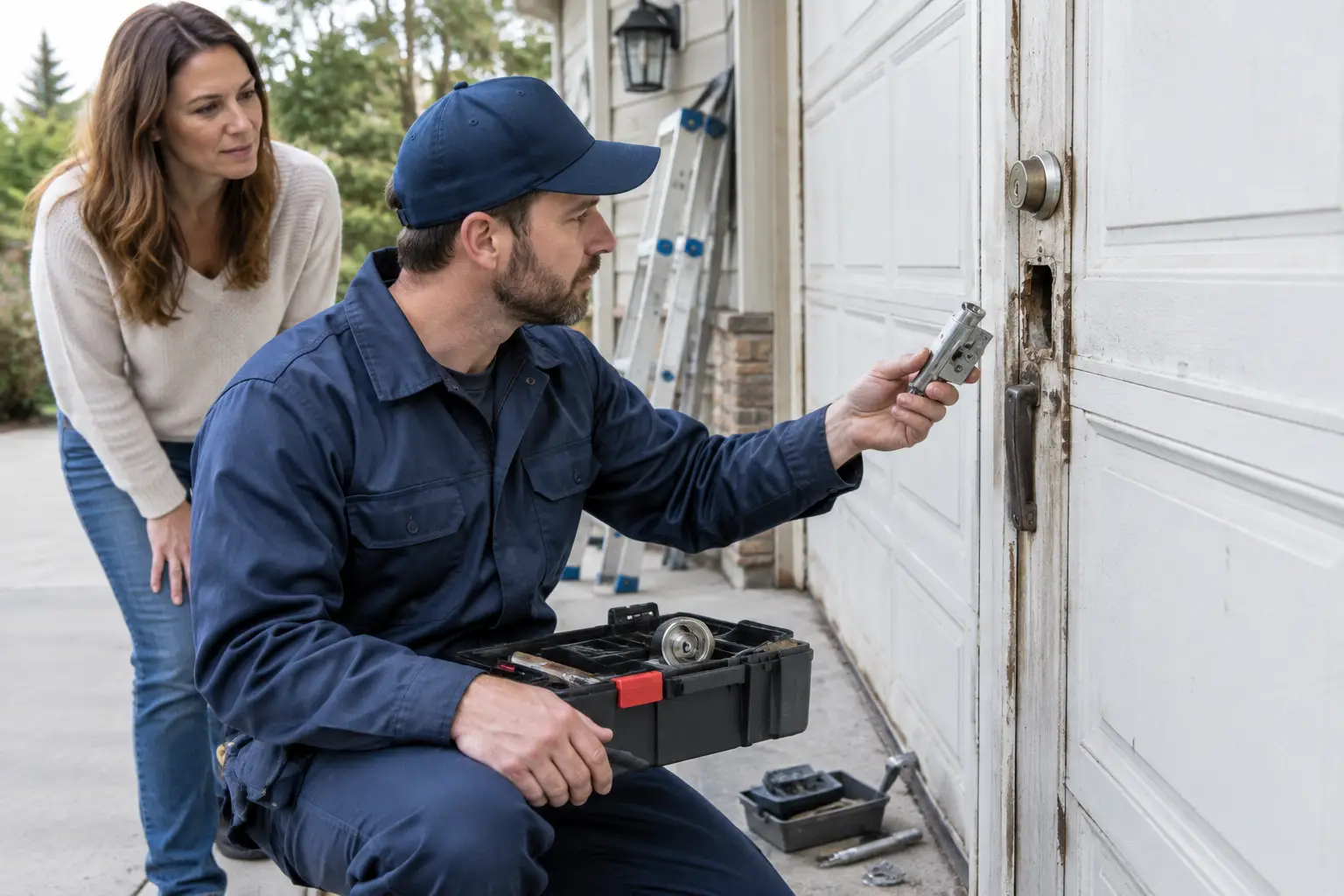
A garage door that closes but does not lock properly is not a minor inconvenience. Garage locks help protect vehicles, tools, bikes, storage, and often a direct entry point into the home. Whether your garage is attached, detached, shared, or used for a business, a sticking lock or damaged latch deserves prompt attention.
For Metro Vancouver property owners, moisture, changing temperatures, frequent use, and ordinary wear can all affect garage door hardware. The right response depends on the type of door, the lock condition, and how the space is used. Sometimes a repair is enough. Other times, replacing outdated hardware is the safer and more practical choice.
How Garage Locks Protect Your Property
A garage is often treated as a storage area, but it can contain some of the most valuable and vulnerable items on a property. Power tools, sports equipment, seasonal tires, e-bikes, vehicle keys, and personal documents may all be kept inside. If the garage connects to your home, an intruder who gains access to it has also moved closer to your living space.
The lock on an overhead garage door is only one part of the security picture. A side or service door needs a properly functioning deadbolt and door hardware. A garage door opener should have secure controls, and windows should not provide easy access to the emergency release. Security is strongest when each entry point is considered together rather than relying on one lock alone.
For detached garages, the door lock may be the primary physical barrier. For attached garages, the interior door leading into the house should also have dependable hardware. Property managers should pay particular attention to shared garages, storage rooms, and parkades, where frequent use creates more wear and more opportunities for unauthorized access.
Signs Your Garage Lock Needs Attention
A lock does not need to be completely broken before it becomes a security concern. If the key is difficult to insert, turns roughly, or must be jiggled before the lock operates, the cylinder or internal components may be worn. Forcing the key can snap it inside the lock and turn a manageable repair into an urgent lockout.
Misalignment is another common issue. A garage door may shift slightly over time, especially after impact, weather exposure, or repeated opening and closing. When the latch no longer lines up cleanly with its strike, the lock may feel stiff, fail to engage, or leave the door unsecured even though it appears closed.
Watch for visible rust, loose handles, bent lock bars, cracked mounting plates, or a door that can be pulled open after locking. On manual garage doors, damaged slide bolts and T-handle mechanisms should be repaired quickly. On electronic garage doors, a door that reverses unexpectedly, fails to close fully, or responds inconsistently may involve more than the opener. The door hardware and access controls should both be checked.
A lost key is also a valid reason to act. If a garage key is missing and could be connected to your address, rekeying or replacing the lock can prevent someone else from using it later. This is especially sensible after moving into a new home, taking over a commercial unit, or changing tenants.
Repair or Replace: What Makes Sense?
Repair is often the right option when the lock is good quality and the problem is limited to alignment, a worn spring, a loose component, minor corrosion, or a serviceable cylinder. A locksmith can assess whether the existing hardware can be restored without compromising security. Repairing a lock may be less expensive than full replacement and can preserve matching keys where that matters.
Replacement is usually the better choice when the lock is severely corroded, damaged by forced entry, repeatedly malfunctioning, or too outdated to provide reasonable protection. A lock that has been drilled, pried, or has a compromised cylinder should not be treated as a cosmetic issue. Even if it still works, its resistance to future tampering may be reduced.
It also makes sense to replace garage locks when upgrading the rest of a property's security. For example, a homeowner may want the side garage door keyed alike with exterior doors, reducing the number of keys needed. A business may need restricted keyways, stronger commercial-grade hardware, or access control that is easier to manage as staff changes.
The best option is not always the most expensive one. A high-security deadbolt is useful on a pedestrian garage door, but it must be correctly installed on a solid door frame to perform as intended. On an overhead door, the right solution may be a properly fitted manual lock, better opener security, or an adjustment to the door itself.
Choosing the Right Lock for a Garage Door
The type of garage determines the hardware that fits. A standard side-entry door can typically use a deadbolt and lever or knob lock, much like a residential exterior door. Choosing a quality deadbolt with a reinforced strike plate can improve resistance to kicking and prying, especially if the door is exposed or not visible from the street.
Manual overhead garage doors may use T-handle locks, centre-mounted locks, or slide bolts that secure the door to the tracks. These systems need to move freely and lock on both sides where designed to do so. Installing the wrong style of lock, or placing it incorrectly, can interfere with the door's movement and create avoidable damage.
Automatic overhead doors require more care. Never add a manual lock to a powered garage door without considering how it will be used. If the opener runs while a manual lock is engaged, it can damage the door, tracks, opener, or lock hardware. Many homeowners rely on the opener's closed position for daily use and use a physical lock only when away for extended periods or when the opener is not in operation.
Smart garage controls can add convenience, particularly for households that need to monitor access remotely. However, they should not replace sound physical security. Use strong account passwords, remove access for former tenants or contractors, and keep remote controls out of visible vehicles. A remote left in an unlocked car can be as useful to a thief as a spare key.
Common Garage Security Mistakes
One frequent mistake is leaving the garage-to-home door unlocked because the garage itself feels secure. That interior door should be treated as an exterior entry point, particularly if the overhead door or side door has been compromised. Another is hiding a spare key in predictable locations near the garage, such as under a mat, planter, or loose stone.
Homeowners also sometimes delay repairs because the garage is still technically usable. A lock that works only occasionally can fail at the worst possible time, leaving you unable to secure the property before work, travel, or bedtime. Prompt service is generally simpler than dealing with a break-in, a broken key, or a door that will not close.
For rental and commercial properties, key control matters just as much as the lock itself. Keep track of who has keys, rekey locks after occupancy changes when appropriate, and avoid distributing unmarked copies without a record. If multiple people need access, a planned access system is safer than a collection of uncontrolled spare keys.
When to Call a Locksmith
Call for professional help if the garage lock is jammed, the key has broken inside, the door will not lock, or there are signs of attempted forced entry. A locksmith can diagnose the hardware without unnecessary damage and recommend a repair, rekey, replacement, or security upgrade based on the door's construction and use.
Emergency help is particularly valuable when a garage door will not secure overnight, a vehicle is trapped inside, or an attached garage creates an immediate concern for the home. NOW LOCKSMITH provides 24/7 locksmith service across Vancouver and surrounding Lower Mainland communities for urgent lock repairs, lockouts, and new lock installation.
Do not keep forcing a key, tape a failing latch in place, or assume an automatic opener solves a physical lock problem. A garage should be easy for authorized people to use and difficult for anyone else to enter. Addressing a small fault now can protect the property and give you confidence that the door is truly secure when you leave.