





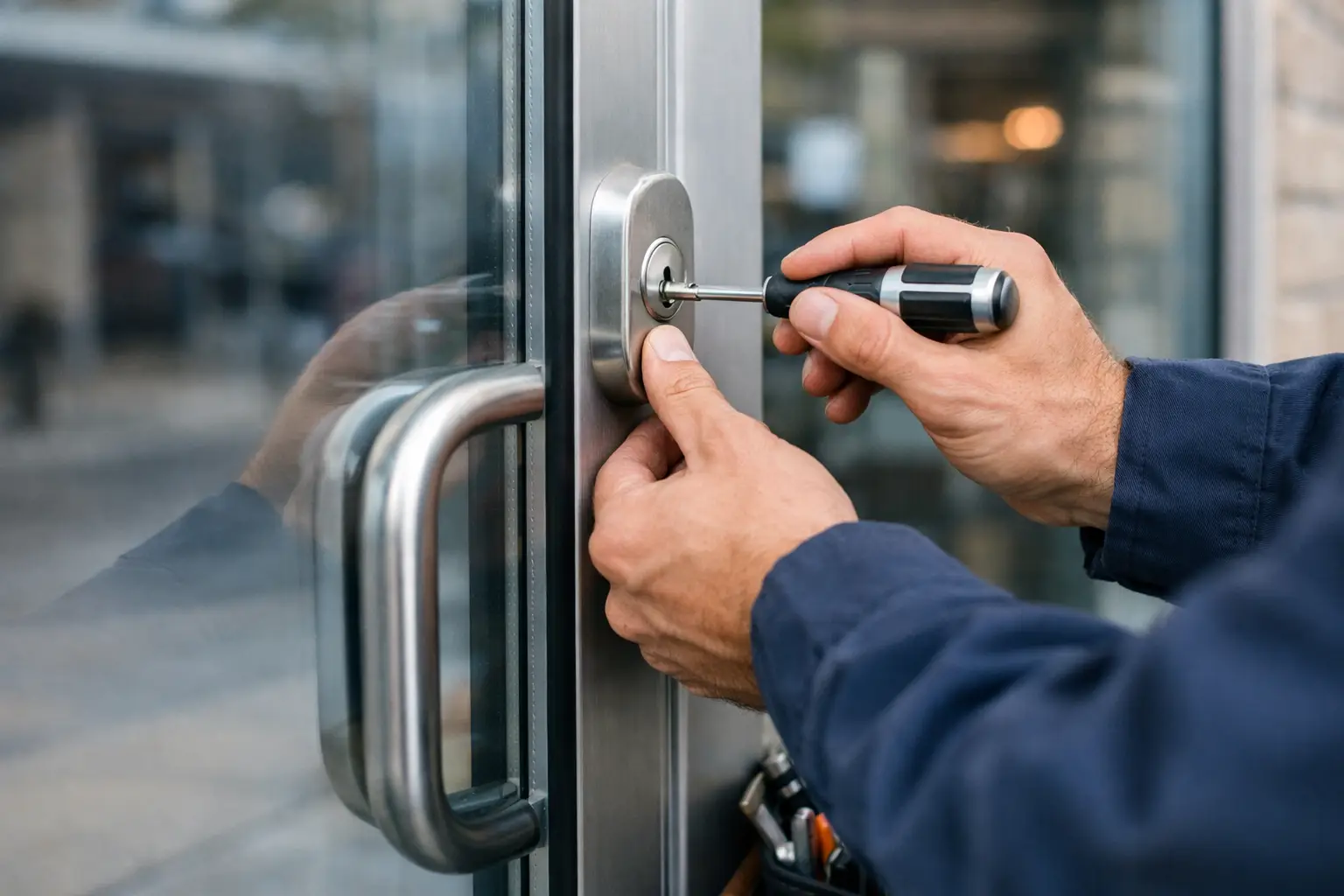
A storefront lock usually fails at the worst possible time - right before opening, during a staff change, or after a break-in attempt. When that happens, storefront door lock repair becomes a business priority fast. A door that will not latch, a key that sticks, or a cylinder that spins can stop operations, create safety issues, and leave your retail unit exposed after hours.
For business owners and property managers across Vancouver and the Lower Mainland, the main concern is simple: get the door secured properly and get back to normal business. The right repair depends on what actually failed. In some cases, the fix is quick. In others, repair is possible but replacement is the smarter call.
When storefront door lock repair is urgent
Not every lock issue is an emergency, but many commercial door problems become urgent faster than people expect. If the key stops turning completely, the door will not lock from outside, the panic hardware is misaligned, or the lock has visible damage after forced entry, waiting can put the business at risk.
A storefront entrance handles constant traffic. Over time, that wear shows up in the lock body, the cylinder, the latch, the door closer, and even the frame. Sometimes the lock is blamed when the real problem is alignment. If the aluminum frame shifts slightly, or the door starts sagging, the latch may no longer meet the strike correctly. The result feels like a bad lock, but the repair has to address the door system as a whole.
This is especially common in retail plazas, mixed-use buildings, and older commercial properties where doors are used heavily every day. A lock that worked fine last week can suddenly become unreliable after months of gradual wear.
Common signs your storefront lock needs repair
The earliest warning signs are easy to ignore because the door still works some of the time. That is usually when repair is most cost-effective.
If your key sticks, needs extra force, or only works when pulled back slightly, the cylinder may be worn or dirty. If the thumbturn feels loose, the internal components may be starting to fail. If staff have to slam the door to get it to lock, the issue may be poor alignment, a weak closer, or latch damage.
Another major red flag is inconsistency. If one employee can lock the door but another cannot, or the lock works in the morning and jams at closing, that points to a mechanical issue that is getting worse. A storefront lock should operate smoothly and predictably. Anything less is a sign that service is overdue.
You should also act quickly after vandalism or attempted forced entry. Even if the key still turns, internal damage can leave the lock weak and unreliable. In that situation, repair is not just about convenience. It is about restoring security before the next closing time.
What causes storefront locks to fail
Commercial storefront doors are built for frequent use, but they are not immune to wear. The most common cause of failure is simple age and repeated operation. Every turn of the key and every cycle of the latch adds up.
Weather also plays a role in BC. Rain, moisture, and temperature changes can affect metal components, especially on exterior doors exposed to the elements. Dirt and debris can work their way into the cylinder. If the lock has not been serviced in years, small internal parts may begin to wear unevenly.
Improper use is another factor. Forcing the wrong key, turning the cylinder while the door is under pressure, or pulling hard on a stuck handle can turn a minor issue into a full lock failure. On busy storefronts, staff may not realize they are compensating for a misaligned door until the lock finally gives out.
Break-in attempts are also a major cause of repair calls. Even when the intruder does not get in, prying, drilling, or impact damage can compromise the cylinder, faceplate, latch, or surrounding hardware.
Repair or replace? It depends on the hardware
A proper assessment matters because not every lock problem needs a full replacement. Many storefront door lock repair jobs involve restoring function to existing hardware, adjusting alignment, replacing a cylinder, or servicing components that are still in good condition.
If the storefront has quality commercial hardware and the damage is limited, repair often makes sense. A worn cylinder can be replaced without changing the full lock assembly. A misaligned latch can often be corrected by adjusting the strike or door closer. Loose hardware can be tightened and secured before it causes more damage.
Replacement becomes more likely when the lock has severe internal wear, visible forced-entry damage, obsolete parts, or repeated service history. If the same lock has failed more than once, spending more on repair may not be the best value. In some cases, upgrading to a more secure or more durable commercial lock is the better long-term decision.
For property managers, that decision often comes down to downtime, liability, and the condition of the full entrance. A quick repair may restore access today, but if the hardware is near the end of its service life, replacement can reduce future emergency calls.
The challenge with aluminum storefront doors
Most retail units use narrow stile aluminum doors, and these setups can be more complex than they look. The lock, cylinder, latch, handle, closer, and frame all have to work together. If one component shifts or wears out, the entire door can become hard to secure.
That is why storefront door lock repair should not be treated like a basic residential lock job. Commercial aluminum doors often use mortise cylinders, Adams Rite style hardware, hook bolts, or other narrow-profile components. These systems require the right parts and the right fit. A quick patch may get the door closed for the night, but if the hardware is not repaired correctly, the issue usually returns.
For business owners, the practical point is this: the lock problem you see may only be part of the issue. A technician should check the cylinder, latch action, strike alignment, door swing, and closer performance before deciding on the fix.
Why fast service matters for retail and commercial units
When a storefront door cannot be secured, every hour matters. Delays can affect opening times, staff safety, insurance concerns, inventory security, and customer access. For a street-facing business, an unsecured entrance is not something you leave until tomorrow.
That is why many commercial lock issues require same-day or after-hours service. If the lock fails at closing, you need the unit secured before you leave. If it fails before opening, you need a repair that gets the business operating again without a full day lost.
For businesses across Vancouver, Burnaby, Surrey, Richmond, Coquitlam, Langley, Delta, Maple Ridge, North Vancouver, White Rock, West Vancouver, Abbotsford, and nearby areas, response time is often just as important as the repair itself. A dependable 24/7 locksmith can assess the hardware on site, secure the entrance, and recommend whether repair or replacement makes more sense.
What to expect from a storefront lock repair visit
A professional service call should start with diagnosis, not guesswork. The technician should inspect how the key turns, whether the latch engages cleanly, whether the cylinder is secure, and whether the frame and closer are affecting lock performance.
From there, the repair may involve rekeying, cylinder replacement, latch servicing, hardware tightening, strike adjustment, or full lock replacement if the original hardware is no longer dependable. If forced entry is involved, the surrounding door condition should also be checked to make sure the lock is not being installed back into compromised material.
For commercial clients, clear recommendations matter. You want to know what failed, what was repaired, and whether the door is likely to need additional work soon. That is particularly important for multi-unit properties and retail operators managing more than one location.
A company like NOW LOCKSMITH understands that these calls are not just about hardware. They are about securing the premises quickly, reducing disruption, and helping businesses move forward with confidence.
How to reduce future lock problems
Storefront locks usually give warning before they fail completely. Acting early is the best way to avoid after-hours emergencies. If your key is sticking, the door is getting harder to latch, or staff are noticing inconsistency, book service before the lock becomes unusable.
It also helps to avoid temporary workarounds. Do not force the key, over-tighten loose parts without checking alignment, or keep using a lock that already feels damaged after a break-in attempt. Those short-term fixes often make the final repair bigger and more expensive.
For high-traffic commercial entrances, periodic inspection is worth it. A small adjustment to the closer or strike today can prevent a complete failure next month. That matters even more for businesses that cannot afford delayed openings or unsecured closings.
A storefront door does more than open and close. It protects your business, your staff, and your daily operations. When the lock starts failing, quick action usually gives you more repair options and less disruption. If something feels off, trust that instinct and get the door checked before your next busy hour.