



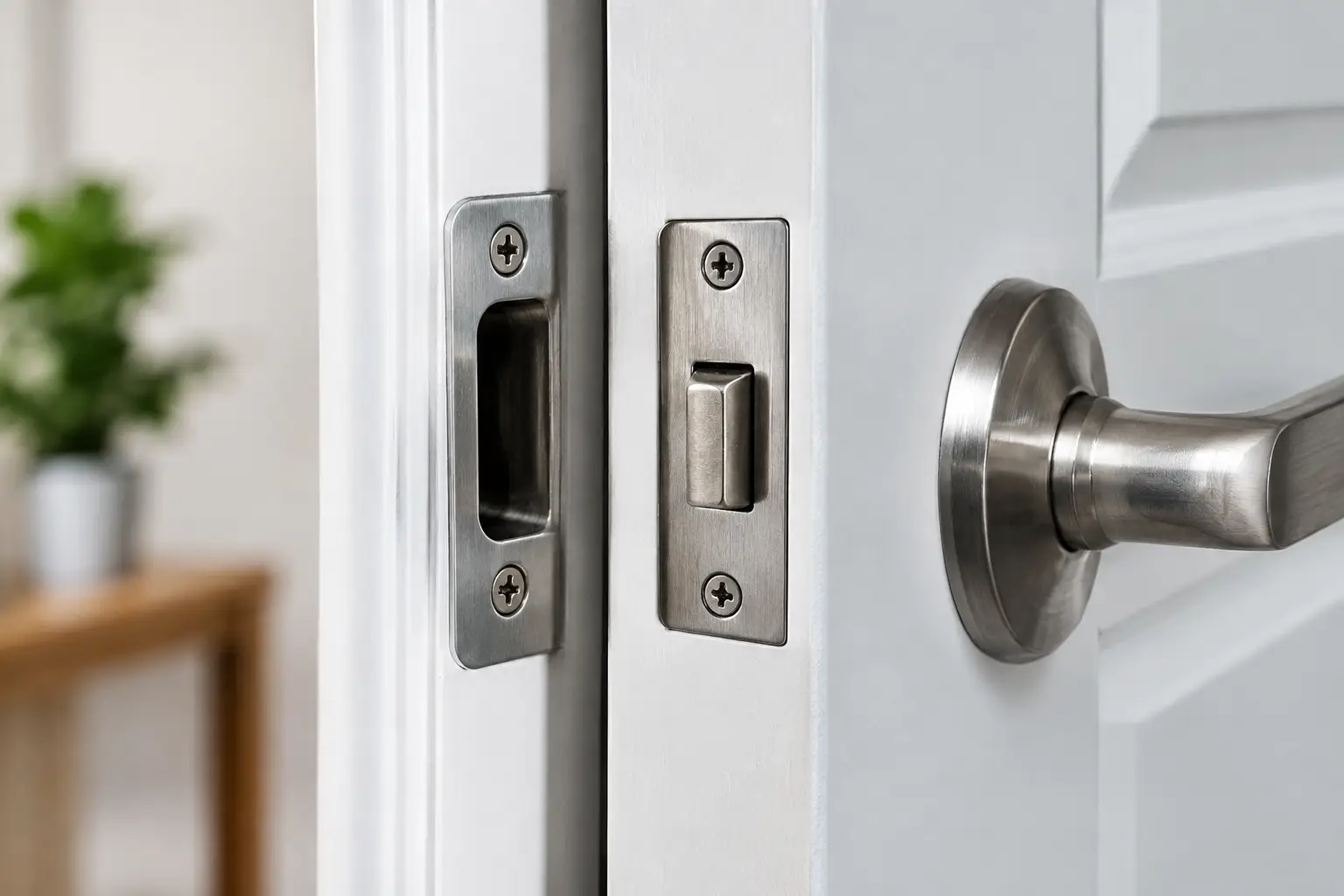
A deadbolt can be in perfect working order and still leave a door vulnerable at its weakest point: the frame. Security strike plates reinforce the area where the bolt or latch enters the jamb, helping the door resist force that could otherwise split wood, bend light hardware, or pull short screws free.
For homes, rental units, storefronts, and offices across Vancouver and the Lower Mainland, this is a practical upgrade that is often overlooked. People tend to focus on the lock cylinder, keys, or smart-lock features. Those matter, but the hardware behind the closed door matters just as much.
What security strike plates do
A standard strike plate is the small metal piece installed on the door frame. It has an opening that receives the latch or deadbolt when the door closes. On many older doors, it is thin, narrow, and held in place with short screws that only grip the door trim or jamb.
Security strike plates are designed to spread force across a larger section of the frame. They are typically made from heavier-gauge steel and use longer screws that reach into the structural framing behind the jamb. When correctly fitted, the load is no longer concentrated on a small piece of trim.
That distinction matters during an attempted forced entry. A strong lock cannot do its job if the frame around it gives way first. It also matters after repeated hard door closing, seasonal movement, or a previous break-in has weakened the area around the strike.
Where a strike plate upgrade makes the most sense
The front door is an obvious place to start, but it is not always the highest-risk opening. Side doors, rear doors, doors from a garage into a home, and basement entries are frequently less visible from the street. They may also have older hardware or receive less regular attention.
For a business, look at employee entrances, rear delivery doors, storage rooms, and doors leading into office areas. A commercial door with a worn strike can become difficult to latch properly, creating both a security concern and a daily access problem. If staff have to push, pull, lift, or slam the door to make it lock, the issue should be assessed before the lock or frame is damaged further.
Apartment and condo residents should not alter common-area doors without approval. However, a unit entry door may still be eligible for upgraded hardware depending on building rules, the door construction, and strata requirements. A locksmith can identify what is practical without interfering with fire-rated door assemblies or building access systems.
Not every door needs the same plate
There is no single strike plate that suits every door. The right choice depends on the lock, the frame, the door material, and how the door is used.
A residential deadbolt may benefit from a reinforced wraparound or extended strike plate with long mounting screws. This provides a larger securing area around the bolt opening. On a door with both a latch and a deadbolt, each locking point should be checked. Upgrading only the deadbolt strike may leave a weak latch strike directly above or below it.
Commercial aluminum storefront doors, hollow metal doors, and metal frames require different hardware and installation methods. The screws, strike shape, backset, and frame preparation all need to match the existing lock. For panic hardware and access-control doors, the strike is part of a complete life-safety and access system, not an isolated piece of metal.
Door alignment is equally important. A heavy-duty strike plate will not solve a door that has sagged, warped, or shifted in its frame. If the bolt rubs the plate, does not fully extend, or only locks when the door is lifted, the hinges, frame, and lock alignment should be corrected first.
Signs your current strike plate may be failing
A close look at the door frame often reveals problems before a lockout or break-in attempt does. Watch for these warning signs:
- The plate is bent, cracked, loose, or visibly pulling away from the frame.
- Screws spin freely, sit crooked, or no longer tighten securely.
- The wood around the strike is split, crushed, or patched repeatedly.
- The deadbolt will not enter smoothly unless the door is pushed or lifted.
- There are marks around the frame from prying, kicking, or a previous forced entry.
These signs do not always mean the entire door must be replaced. In many cases, a locksmith can repair damaged wood, realign the door, install a suitable reinforced strike, and confirm the deadbolt engages fully. If the frame is severely split or the door has been forced open, more substantial repair may be needed before new security hardware is installed.
Installation is more than changing screws
Replacing a thin plate with a stronger one may look straightforward, but proper fit is critical. The strike opening must line up precisely with the latch or bolt. If it is too shallow, too narrow, or positioned incorrectly, the door may not lock reliably. A bolt that only partly enters the frame can be easier to force open and may damage the lock over time.
Long screws are often a key part of the upgrade, but longer is not automatically better. They need to be placed where they securely engage solid framing without creating problems for the door frame, electrical wiring, or adjacent hardware. The condition of the jamb also determines whether reinforcement, repair, or different mounting hardware is required.
A professional installation includes testing the door from both sides. The latch should catch without slamming. The deadbolt should turn smoothly and extend fully. The door should remain secure when pressure is applied from outside, while still allowing occupants to exit normally.
Security works as a system
Strike plates are highly worthwhile, but they are one part of door security. A reinforced frame cannot compensate for a hollow-core exterior door, worn hinges, a loose lock, or a key that has been shared too widely. Likewise, replacing a lock alone may not improve security much if the strike plate is weak.
A useful door security assessment looks at the deadbolt, latch, hinges, frame, door material, key control, and overall alignment together. For outward-swinging doors, exposed hinge security deserves particular attention. For rental properties and commercial spaces, rekeying after tenant or staff changes may be just as urgent as reinforcing the frame.
It also depends on the location and use of the property. A detached home may prioritize exterior side and rear doors. A retail business may need to balance stronger rear-door hardware with staff access and emergency egress. A property manager may need a consistent solution that can be maintained across several units.
When to call a locksmith
Call for service promptly if a door has been kicked, pried, or forced, even if it still appears to lock. Internal frame damage can make the next forced entry easier, and a misaligned lock can eventually leave you unable to secure the door or get inside.
NOW LOCKSMITH provides 24/7 locksmith support across Vancouver and surrounding Lower Mainland communities for damaged locks, door security repairs, rekeying, and new hardware installation. A technician can assess whether the issue is the strike plate alone or part of a larger door and lock problem.
A strong entry door should close cleanly, lock without a struggle, and give you confidence when you leave. If yours has loose hardware, damaged wood, or a bolt that no longer lands where it should, addressing it now is a sensible step before a minor repair becomes an urgent security call.