



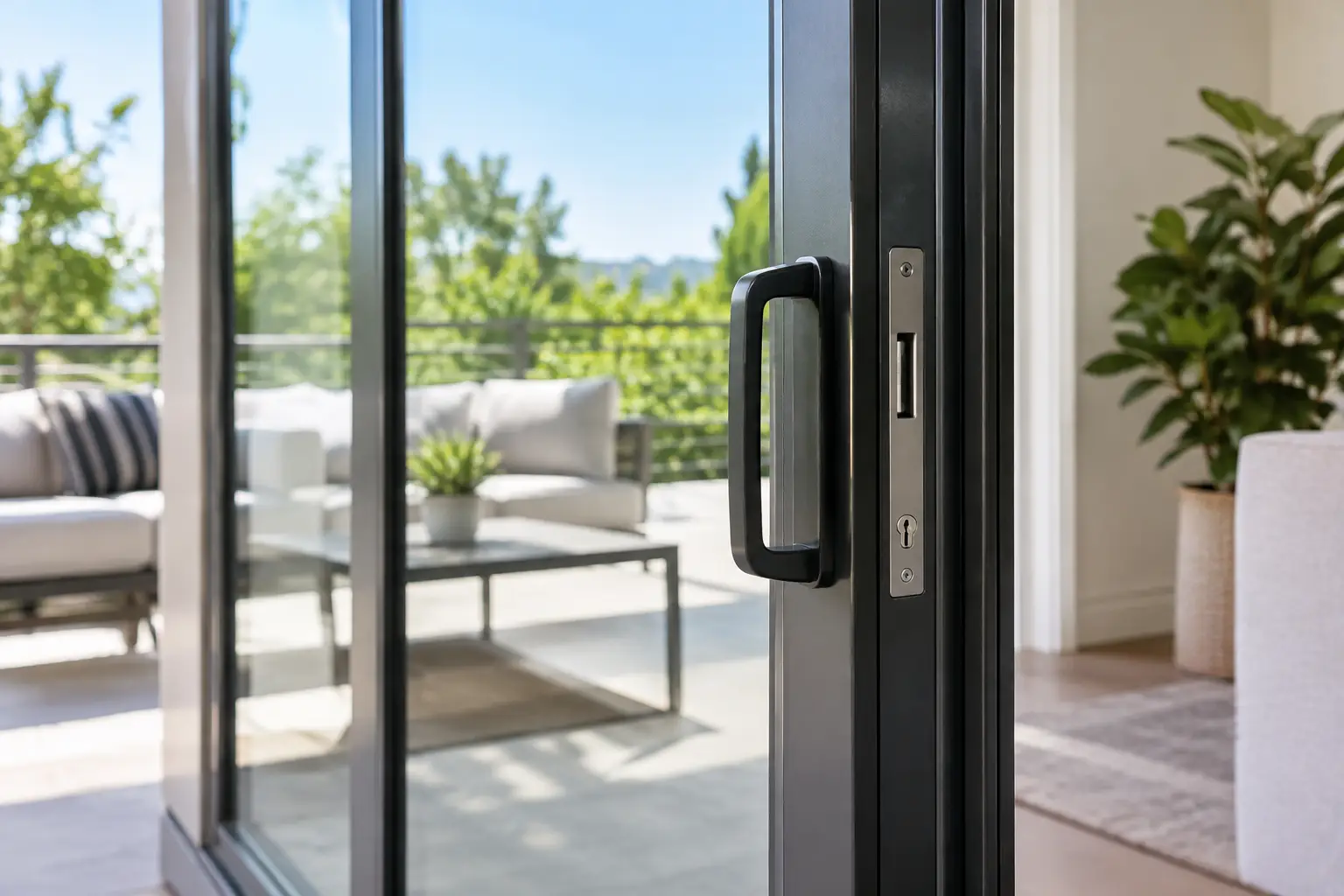
A sliding patio door can be the easiest way into a home when its lock is loose, its panel can be lifted from the track, or its frame no longer closes squarely. Secure sliding patio doors need more than a small latch at handle height. They need a working locking system, a properly adjusted frame and track, and protection against forced lifting or prying.
For homeowners, renters, and property managers across Vancouver and the Lower Mainland, patio door security deserves the same attention as a front entry door. These doors often face backyards, balconies, side yards, or shared outdoor spaces where suspicious activity may not be noticed right away. A few targeted upgrades can make a major difference, but the right solution depends on the door's age, material, condition, and how it is used every day.
Why Sliding Patio Doors Need Extra Security
Most sliding doors are designed around convenience. A large glass panel rolls along a track, overlaps a fixed panel, and locks with a compact mortise-style latch. When everything is new and correctly installed, that system can provide reasonable resistance. The problem is that many doors have years of wear behind them.
Rollers gradually drop, making the moving panel drag and sit lower in the frame. Tracks collect dirt, grit, and moisture. The latch may stop lining up with its keeper. A door that requires a shoulder push or lift to lock is not merely inconvenient. It may not be fully engaging at all.
Older patio doors can also be vulnerable to lifting. If there is enough clearance between the panel and upper track, an intruder may be able to raise the panel and pull it outward from the bottom track. A basic handle lock alone does not address this risk.
Glass is another consideration. Large panes provide visibility and natural light, but they can expose interior locks or be targeted for breakage. Security film, laminated glass, and thoughtfully placed window coverings each have a role, though none replaces a correctly functioning lock and door frame.
Start With the Door's Basic Condition
Before adding security hardware, check whether the door closes, locks, and rolls as it should. An upgrade attached to a loose keeper, damaged frame, or poorly aligned panel will not perform as intended.
Close the door slowly and look at the gap around its edges. The reveal should be reasonably consistent, and the panel should meet the frame without excessive force. Test the lock several times from inside. The latch should enter the keeper cleanly, without needing to lift the door or pull it hard toward the frame.
If the door scrapes, binds, rattles, or has visible movement after it is locked, it may need roller adjustment, track cleaning, replacement rollers, a new lock mechanism, or strike plate adjustment. In many cases, a sliding door that seems weak is simply worn out of alignment. Repairing that issue first improves security and extends the life of the door.
Do not rely on forcing a stiff lock. Continued pressure can bend internal parts, damage the handle, or create a sudden failure that leaves the door unable to lock. If your patio door will not secure before you leave home or before bed, treat it as an urgent repair.
Security Upgrades for Sliding Patio Doors
The most effective setup uses layers. One layer prevents ordinary opening, another resists forced movement, and a third makes lifting the panel out of the track more difficult. Not every door needs every option, but relying on one small latch is rarely the best approach.
Upgrade the Main Lock When Needed
A worn or basic latch can often be replaced with a higher-quality patio door lock. Depending on the door design, this may include a stronger mortise lock, an improved keeper, or a keyed lock for exterior access. A keyed exterior lock can be useful for a detached suite, patio access point, or rental property, but it must be selected and installed carefully.
Emergency exit comes first. Anyone inside must be able to leave quickly in an emergency, and local building requirements may affect what hardware is appropriate. A professional locksmith can identify options that improve access control without creating an unsafe exit situation.
Add a Secondary Lock or Security Bar
A secondary lock stops the panel from sliding even if the primary latch is defeated or fails. This may be a track-mounted pin lock, a foot-operated lock, or another device designed for the specific door style.
A security bar placed in the lower track is a familiar option. It can work well when it fits tightly and cannot be easily knocked out of position. Avoid treating a loose piece of wood or dowel as a permanent solution. It can shift, split, interfere with normal operation, and may give a false sense of security. Purpose-built hardware is generally more reliable, particularly for a frequently used family entrance.
Install Anti-Lift Protection
Anti-lift devices limit how far the movable panel can rise in its frame. These can be fitted at the top of the door or integrated through correctly adjusted hardware, depending on the design. The goal is simple: leave too little vertical clearance for the panel to clear the bottom track.
This is one of the most overlooked steps for secure sliding patio doors. It is also a job where proper positioning matters. Hardware that is too tight can affect door operation, while hardware that is too loose may offer little protection.
Reinforce the Keeper and Frame Area
The keeper is the part of the frame that receives the latch. If it is installed with short screws into thin material, the lock may be stronger than the area holding it. Reinforcing the keeper with appropriate fasteners and backing, where the frame construction allows, can improve resistance to forced entry.
The best method depends on whether the door frame is vinyl, aluminum, wood, or a combination of materials. Drilling or using the wrong screws can crack vinyl, damage insulated glass components, or interfere with drainage paths. This is not always a simple hardware-store fix.
Do Not Ignore the Glass and Nearby Access Points
Locks prevent the panel from opening normally. They do not eliminate every risk around a large glass door. If privacy is limited, keep valuables out of sight and avoid leaving vehicle keys, wallets, or electronics within clear view of the patio.
For doors in exposed ground-level areas, security film can help hold broken glass together and slow entry. Laminated safety glass offers better performance than standard glass, but replacing a full door panel is a larger investment. Whether that expense makes sense depends on the property's risk level, insurance requirements, and the condition of the existing door.
Also check adjacent windows, pet doors, and gate access. A well-secured patio door is less useful if a nearby unlocked window provides easy reach to the interior handle or if a gate lets someone work out of sight beside the house.
What Renters and Property Managers Should Do
Renters should report a loose lock, broken handle, misaligned panel, or damaged track promptly and in writing. Do not modify a rental door with drilled-in hardware without permission. The wrong modification can create a repair dispute or affect the building envelope.
Property managers should treat patio door lock concerns as a security maintenance issue, not just a minor service call. Between tenants, inspect door alignment, rollers, locks, handles, weatherstripping, and any existing secondary security devices. A lock that technically catches but only after repeated effort is likely to become an after-hours problem.
For strata properties and multi-unit buildings, confirm any exterior hardware requirements before installation. Appearance standards, common-property responsibilities, and fire-safety rules can affect the available options.
When to Call a Locksmith
Call for professional help when the door will not lock, the key turns without engaging, the panel can be lifted or rocked in the track, the handle is loose, or there are signs of attempted forced entry. After a break-in attempt, avoid repeatedly operating damaged hardware. The door may be unstable, and temporary locking methods may not hold.
NOW LOCKSMITH can assess patio door locks, alignment issues, damaged hardware, and practical upgrade options for homes and properties across Vancouver and surrounding Lower Mainland communities. For an urgent security issue, especially at night or before leaving a property unattended, 24/7 locksmith support can help restore a secure closing point without unnecessary delay.
A patio door should close smoothly, lock positively, and resist movement when tested from the inside. If yours does not, arrange the repair before a small alignment issue turns into a failed lock at the worst possible time.