





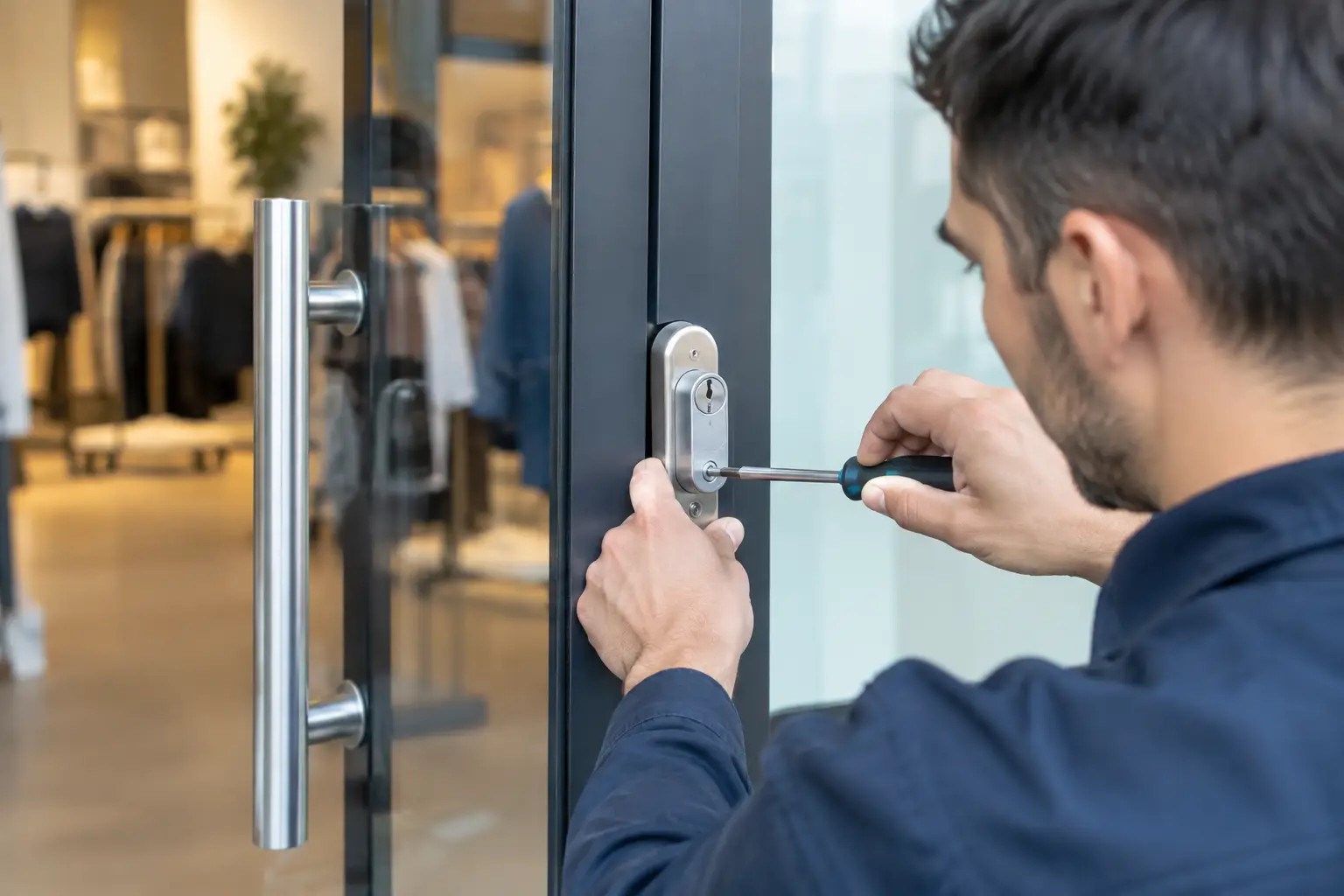
A broken storefront lock is not just a repair issue. After a forced entry, the same weakness can leave your inventory, staff and next business day exposed again. A retail burglary lock upgrade gives Vancouver-area shop owners a chance to correct the point of failure, restore secure access and make a repeat incident less likely.
The right response is rarely to replace one damaged cylinder and move on. A break-in can affect the door frame, latch alignment, glass, hinges, key control and closing hardware. The goal is to get your premises secured quickly, then make practical changes based on how the entry occurred.
Start by Securing the Retail Unit
If a burglary has just happened, protect the site before assessing long-term improvements. Avoid handling damaged locks, doors or glass more than necessary until police and insurance requirements have been addressed. Document the damage with clear photos, note missing property and keep any relevant surveillance footage.
Once the authorities have released the area, a commercial locksmith can secure the affected opening. That may mean replacing a damaged lock, rekeying the premises, repairing the door hardware or installing temporary protection while a permanent repair is arranged. For a business that closes late or discovers damage early in the morning, 24/7 locksmith support matters because an unsecured door cannot wait for regular business hours.
Also consider who may have had keys before the incident. If keys were lost, stolen, taken from an employee area or kept in a compromised cash office, rekeying is usually more sensible than assuming those keys will never be used. Rekeying changes the lock’s internal configuration so the previous key no longer works, without necessarily replacing every lock body.
Assess the Entire Door, Not Only the Lock
Retail burglary damage often looks concentrated around the lock, but the surrounding hardware determines how well the door holds under pressure. A new lock installed on a weak frame or misaligned door may not deliver the security improvement you expect.
For aluminum-frame glass storefront doors, look closely at the deadlatch, cylinder, door stile, pivot hardware and strike area. A commercial-grade deadlatch may be appropriate, but it needs to fit the specific door preparation and operate smoothly. If the door is dragging, not latching fully or has a loose frame, those issues need correction as part of the work.
Rear service doors deserve equal attention. They are frequently out of public view and may have older hardware than the front entrance. A steel door with a properly installed commercial deadbolt, protected cylinder and reinforced strike area can be a meaningful improvement. However, hardware must never interfere with required emergency egress. If a door is part of an exit route, its lock and panic hardware must allow people inside to leave safely and comply with applicable building and fire requirements.
Roll-up doors, gates and storage-room doors should be included in the inspection as well. Burglars may test more than one opening, even if only one entry point was successful. A locksmith can identify signs of tampering, loose hardware and wear that should be corrected before it becomes an emergency.
What a Retail Burglary Lock Upgrade Can Include
The best retail burglary lock upgrade depends on the type of retail space, the door construction, operating hours and what was compromised. A small boutique in a mixed-use building has different needs than a warehouse-style retailer with staff entrances and multiple stock rooms.
Common upgrades include commercial-grade deadlatches or deadbolts, high-security cylinders, reinforced strikes, door closers, latch guards and cylinder protection. These components address different weak points. A high-quality cylinder helps control resistance to unauthorized key use and manipulation, while a reinforced strike helps strengthen the point where the lock connects to the frame. Neither is a complete solution on its own.
Key control is often one of the most valuable upgrades after a break-in. Standard keys can be copied without the owner knowing, especially when turnover is high or keys have been passed between managers, cleaners and contractors. Restricted or controlled key systems provide a clearer process for issuing, tracking and replacing keys. They are particularly useful for businesses with multiple staff members or several locations.
Electronic access can also make sense for staff-only areas, offices and rear entrances. Keypads, fobs or credential-based access systems can remove access immediately when an employee leaves. The trade-off is that electronic hardware requires proper installation, credential management and ongoing maintenance. For a single low-traffic stockroom, a well-managed mechanical lock may be the simpler and more cost-effective choice.
Do Not Overlook Daily Operations
A lock upgrade works best when it supports the way your business actually opens and closes. If staff prop the rear door because deliveries are frequent, or if a lock is difficult to operate during closing, even good security hardware can be bypassed by routine habits.
Review who opens the store, who locks up and where keys are kept. Avoid hiding spare keys outside the unit or leaving them in an accessible desk drawer. Establish a process for collecting keys when staff leave, reporting a lost key immediately and documenting who has access to restricted rooms.
It is also worth checking whether your alarm contacts, cameras and lighting support the new physical security measures. Locks delay unauthorized entry, while alarms, cameras and visible lighting can improve detection and documentation. These measures work together, but one should not be used as a reason to ignore another. A camera can record a burglary, but it does not keep the door secure after the fact.
Choose Repairs Based on Risk, Not Just Visible Damage
After a break-in, it is tempting to choose the fastest replacement that gets the door working. Fast service is necessary, especially when the business cannot close securely, but the cheapest like-for-like replacement may leave the original vulnerability in place.
Ask practical questions during the assessment. Was the lock itself defeated, or did the frame, glass or surrounding door hardware fail? Is this a public entrance, a staff entrance or a rarely used service door? Has the business had previous attempts at forced entry? Are staff carrying keys that can no longer be accounted for?
The answers help determine whether a targeted repair is enough or whether a broader upgrade is justified. A recently damaged lock on an otherwise sound, properly aligned door may only need a commercial replacement and rekeying. Repeated damage at a rear entrance may call for stronger door reinforcement, better key control and changes to after-hours procedures.
For tenants, involve the landlord or property manager early. Responsibility for the door, frame, glazing and lock hardware can vary by lease agreement. Prompt communication helps avoid delays, particularly when a storefront door requires specialized parts or coordinated repairs.
Get Help Quickly When Your Store Cannot Be Secured
A retail burglary can interrupt sales, create safety concerns for employees and leave owners dealing with insurers, police reports and repairs all at once. The immediate priority is a secure door and controlled access. The next priority is choosing upgrades that address the real weak point without creating a problem for staff, customers or emergency exits.
NOW LOCKSMITH provides 24/7 commercial locksmith support across Vancouver and surrounding Lower Mainland communities for damaged locks, urgent rekeying and commercial lock installation. When the door is secure again, take a moment to make access easier to manage - that small decision can protect your business long after the repair crew has left.