



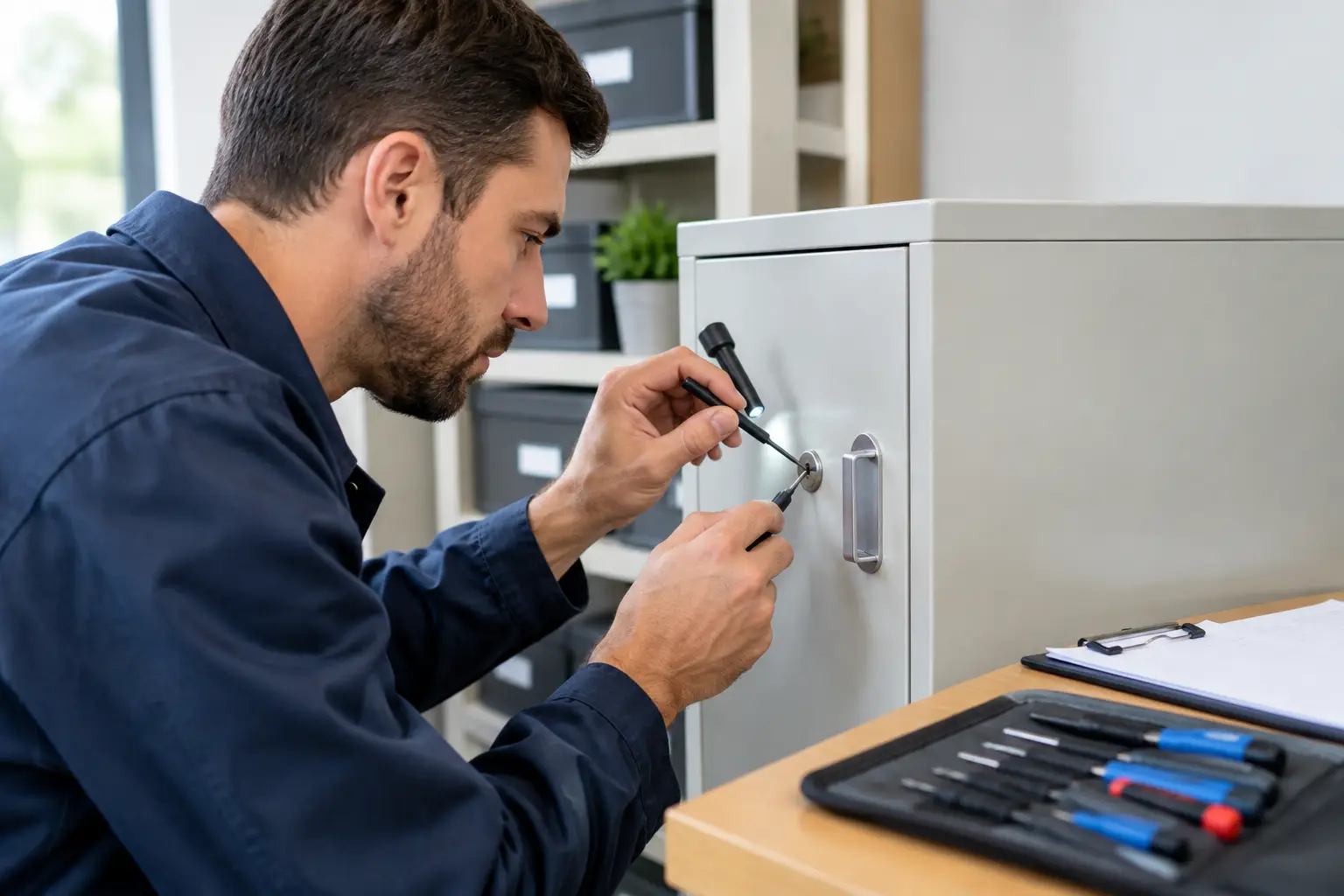
A locked cabinet can stop a workday, delay a repair, or leave you without items you need right away. When you need to open a locked cabinet, the priority is not simply getting the door open. It is restoring access without damaging the cabinet, its lock, or the contents stored inside.
For homeowners, tenants, business owners, and property managers across Vancouver and the Lower Mainland, cabinet lockouts are common. Keys get misplaced, old locks seize, drawers jam, staff changes leave no key record, and filing cabinets are often inherited without the correct key. The right response depends on the type of cabinet and why it will not open.
Start by confirming you are authorized
Before taking any action, make sure you have permission to access the cabinet. This matters especially in rental homes, shared offices, retail spaces, strata properties, and workplaces. A cabinet may contain private files, medications, financial records, controlled inventory, or personal belongings.
If the cabinet belongs to a business, check with the owner, manager, or designated keyholder first. Property managers should confirm tenancy status and ownership before arranging service. A professional locksmith may ask for identification or proof of authorization before opening secured furniture, particularly when the cabinet contains sensitive materials.
That small check protects everyone involved and prevents an access issue from becoming a security or liability problem.
Check the simple causes before forcing anything
A cabinet can feel locked even when the key is correct. Before applying force, look for signs that the issue is mechanical rather than a missing-key lockout.
The door or drawer may be under pressure from packed contents. A warped wooden cabinet can shift with moisture or seasonal temperature changes. On a filing cabinet, one partially open drawer can activate an interlock that prevents the other drawers from moving. A key may turn only partway because the lock cylinder is dirty, worn, or beginning to fail.
Try the correct key gently while supporting the door or drawer in its normal position. Do not twist the key hard. If it bends or breaks inside the lock, a straightforward cabinet opening can turn into a more involved repair. If the key will not enter smoothly, if the cabinet is visibly misaligned, or if the lock feels loose, stop before the hardware suffers further damage.
Why forcing a locked cabinet often costs more
It is tempting to use a screwdriver, pry bar, drill, or improvised tool when access feels urgent. That approach can damage far more than the lock. Thin metal filing cabinets can bend at the latch point. Wood veneer can split. Glass-front cabinets can crack. A damaged cabinet door may no longer align properly even after a new lock is installed.
Forced entry can also destroy useful evidence of what caused the failure. A locksmith can often identify whether the problem is a worn cam lock, a broken linkage, a failed latch, a damaged cylinder, or a cabinet alignment issue. Once the lock and frame have been heavily damaged, repair options become more limited.
There is also a security concern. A cabinet that has been pried open may not close or lock reliably afterward. That is a serious issue for offices holding employee records, retail locations storing keys or documents, and homes where medications, valuables, or personal information are kept.
When a locksmith is the right choice
Calling a locksmith is usually the safest option when the key is lost, the lock is jammed, the key has broken, or the cabinet holds items you need quickly. Professional cabinet opening is not just about access. It is about assessing the lock and cabinet construction so the least destructive method can be used where possible.
A qualified locksmith can help with common cabinet types, including filing cabinets, office storage cabinets, tool cabinets, display cases, desk drawers, mailboxes, medicine cabinets, and metal lockers. The available approach will depend on the make, lock style, condition, and whether the cabinet has previously been damaged or modified.
In many cases, the lock can be serviced or replaced after access is restored. This is especially useful when the original key is gone permanently. Rather than relying on a cabinet that may lock you out again, you can arrange for a new compatible lock and working keys.
NOW LOCKSMITH provides 24/7 support for urgent residential and commercial lock concerns across Vancouver and surrounding Lower Mainland communities. If access is time-sensitive, explain what type of cabinet is involved, whether a key is available, and whether anything critical is stored inside. That information helps the technician arrive prepared.
What to have ready for a cabinet lockout
A locksmith can work more efficiently when you can provide a few practical details before dispatch. Describe whether it is a wood cabinet, metal filing cabinet, locker, display cabinet, desk, or storage unit. If you know the manufacturer or can see a model number, keep that information available.
It also helps to explain what happened immediately before the cabinet stopped opening. Did the key go missing? Did it suddenly stop turning? Is a drawer stuck? Was the cabinet moved recently? These details can point to a key issue, a lock failure, or a mechanical alignment problem.
For commercial properties, identify the authorized contact who can approve the work on site. If the cabinet contains documents that need privacy protection, arrange for an authorized staff member to be present when it is opened.
After you open the locked cabinet, address the cause
Getting the cabinet open is only the first step. If the lock failed once, consider whether it remains dependable enough for regular use. An old cam lock, loose latch, worn key, or bent drawer mechanism can create another lockout with little warning.
For cabinets that hold important items, replacing a failing lock is often more sensible than continuing to use it until it stops working completely. Businesses may also benefit from standardizing cabinet keys or maintaining a controlled key record. This avoids the common situation where several people believe someone else has the key.
At home, store spare cabinet keys somewhere separate from the cabinet but still accessible to authorized adults. Avoid taping a spare key inside the same room in an obvious location. For a filing cabinet or document cabinet, consider a labelled key organizer kept in a secure area.
If a cabinet is difficult to close, do not repeatedly slam it or lean on the door to make the lock engage. The cabinet may need adjustment, or the contents may need to be rearranged to reduce pressure on the latch. A lock should operate smoothly. If it does not, the problem is worth addressing before it becomes an emergency.
Cabinet access can be urgent without being destructive
Some cabinet lockouts cannot wait. You may need business records for an appointment, tools for a service call, medication, identification, or equipment required to keep a property operating. In those situations, quick help matters, but damage does not have to be the trade-off.
Avoid escalating the problem with force, protect the cabinet and its contents, and get authorized professional help when the key is missing or the lock has failed. A properly opened and repaired cabinet is easier to secure, easier to use, and far less likely to create another stressful interruption later.