



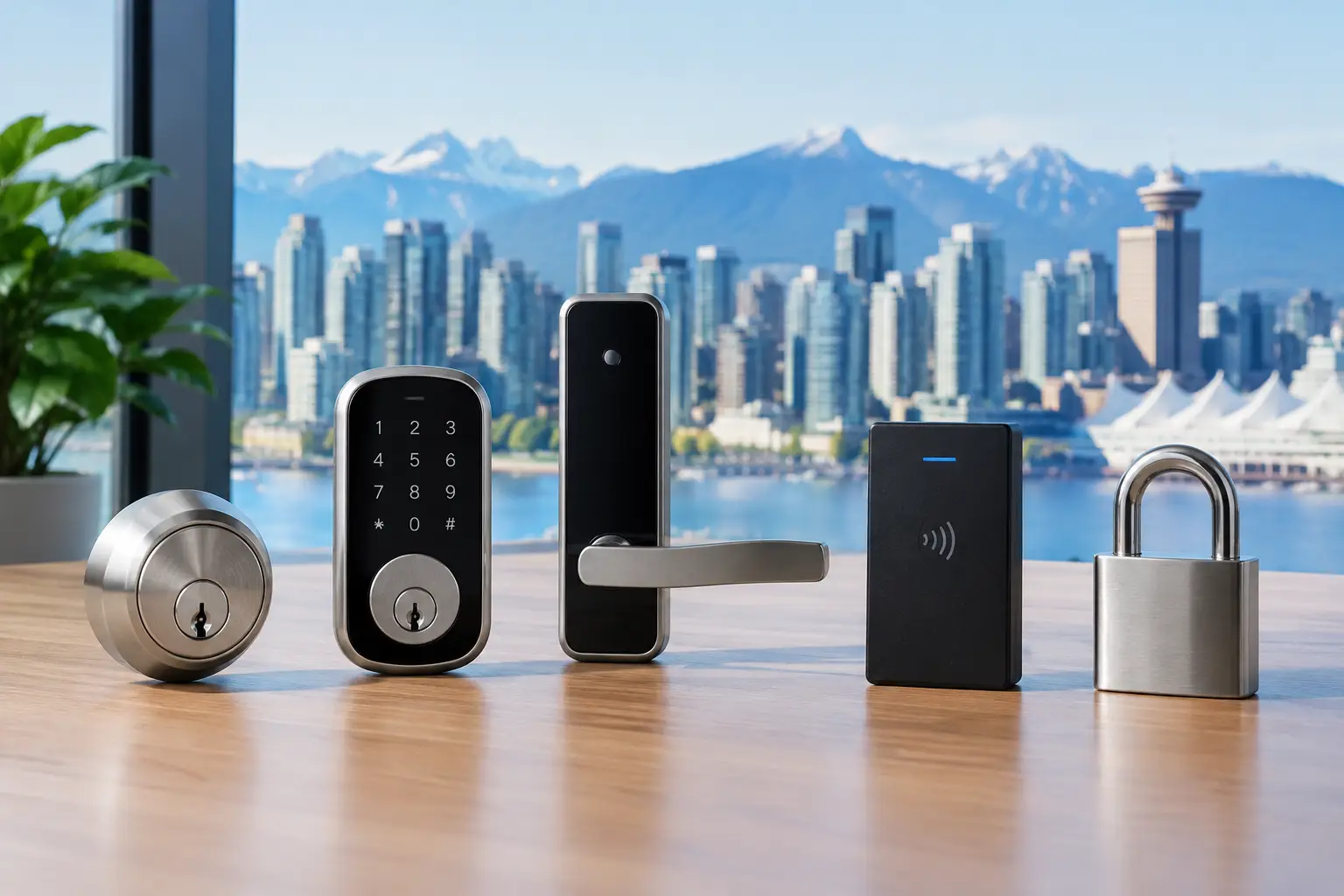
A lost master key at 8 p.m., an employee who leaves without returning a fob, or a damaged front-door lock can quickly become a business security problem. An office lock system comparison helps Vancouver business owners choose protection that fits their daily operations, not just the door hardware that happens to be easiest to buy. The best choice depends on how many people need access, how often staff changes, whether you need entry records, and how quickly you need to secure the building when something goes wrong.
Start With the Doors and the Daily Routine
Before choosing a system, look at how the office actually operates. A small professional office with five trusted employees has different needs from a shared workspace, medical clinic, warehouse, retail back office, or multi-tenant commercial building.
Count every access point, not only the front entrance. This may include rear doors, staff entrances, storage rooms, IT rooms, records cabinets, loading areas, and interior suites. A system that works well at the front door may be unnecessary or impractical for every room.
Also consider the moments when access becomes urgent. Who opens the office first? Does a manager need to let in cleaning staff after hours? Can a former employee's access be removed immediately? If an exterior lock fails overnight, can the business still be secured until repairs are completed? These questions usually matter more than the latest feature list.
Mechanical Key Systems
Traditional keyed locks remain a practical choice for many offices. Commercial-grade deadbolts, lever locks, and high-security cylinders are familiar to staff, do not rely on batteries, and are often cost-effective for a smaller location. A properly installed commercial lock can provide dependable protection for a front door, supply room, or individual office.
The weakness is key control. When a key is copied, lost, or not returned, there is no way to know who has it. Re-keying restores control, but it takes time and can become costly when staff turnover is frequent. Standard keys are also easy to share without management knowing.
Restricted keyways improve that situation. These keys are designed to be duplicated only through authorized channels, giving a business tighter control over copies. They are a strong middle ground for offices that want better security without moving to electronics. However, they still do not provide a record of who entered or when.
A master key system can make day-to-day management easier. One manager may carry a key that opens several approved doors while employees receive keys for limited areas. The trade-off is planning. A poorly designed master key system can create too much access, and a lost master key may affect many doors at once. It should be designed around real job roles rather than convenience alone.
Office Lock System Comparison: Keypads and Smart Locks
Keypad locks remove the need to issue physical keys for many office doors. Staff enter a PIN, and managers can change or delete codes when someone leaves. For a small office, this can be a practical improvement over re-keying after every staffing change.
The main concern is code sharing. If everyone uses one common PIN, the system only tells you that the code was used, not which employee entered. Individual user codes are far better where the lock supports them. Managers should also change default codes immediately and avoid predictable numbers such as suite numbers or birthdays.
Standalone smart locks may use PINs, fobs, mobile credentials, or a combination of these. Some allow scheduling, so a cleaner can enter only during approved evening hours, for example. Others can send alerts or store activity records. These functions can be useful, but only when the person responsible for the office is prepared to manage users, app permissions, batteries, and updates.
Not every smart lock is suited to a commercial exterior door. The hardware must match the door type, traffic level, latch function, and building requirements. A residential-style smart deadbolt on a busy office entrance may wear out early or fail to provide the right level of protection. Professional installation matters because a lock that binds, misaligns, or does not fully latch can leave a business vulnerable even if the technology is sound.
Card, Fob, and Mobile Credential Systems
Electronic access control is usually the better option for offices with frequent staff changes, multiple departments, or a need for accountability. Employees use a card, fob, or phone credential. When someone leaves, management can remove their access rather than collecting keys and changing locks.
This type of system can also assign different access levels. Reception staff may enter the main office during business hours, while managers can enter storage or server rooms after hours. Larger systems may provide reports that show when a credential was used at a particular door.
The trade-off is higher upfront cost and more components. Depending on the setup, access control may require electric locking hardware, readers, controllers, wiring, power supplies, door-position contacts, and professional programming. It may also need coordination with the building manager, especially in leased commercial space.
Mobile credentials can be convenient because employees already carry their phones. But phones run out of battery, apps need support, and not every workplace wants staff to rely on personal devices for access. Fobs remain a simple backup for many teams. A combined approach often works best: mobile access for regular staff and physical credentials for emergency backups or contractors.
Wired Versus Battery-Powered Access
Battery-powered locks are faster to install and can be a good fit for interior offices, storage rooms, and locations where running cable would be disruptive. They still need a battery replacement schedule. Waiting for a low-battery warning to become an emergency is not a maintenance plan.
Wired access control is generally better for high-traffic exterior doors and locations where reliability and detailed control are priorities. It can be integrated with door hardware and, where appropriate, broader building security systems. Installation is more involved, but it avoids relying on a battery inside every door lock.
Power outages must be considered either way. A commercial access system should be selected with the right fail-safe or fail-secure behaviour for the opening. This is not simply a preference. Exit paths, fire safety requirements, and building code considerations affect what hardware can be installed. An office door must allow occupants to leave safely without needing a credential or special knowledge.
Do Not Overlook the Door and Physical Hardware
Access control is only one part of office security. A strong reader or keypad cannot compensate for a weak door frame, loose strike plate, damaged closer, or misaligned latch. In Vancouver and the Lower Mainland, wet weather and regular temperature changes can affect exterior doors, causing hardware to drag or fail to close properly.
For an exterior office entrance, inspect the deadbolt or latch, strike reinforcement, hinges, door closer, glass exposure, and frame condition. A commercial locksmith can identify whether the problem is the lock itself or the door alignment. This distinction matters because replacing a lock without fixing the underlying door issue can lead to another failure soon after.
Sensitive areas deserve separate attention. Server rooms, records rooms, medicine storage, cash offices, and key cabinets may need a higher-security cylinder or restricted access system even when the main office uses standard hardware. Security should follow the value and sensitivity of what is behind each door.
Choosing the Right Level of Control
For a small office with stable staff, commercial mechanical locks with restricted keys may be the sensible choice. They are straightforward, reliable, and easier to maintain. A keypad lock can add convenience when a few people need flexible access and management is comfortable maintaining individual codes.
For businesses with regular hiring, contractors, multiple suites, or sensitive rooms, card, fob, or mobile access control usually offers better control. The ability to remove a credential immediately can be worth far more than the initial cost after only a few employee changes.
Avoid choosing solely on price. The least expensive lock may create repeat service calls, weak key control, or a poor fit for the door. At the same time, a full electronic system may be excessive for a single low-risk office door. The right solution is the one that matches your security risk, staffing pattern, building rules, and budget.
When a lock is damaged, keys are missing, or access needs to change immediately, NOW LOCKSMITH provides 24/7 commercial locksmith support across Vancouver and surrounding Lower Mainland communities. A prompt on-site assessment can help determine whether the door needs repair, re-keying, a hardware upgrade, or a planned access-control installation.
The most useful office security system is one your team can operate confidently and your business can maintain consistently. Choose hardware that gives you control on an ordinary workday, while still giving you a clear response when access becomes urgent after hours.