





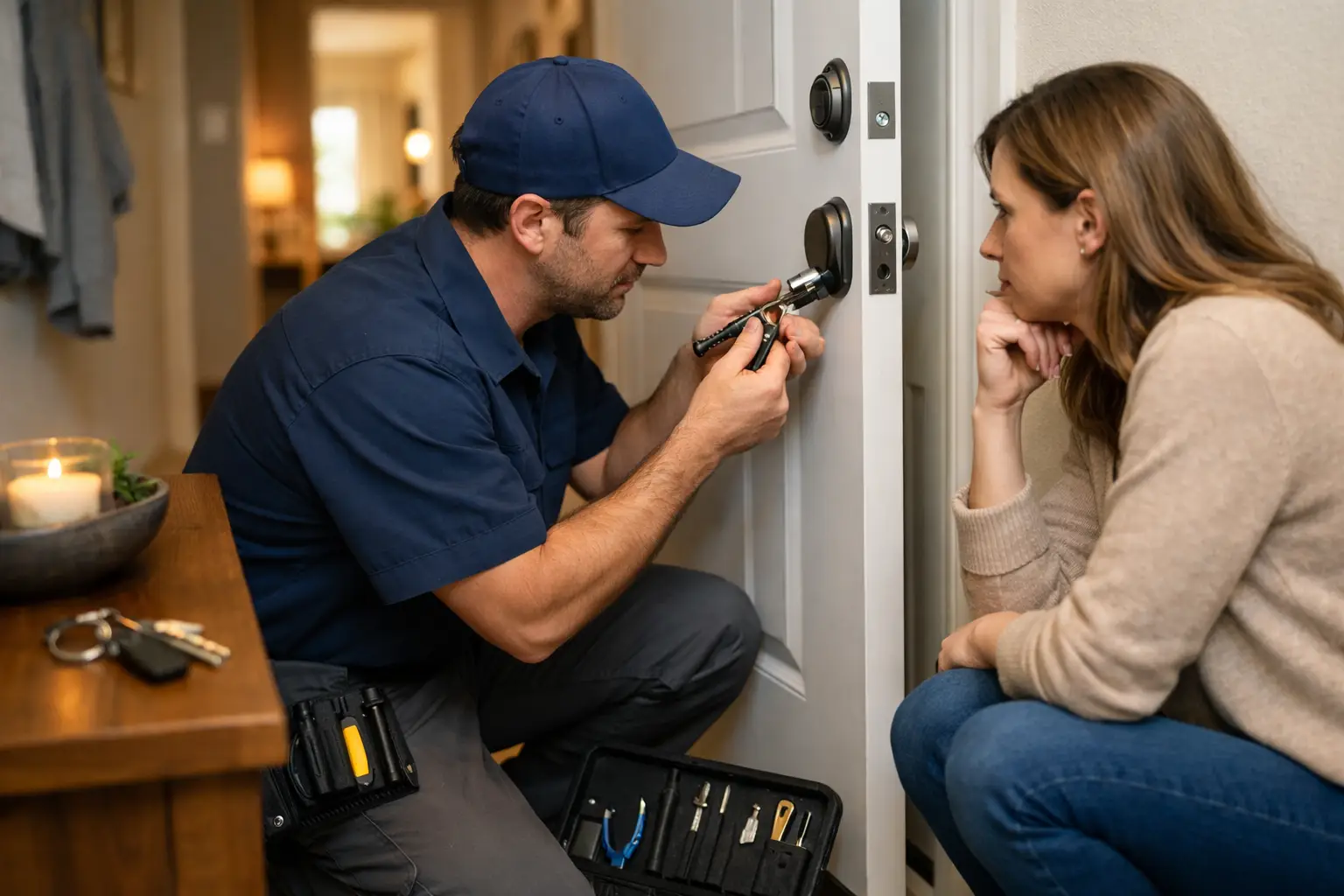
A snapped key usually happens at the worst possible moment - late at night, in the rain, or when you are trying to get the kids inside fast. If you need a locksmith for broken house key problems, the priority is simple: get back in safely without turning a bad situation into a damaged lock, broken door hardware, or a security risk.
A broken house key can leave part of the blade stuck inside the cylinder, make the lock impossible to turn, or jam the mechanism so the door will not open from either side. In some cases, the key breaks because it is worn down. In others, the lock itself is stiff, dirty, misaligned, or already failing. That is why the right response is not only removing the key fragment. It is making sure the lock still works properly once the piece is out.
When to call a locksmith for broken house key service
If part of the key is still visible, many people are tempted to grab tweezers or a knife and start digging. That can work in very limited situations, but it often pushes the broken piece deeper into the lock. Once that happens, extraction gets harder and the chance of cylinder damage goes up.
A locksmith for broken house key service is the right call when the key has snapped inside the lock, the door is locked and you cannot get in, the lock feels stiff before or after the break, or the key broke off and bent the cylinder. It is also the safer option if the door is your main entrance, the home is currently unsecured, or you are dealing with a tenant, child, or older family member who cannot be left waiting outside.
For homes in Vancouver and surrounding Lower Mainland communities, speed matters. A front door that will not lock or unlock properly is not just inconvenient. It affects safety, schedules, and peace of mind.
What a locksmith will actually do
The first step is assessing the lock, not just the broken key. A professional will look at how much of the key remains inside, whether the cylinder is under tension, and whether the door hardware is aligned. That quick inspection tells them whether a clean extraction is likely or if the lock has underlying wear.
In the best-case scenario, the broken piece is removed with a specialist extraction tool and the lock continues to work. If the cylinder is dry, dirty, or slightly misaligned, the locksmith may service the lock so it turns smoothly again. If the lock was already near failure, they may recommend repair or replacement instead of forcing a worn mechanism back into use.
That trade-off matters. Saving the existing lock can be the fastest and most affordable outcome, but only if the hardware is still dependable. If the break happened because the key was old and the lock is fine, extraction may be all that is needed. If the break happened because the lock was binding for weeks, replacing the lock may prevent the same problem from happening again in a day or two.
Entry without unnecessary damage
One of the biggest concerns during a lockout is whether the door will need to be drilled. In many broken key cases, no. A trained locksmith will usually try non-destructive methods first, especially on standard residential deadbolts and knob locks.
Drilling tends to be the last option when the cylinder is severely damaged, the key fragment cannot be removed cleanly, or the internal components have failed. The goal is always to restore access with the least disruption possible while keeping the home secure.
Why house keys break in the first place
Most people assume the key is the problem. Sometimes it is, but not always.
Keys often snap because of metal fatigue. A key that has been copied several times, used daily for years, or bent slightly in a pocket can weaken over time. Older keys can crack at the narrow points near the cuts or shoulder. When extra pressure is applied, they give way.
Locks also contribute. Dirt inside the cylinder, cold-weather stiffness, worn pins, rust, or a strike that no longer lines up properly can all make the key harder to turn. That extra resistance is what causes many breaks. If you had to jiggle, force, or pull back on the key recently, the lock was already giving you a warning.
Doors can be part of the issue too. Seasonal swelling, frame movement, and loose hinges can throw off alignment. In that case, the deadbolt may be taking pressure from the door frame, which makes the key feel sticky even though the cylinder itself is not the root cause.
What to do right after the key breaks
Stay calm and avoid twisting the remaining piece. If any part of the key is still sticking out, do not keep trying to turn it. That usually snaps it closer to the face of the lock and makes removal harder.
If the door is open, leave it open until the lock is checked. If the door is closed and locked, avoid spraying random household lubricants into the cylinder. The wrong product can gum up pins or trap debris. It is better to leave the lock as-is and have it assessed properly.
If this is your only working key, mention that when you call. It can affect what the locksmith brings and whether key cutting, rekeying, or full lock replacement should be done on site.
Information that helps speed up service
When you contact a locksmith, a few details can save time. Mention whether the door is locked or unlocked, whether any part of the key is visible, what type of lock is involved, and whether you have another entrance available. If the lock has been sticking for a while, say that too. It helps the technician prepare for more than a simple extraction.
For urgent residential calls across Vancouver, Burnaby, Surrey, Richmond, Coquitlam, Langley, Delta, Maple Ridge, North Vancouver, White Rock, West Vancouver, Abbotsford, and nearby areas, a 24/7 service matters because broken keys rarely happen during regular business hours.
Repair, rekey, or replace?
After the key is removed, the next step depends on the condition of the hardware.
If the lock is in good shape and the problem was a weakened key, you may only need a new key cut properly. If the lock works but feels rough, servicing or minor repair may be enough. If the cylinder is worn, the keyway is damaged, or the lock has a history of sticking, replacement is often the better long-term choice.
Rekeying can also make sense, especially if the broken key was lost in part, if you recently moved in, or if you are not sure who may still have copies. A broken key incident is often the moment homeowners realize their front door hardware is overdue for an update.
For landlords and property managers, the decision can be more practical. If the lock is older, tenant turnover is frequent, or the hardware has already needed service more than once, replacement may reduce future emergency calls.
Why fast service matters for home security
A broken key is not only a lockout issue. Sometimes the bigger problem is that the home cannot be secured afterwards. If the key snaps while locking the door from outside, you may not know whether the deadbolt is fully engaged. If it breaks from inside, you may be left with a door that will not lock at all.
That is why emergency residential locksmith service is about more than entry. It is about making sure the lock works correctly before the technician leaves. For local homeowners and renters, that can mean extraction, lock repair, rekeying, or a same-visit replacement depending on what the door needs.
NOW LOCKSMITH handles these urgent residential situations around the clock across the Lower Mainland, with service focused on restoring access quickly and securing the property properly.
How to reduce the chance of it happening again
A little prevention goes a long way. Replace worn keys before they start bending or catching. If the lock feels stiff, get it checked early rather than forcing it for another month. If you notice the door rubbing the frame or the deadbolt only turns when you lift the handle, alignment should be corrected before the cylinder takes the strain.
It also helps to keep a spare key in a safe place and make sure copies are cut accurately. Poorly copied keys often wear locks faster and increase the chance of snapping under pressure.
When a house key breaks, the temptation is to treat it like a small annoyance. In reality, it is often a sign that something in the lock, key, or door setup needs attention. Fast professional help gets you back inside, but the real value is knowing the same door will lock properly tonight.