




A car lockout can happen outside your home in Burnaby, at a Richmond shopping centre, or on the side of the road after a long shift. If you are searching for how to unlock a car door, the priority is getting back inside safely without scratching the vehicle, damaging the lock, or creating a more expensive repair.
Modern vehicles are not designed for improvised entry. Side airbags, electronic door modules, weather seals, and anti-theft systems can all be damaged by forcing a tool into a door frame. Start with the safest options first, then call an automotive locksmith when those options do not work.
How to Unlock a Car Door Safely
Before doing anything else, check whether there is an immediate safety issue. If a child, vulnerable person, or pet is locked in the vehicle, especially in hot or cold weather, call 911 right away. Do not wait for roadside assistance or try to force entry yourself when someone inside may be in danger.
If everyone is safe, take a breath and confirm the situation. Check every door, the hatch or trunk, and whether a window is partly open. Some vehicles allow the rear hatch to be opened independently, while others may have one door that did not lock fully. Do this gently. Pulling hard on a handle or repeatedly pressing a remote will not solve a mechanical fault and can make a weak component fail.
Next, look for your spare key or spare remote. It may be with a family member, at home, in a bag, or held by your workplace. This is usually the simplest solution, although it depends on how quickly someone can bring it to you. If you are far from home or stranded late at night, waiting for a spare may not be practical.
Try the Mechanical Key in Your Fob
Many push-button-start vehicles have a hidden mechanical key inside the remote fob. Look for a small release switch on the fob and slide it to remove the key. There is often a concealed key cylinder on the driver's door handle, sometimes behind a small plastic cover.
Use the key carefully and avoid twisting it aggressively. A key that has not been used in years may feel stiff because the lock cylinder has collected dirt or moisture. If it will not turn with normal, steady pressure, stop. Breaking the key inside the door creates a separate repair and can leave the vehicle exposed.
A successful mechanical entry may set off the alarm on some vehicles. That is normal. Once inside, place the fob in its required location or start the vehicle according to the owner's manual to silence the alarm.
Check the Remote and Vehicle Battery
If your fob buttons do nothing, the problem may be the fob battery rather than the vehicle. If you have a second remote and it works, replacing the first fob battery is likely the fix. A weak vehicle battery can also prevent power locks from responding, even when the fob itself is working.
Signs of a low vehicle battery include dim interior lights, no response from the horn, or a remote that seems to work only at very close range. Some vehicles have manufacturer-specific emergency procedures for a dead fob battery, such as holding the fob against the start button. Your owner's manual can confirm the correct process for your model.
Do not assume a dead battery makes forced entry necessary. An automotive locksmith can often gain entry without damage and assess whether the issue is the key, the door lock, the fob, or the vehicle battery.
When Roadside Assistance Makes Sense
Roadside assistance may be included with your auto insurance, vehicle warranty, credit card, or membership program. If you are in a safe location, have time to wait, and know your provider covers lockouts, it can be worth calling.
The trade-off is response time. During bad weather, rush hour, or a busy evening in the Lower Mainland, service queues can be long. Roadside providers may also have limited options for lost transponder keys, damaged locks, or key fobs that need programming. They may help with entry but not with the reason the lockout happened.
A local automotive locksmith is often the better choice when you need prompt entry, have lost all keys, have a broken key or key fob, or suspect a fault in the door lock. A qualified technician can handle more than a basic lockout and can help prevent the same problem from repeating.
What Not to Do During a Car Lockout
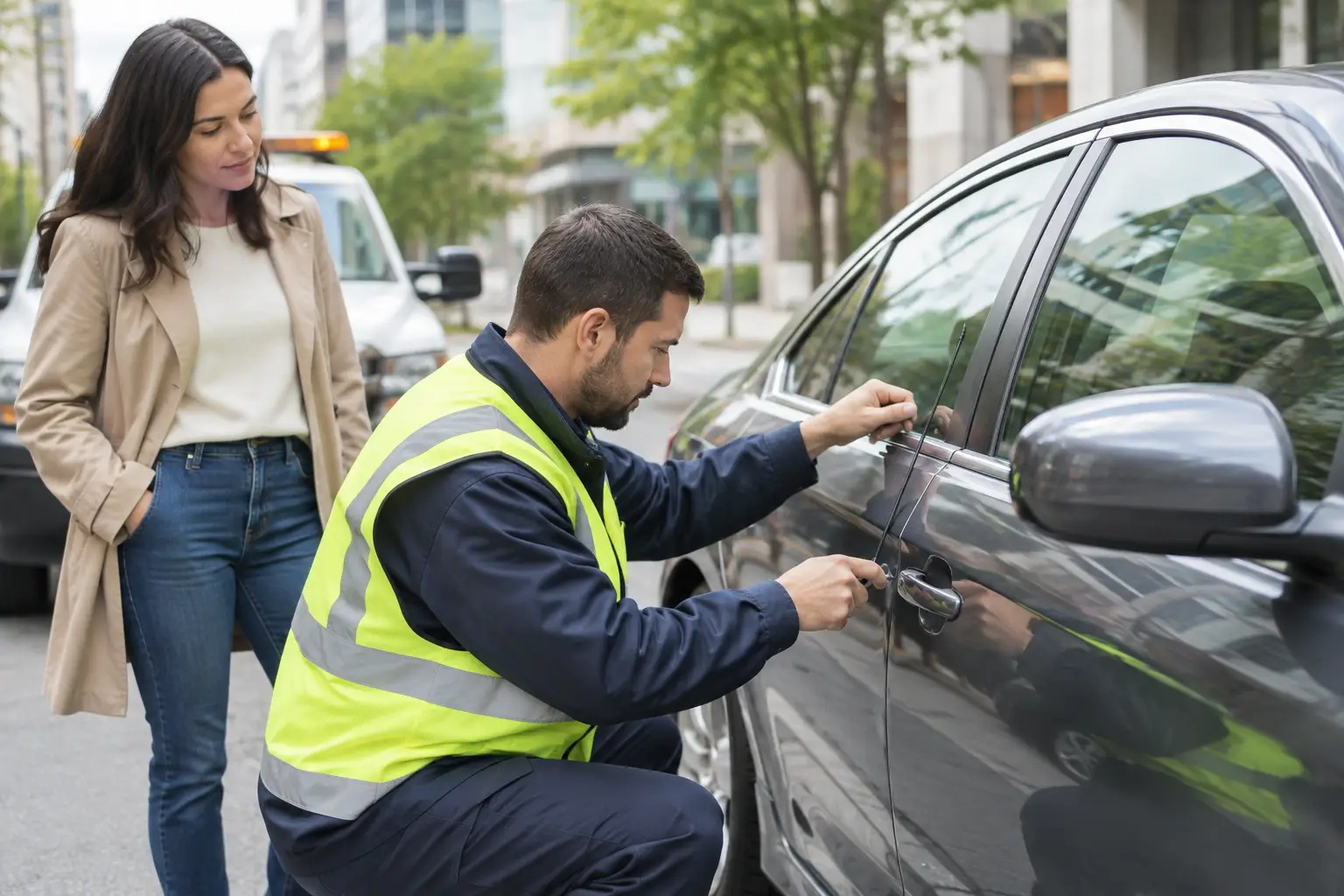
Online videos often show people using coat hangers, shoelaces, wedges, screwdrivers, or improvised "slim jim" tools. These methods are risky on virtually every modern vehicle. They can bend the door frame, tear weather stripping, scratch paint, damage wiring, interfere with side-impact components, or harm the lock linkage inside the door.
Avoid breaking a window unless emergency responders instruct you to do so because someone inside is in immediate danger. Replacing automotive glass is costly, and broken glass creates a safety hazard for passengers and pets. The same applies to prying at the top of a door. Even a small gap can permanently affect the seal, leading to wind noise, water leaks, and heat loss during a Vancouver winter.
Do not repeatedly cycle the lock with a failing key, either. If the key is bent, cracked, or catching in the cylinder, continued use can snap it. Set it aside and have it inspected before it becomes an after-hours emergency.
When to Call an Automotive Locksmith
Call a professional when the spare key is unavailable, the hidden mechanical key will not work, or the vehicle is locked with the keys visible inside. Professional assistance is also the right move if you have lost your only key, your fob has stopped communicating with the vehicle, or the door lock feels damaged.
For a lockout, the technician should verify that you are authorized to access the vehicle before beginning work. Have photo identification, registration, insurance documents, or another form of proof of ownership ready if possible. If the documents are inside the vehicle, explain that at the time of the call. This protects you, your vehicle, and the technician.
NOW LOCKSMITH provides 24/7 automotive locksmith support across Vancouver and nearby Lower Mainland communities, including Surrey, Burnaby, Richmond, Coquitlam, Langley, Delta, Maple Ridge, and North Vancouver. For an after-hours lockout, local availability matters: you need someone who can respond to the vehicle's location and use the right equipment for the job.
Give Clear Details When You Call
A faster, more accurate response starts with good information. State the vehicle's year, make, and model, where it is parked, whether the keys are locked inside or lost, and whether there is an urgent safety concern. Mention any unusual symptoms, such as a fob that stopped working after rain, a key that turns but does not open the door, or a door that will not latch.
If you drive a newer vehicle with keyless entry, tell the dispatcher that as well. The methods and tools used for a traditional metal key vehicle can differ from those required for a proximity fob or electronic key system.
Prevent the Next Lockout
Once you are back inside, take a few practical steps while the problem is fresh. Replace a weak fob battery, test your mechanical emergency key, and store a spare key where you can safely access it. For many households, that means leaving a spare with a trusted person rather than hiding one on the vehicle.
If your doors lock themselves unexpectedly, your remote only works intermittently, or a key has started sticking, arrange service before the issue becomes urgent. Small warning signs are easier and less stressful to address in a driveway than in a dark parking lot at midnight.
The safest answer is rarely a trick with a household tool. Protect the vehicle, confirm everyone is safe, and choose the quickest legitimate route back inside. That approach saves time now and helps keep a simple lockout from turning into a damaged door, broken window, or costly repair.