





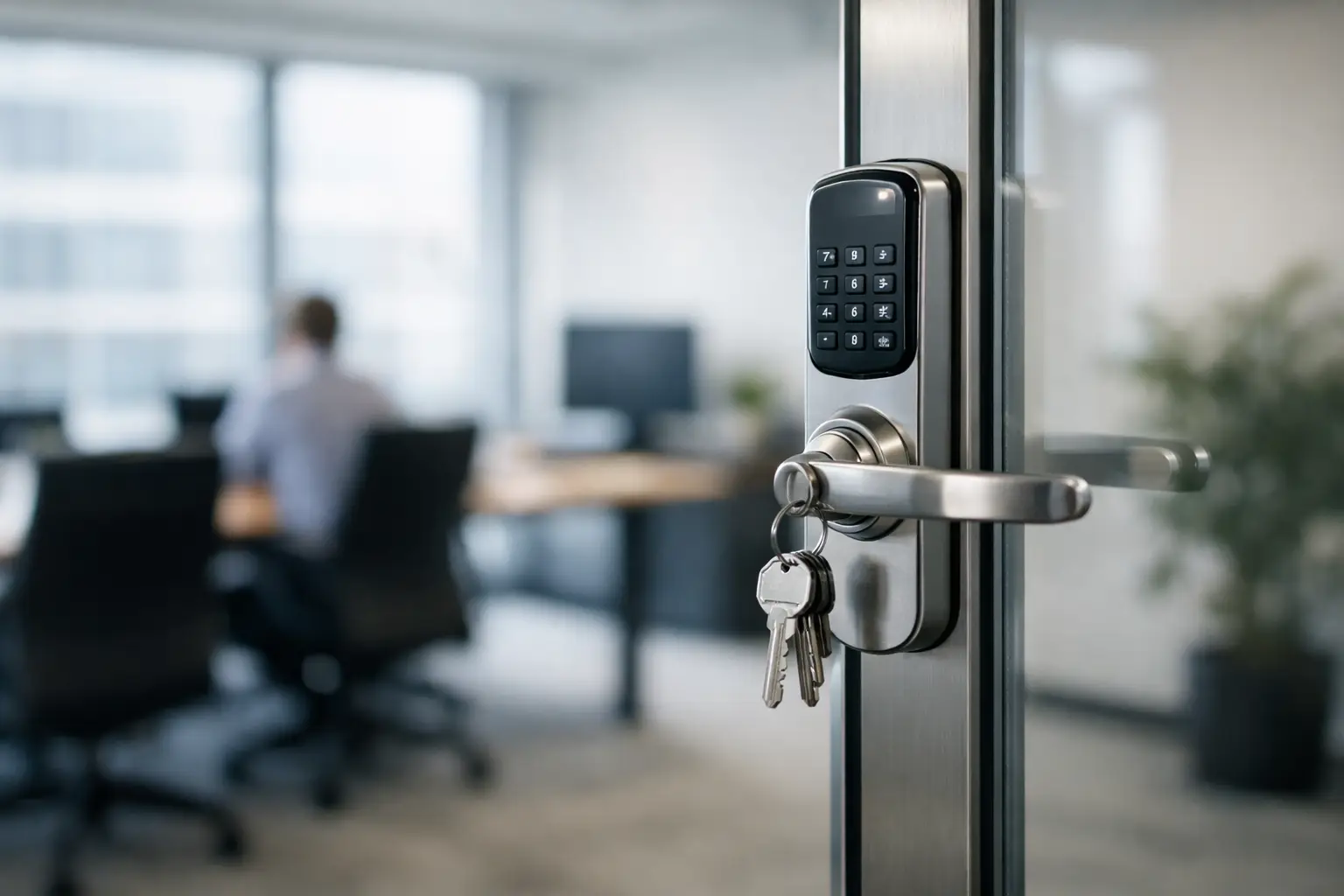
A lost office key, a former employee who still has access, or a lock that fails after closing can quickly become a security problem. Knowing how to choose office door locks starts with looking beyond the door itself. Your lock needs to protect people, equipment, records, and inventory while still allowing staff and visitors to move through the workplace without unnecessary delays.
For Vancouver-area offices, retail spaces, clinics, warehouses, and multi-unit commercial properties, the right answer depends on who needs access, when they need it, and what is on the other side of the door. A private office does not need the same protection as a server room, rear entrance, or shared tenant entrance.
Start With the Door’s Purpose
Before comparing lock brands or electronic features, identify what each door does. This is the fastest way to avoid overspending on low-risk areas or under-protecting critical ones.
A public-facing entrance needs controlled access without making clients feel unwelcome. A staff-only rear door needs strong protection against forced entry and reliable re-entry for authorized employees. Storage rooms, records rooms, cash offices, and IT rooms usually require tighter control because the loss from unauthorized access can be much higher.
Also consider how often the door is used. A lock on a busy office entrance may be opened dozens of times each day. A low-cost residential-grade lock can wear out quickly in that setting. Commercial hardware is built for heavier use and is usually the better choice for doors used by staff, customers, delivery drivers, or tenants throughout the day.
Choose the Right Type of Office Door Lock
There is no single best lock for every office. The right setup often combines mechanical locks, electronic access controls, and properly installed exit hardware.
Commercial deadbolts
A commercial deadbolt is a practical choice for exterior doors, private offices, and rooms that need stronger resistance to forced entry. Look for a high-quality deadbolt designed for commercial use, especially on doors facing alleys, loading areas, or less visible parts of the building.
Deadbolts work well when only a small group needs access. Their limitation is key control. If keys are copied, misplaced, or not returned when staff leave, the lock may need to be rekeyed to restore security.
Lever-handle locksets
Lever locks are common in offices because they are easy to operate and suitable for frequent use. They can be fitted with different functions, such as passage, privacy, storeroom, classroom, or office function locks.
For example, a storeroom function keeps the exterior lever locked at all times, while authorized users enter with a key or credential. A classroom function allows the exterior side to be locked or unlocked with a key, which can work well for meeting rooms or areas that need changing access during business hours.
Keypad and smart locks
Keypad locks allow entry with a code rather than a physical key. They can reduce the number of keys in circulation and make it easier to change access when a code is compromised. They are useful for small offices, staff rooms, storage areas, and spaces where several authorized people need access.
The trade-off is code management. If the same code is shared too widely or never changed, a keypad lock can create a false sense of security. Choose a system that supports individual user codes where possible, and remove old codes promptly.
Card, fob, and mobile access systems
Electronic access control is often the strongest option for businesses with multiple employees, changing schedules, or sensitive areas. Cards, fobs, and mobile credentials can be assigned to individual users, restricted by time, and deactivated without replacing the lock cylinder.
This is especially useful when employees leave, contractors need temporary access, or different teams require access to different rooms. Some systems also provide an entry record, which can help property managers and business owners investigate access concerns.
Electronic access is an investment, and it needs professional installation. The door, frame, power source, wiring, and emergency exit requirements all affect which system will work safely and reliably.
Consider Key Control Before Choosing a Keyed Lock
If you prefer traditional keys, key control matters as much as the lock itself. Standard keys can be copied easily at many hardware stores. For a busy office, that can make it difficult to know how many keys are in circulation.
Restricted key systems offer better control. Keys are harder to duplicate without authorization, and the business can keep an accurate record of who has been issued a key. This can be a smart choice for property managers, medical offices, professional firms, and businesses with high staff turnover.
A master key system may also be useful. It allows managers or designated personnel to access multiple doors with one key while individual staff members only have keys for the rooms they need. The design must be planned carefully. Too much master-key access can turn one lost key into a larger security issue.
Match the Lock to the Door and Frame
Even an excellent lock will not perform properly if it is installed on a weak door, loose frame, or damaged strike plate. When choosing office door locks, assess the full opening, not just the hardware.
Metal and solid-core wood doors are common in commercial spaces and can support a range of lock types. Glass storefront doors require specialized commercial hardware. Hollow-core interior doors may be suitable for low-security rooms but are not the right choice for protecting valuable equipment or confidential information.
Pay close attention to the strike plate and screws. A reinforced strike plate secured with long screws into the structural framing can improve resistance to forced entry. Door closers, hinges, latch alignment, and gaps around the door also matter. A lock that sticks, does not latch properly, or requires staff to force the door closed will create daily frustration and may eventually fail.
Do Not Compromise Emergency Exit Safety
Office security must never interfere with safe emergency exit. Exit doors may require panic hardware, fire-rated hardware, or specific locking arrangements depending on the building, occupancy, and local code requirements.
A door that is meant to be used for emergency egress must allow people to leave quickly without searching for a key, fob, or code. This is particularly important for offices with staff, customers, patients, or public visitors. Adding a deadbolt or access-control device to an exit door without understanding its function can create a serious safety issue.
Before changing locks on any exterior exit or fire-rated door, have the door and hardware assessed by a qualified commercial locksmith. If you lease the space, check with the property manager as well. Building rules, insurance requirements, and fire safety obligations may affect the available options.
Plan for Power Failures and Lockouts
Electronic locks are convenient, but every business should know what happens if the power goes out, the battery dies, or the access system stops communicating. Some locks use replaceable batteries, while others connect to building power and may include backup options.
Ask whether the lock will fail secure or fail safe. Fail secure means the door stays locked during a power loss, which is common for protecting secure areas. Fail safe means the door unlocks when power is lost, which may be required for certain exit applications. The correct choice depends on the door’s role and life-safety requirements.
Keep an emergency access plan. Designated managers should know who to call, where backup credentials are stored, and how to respond if a key breaks or a lock fails after hours. For urgent commercial lockouts, damaged locks, or security concerns, a 24/7 local locksmith can help restore access and secure the premises without waiting for the next business day.
Balance Security With Daily Workflow
The strongest lock is not always the best office lock if staff work around it. If employees prop open a secure door because the entry process is too slow, the system is not meeting the real need.
Think about shift changes, deliveries, cleaning crews, visitors, and employees working late. A small office may be well served by a commercial deadbolt and restricted keys. A larger office with several departments may benefit more from fobs or card access that can be managed as staffing changes.
It also helps to separate access levels. Not every employee needs access to every room. Restricting access to records, inventory, server equipment, and management offices limits risk without making the entire workplace difficult to use.
Get the Installation Right
Commercial lock installation is not a place to guess. Incorrect drilling, poor alignment, unsuitable hardware, or an improperly fitted strike can damage the door and reduce security. On fire-rated doors and exit doors, the wrong modification can also create compliance concerns.
A professional locksmith can assess the door type, traffic level, existing hardware, keying needs, and access requirements before recommending a practical option. NOW LOCKSMITH provides commercial lock installation, repair, rekeying, and emergency service across Vancouver and the Lower Mainland when your office needs help quickly.
The best office door lock is one your staff can use confidently, your manager can control easily, and your business can rely on after hours. Choose for the way your workplace actually operates, then keep the hardware maintained before a small problem becomes a late-night emergency.