





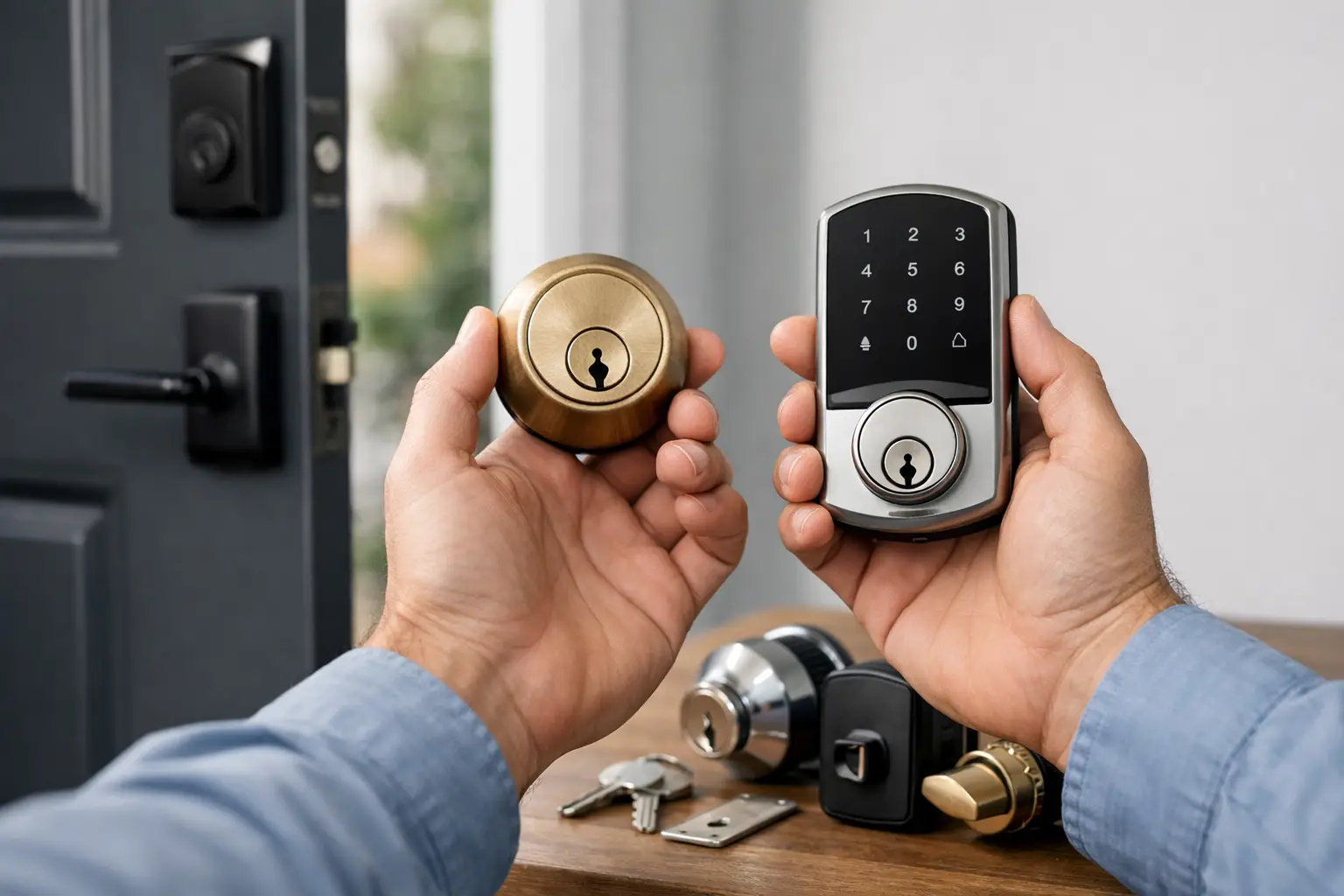
A front door lock usually gets attention only after something goes wrong - a stuck key, a loose deadbolt, a break-in nearby, or a move into a new home. If you are figuring out how to choose a front door lock, the right answer is not just “buy the strongest one.” It depends on your door, your daily routine, who needs access, and how much security you actually need.
For homeowners and renters across Vancouver and the Lower Mainland, weather, building type, and traffic through the entrance all matter. A lock that works well on a detached house in Maple Ridge may not be the best fit for a condo in Burnaby or a rental suite in Surrey. The goal is to choose a lock that fits the door properly, holds up over time, and makes access easier without creating new problems.
Start with the door before the lock
A high-quality lock cannot make up for a weak door, a loose frame, or poor installation. Before choosing hardware, look at the full entry setup. Check the door material, the thickness, the condition of the frame, and how solidly the strike plate is secured. If the door shifts, drags, or has visible gaps, the best lock in the store will still be working at a disadvantage.
This is especially important on older homes, secondary suites, and doors that have been repaired more than once. If the existing bore holes are worn out or misaligned, your lock options may be narrower than you expect. In those cases, the right choice may involve minor door work along with the new lock.
How to choose a front door lock by security level
Most residential front doors use a deadbolt, a handleset with a deadbolt, or a smart lock paired with a deadbolt. The deadbolt is still the core security component. If you are comparing options, one of the first things to check is the lock grade.
In Canada, many homeowners shop by brand or appearance first, but grade tells you more about durability and performance. A higher-grade lock is generally tested for more cycles and more force. For a front entrance that gets used every day, a better grade is worth it. It usually means smoother operation and a longer service life, not just stronger marketing.
That said, more security is not always the same as better fit. A heavy-duty lock on a light-duty door can be overkill, while a stylish lower-end lock on a frequently used main entrance may wear out quickly. If the door is your primary entry point, daily reliability matters as much as resistance to forced entry.
Deadbolt, smart lock, or handleset?
A standard single-cylinder deadbolt is still one of the most practical choices for many homes. It locks from the outside with a key and from the inside with a thumbturn. It is familiar, dependable, and usually easier to service than more complex hardware.
A handleset is often chosen for curb appeal, especially on detached homes and newer builds. It can look more substantial and improve the feel of the entrance, but the handleset itself is often secondary to the deadbolt above it. The deadbolt still does the real security work.
Smart locks appeal to households that want keyless entry, temporary codes, or app control. They can be very useful for busy families, rental properties, or anyone tired of managing spare keys. But smart convenience comes with trade-offs. Batteries need replacing, connectivity can fail, and not every smart model handles cold, wet weather equally well. If you go this route, choose one with a solid mechanical override and a reputation for reliable operation, not just flashy features.
Pick the right keyway and key control
Many people focus on the lock body and ignore the key system. That can be a mistake. If you lose track of who has copies of your key, your security is weaker than you think.
Basic residential keys are easy to duplicate. That may be fine for some households, but it is less ideal for shared homes, rentals, and situations where former tenants, contractors, or cleaners may still have access. If tighter control matters, ask about restricted or controlled key systems. These make unauthorized duplication harder and can be a smart upgrade for property managers and owners who need better oversight.
Rekeying is also worth considering if you are replacing a lock after moving in. In some cases, you do not need all-new hardware. If the existing lock is in good condition, rekeying may restore control at a lower cost. If the lock is worn, loose, or outdated, replacement makes more sense.
Don’t ignore fit, handing, and backset
One of the most common lock-buying mistakes is choosing a lock that looks right but does not fit the door properly. Residential locks are not all interchangeable. Door thickness, bore size, backset, and handing can affect what will install cleanly.
Backset is the distance from the edge of the door to the centre of the bore hole. If that measurement is wrong, the trim may sit awkwardly or the latch may not align correctly. Handing matters more on certain handlesets and electronic locks. If you choose the wrong configuration, installation can turn into a frustrating return trip.
This is where professional advice can save time. A lock should operate smoothly without forcing the key, pushing the door, or lifting the handle. If it only works when the door is pulled hard into place, the issue may be alignment, not the lock itself.
Think about your real access needs
The best front door lock for a retired couple, a family with teens, and a rental property owner may be three different products. Think through how the door is used day to day.
If several people come and go on different schedules, keyless entry may reduce lost keys and lockouts. If you want simple reliability with low maintenance, a quality deadbolt may be the better call. If deliveries, dog walkers, or short-term visitors need temporary access, a smart lock with user codes could be worth the extra cost.
For apartment and condo residents, building rules may also shape your options. Some strata properties limit what can be installed on common corridor doors or require specific fire-rated hardware. Before buying anything, make sure your lock choice fits the building’s rules and the door’s rating.
Weather resistance matters in BC
In Metro Vancouver and surrounding communities, exterior hardware deals with steady moisture for much of the year. A lock that corrodes quickly or develops stiffness after one wet season is not a good value, even if the upfront price looks attractive.
Look for finishes and hardware built for exterior exposure. This matters even more on doors without much overhang or protection from wind-driven rain. Coastal air, cold snaps, and repeated damp conditions can affect both keyed and electronic components. A front lock should not only be secure - it should keep working reliably in local conditions.
Installation quality can make or break the lock
Even a good lock can perform poorly if it is installed badly. Loose screws, shallow strike plate anchoring, and poor alignment reduce both security and lifespan. In many forced-entry situations, the failure point is not the cylinder. It is the frame, the short screws, or the weak connection at the strike.
That is why proper installation matters. A professional locksmith can check whether the deadbolt throws fully, whether the strike is reinforced, and whether the door closes under normal pressure. Small adjustments can make a major difference in both security and everyday use.
If you are upgrading after a break-in, a move, or repeated lock trouble, this is a good time to assess the whole entry. NOW LOCKSMITH often sees situations where replacing the lock alone would not solve the actual problem.
How to choose a front door lock without overspending
Price matters, but cheapest rarely means best value on a front entrance. A low-cost lock may be fine for a low-use interior door, but your main entry needs something built for frequent use and real exposure. The better question is where your money makes the biggest difference.
Usually, it makes sense to spend more on the deadbolt quality, the strike reinforcement, and the installation rather than purely decorative trim. If you want smart features, pay for reliability and support, not gimmicks. If your budget is tight, a well-installed quality mechanical deadbolt is often a stronger choice than a bargain smart lock.
The right front door lock is the one that fits your door, supports how you live, and keeps working when you need it most. If you are unsure, get the door assessed before you buy. A quick expert opinion can help you avoid the wrong hardware, wasted money, and another lock problem a few months from now.