



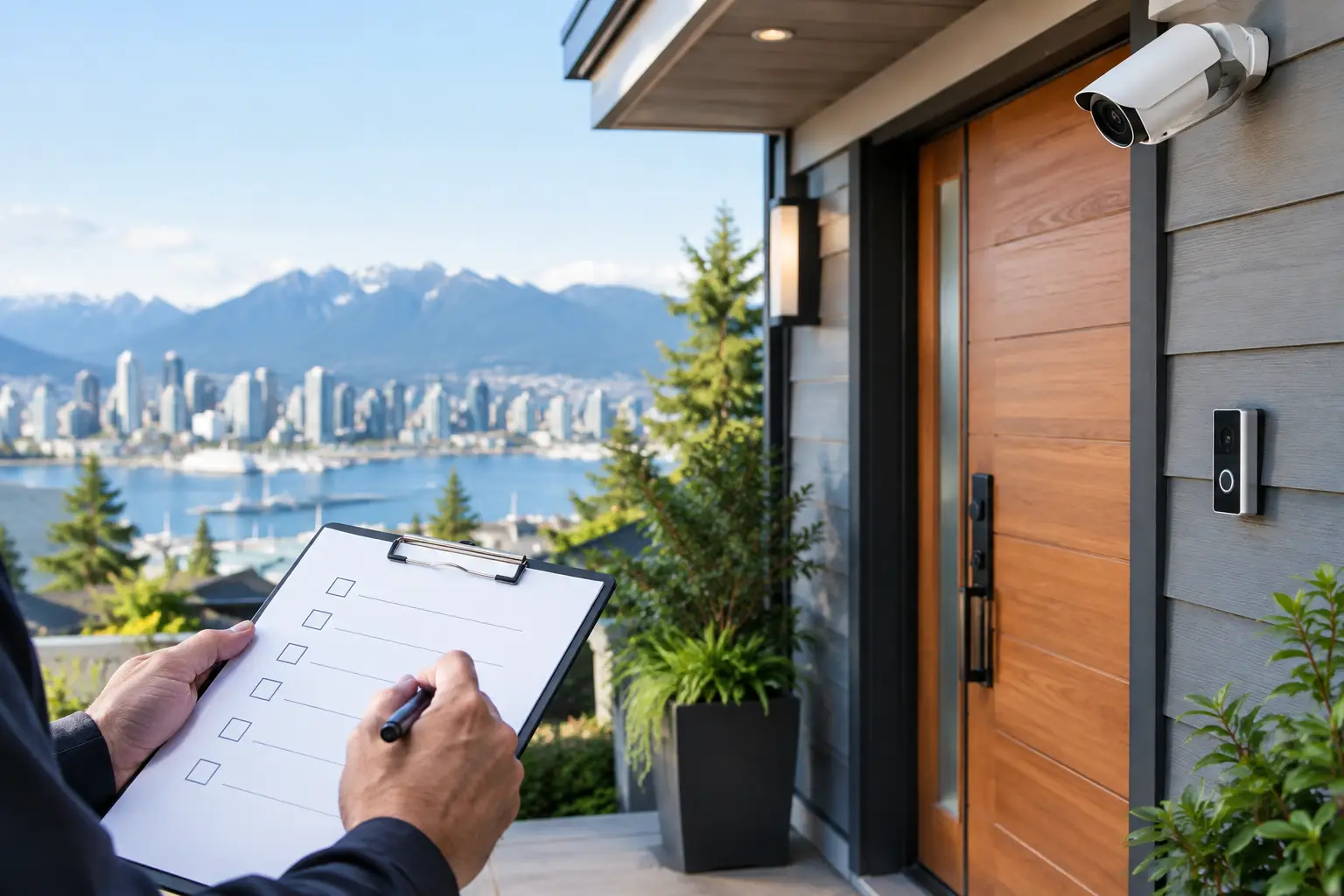
A home can look secure from the street and still have weak points that are easy to miss: a loose deadbolt, an old patio-door lock, a spare key left in the wrong place, or a window that no longer closes tightly. This home security checklist helps Vancouver-area homeowners, renters, and property managers identify the problems worth fixing before they become an emergency.
Security does not always mean adding expensive equipment. Often, the fastest improvement comes from repairing or upgrading the physical hardware that controls entry. Start with the doors and locks people use every day, then work outward to windows, lighting, keys, and routines.
Home Security Checklist: Start at Every Exterior Door
Walk around your property and test each exterior door as if you were arriving home late at night. This includes the front door, rear door, garage access door, side entrance, basement door, and any door between an attached garage and the home.
A locked door should not rattle, shift in the frame, or open a gap large enough to see light around the latch side. Check that the deadbolt extends fully into the strike plate when the door is closed. If it only catches partway, the issue may be poor alignment rather than the lock itself. Weather changes, settling, moisture, and worn hinges can all affect how a door closes in the Lower Mainland.
Look closely at the strike plate on the frame. Small screws that only bite into the trim do not provide the same support as longer screws secured into the wall framing. The door frame should also be solid, not cracked, soft, or split around the lock area.
Your exterior doors should have dependable deadbolts where appropriate, particularly on main entry points. A basic knob lock is useful for latching a door, but it is not a replacement for a properly installed deadbolt. For doors with glass near the lock, consider the door design and local fire-safety requirements before choosing a lock style. Every household needs a safe, practical exit plan in an emergency.
If a key turns roughly, the latch sticks, the deadbolt needs force to operate, or the lock cylinder feels loose, arrange a repair before the hardware fails. A lock that works only when you lift the door, pull it tightly, or jiggle the key is already telling you something is wrong.
Check Who Can Still Get In
Key control is one of the most overlooked parts of residential security. Think about every copy of your house key, garage key, mailbox key, fob, and keypad code. If you cannot confidently say who has access, it may be time to rekey or replace the locks.
Rekeying is often the practical choice when the existing lock hardware is in good condition but key access has changed. It can make old keys stop working without requiring every lock to be replaced. New homeowners should consider this shortly after taking possession, even if they received keys from the seller. Previous owners, contractors, cleaners, neighbours, tenants, or relatives may still have copies.
The same applies after a lost key, a break-in, a roommate move-out, a relationship change, or the return of an unaccounted-for key. Waiting until there is clear evidence of misuse can leave you reacting under pressure.
Avoid hiding spare keys under mats, planters, rocks, or nearby décor. These locations are familiar to anyone looking for an easy way in. A better option may be giving a spare to a trusted nearby person, using a securely installed key storage solution where suitable, or choosing a code-managed entry system. The right approach depends on who needs access and how often.
Inspect Windows, Sliding Doors, and Garage Entry
Windows deserve the same attention as doors, especially on ground-level rooms, basement suites, and accessible upper-level decks. Test each lock to confirm it engages and holds the window closed. A damaged latch, warped frame, or loose screen is not always a security issue by itself, but it can indicate that the window is not closing as intended.
Sliding patio doors need special attention. Check that the door locks fully and does not lift or slide when locked. The track, rollers, and latch can wear over time, making a once-secure door easier to force or bypass. A secondary security device may help, but it should not prevent anyone inside from leaving quickly during an emergency.
Do not overlook the garage. Many people secure the main house door carefully while leaving the garage service door or door into the home poorly protected. Keep the interior garage-to-house door locked when practical, particularly if tools, bicycles, vehicle remotes, or access equipment are stored in the garage.
For detached garages, sheds, and storage areas, use hardware that matches the value of what is inside. A thin hasp and inexpensive padlock may not be enough for expensive tools or equipment. At the same time, do not spend heavily on a lock while ignoring a weak door, frame, or hinge. Security works as a system.
Improve Visibility Around the Property
Good visibility makes it easier to notice unusual activity and harder for someone to work unseen. Walk your property after dark and identify entrances, gates, side paths, and parking areas that are poorly lit.
Motion-activated lighting can be useful near doors, driveways, garages, and side yards. Keep shrubs and hedges trimmed away from windows and entryways where possible. The goal is not to make a property feel exposed or unwelcoming. It is to reduce concealed areas around the places where someone could try to gain access.
Address numbers should also be visible from the street. This is helpful when you need emergency services or a locksmith dispatched to your location, particularly at night or during poor weather.
If you use security cameras or a video doorbell, test them regularly. Confirm that batteries are charged, recording settings are active, and the camera view is not blocked by plants, glare, or seasonal decorations. Cameras can support awareness, but they do not fix a weak lock or damaged door frame.
Review Daily Habits That Affect Home Security
A secure lock is only useful when it is used consistently. Before leaving or going to bed, make a simple habit of checking that exterior doors, accessible windows, garage doors, and patio doors are closed and locked.
Be cautious about posting travel plans publicly while away. Arrange for mail and packages to be collected, and consider having someone check the home if you will be gone for an extended period. A full mailbox, piled-up parcels, and an unlit home can signal that nobody is there.
For families, agree on what to do if a key is lost and who is authorized to share entry codes. For rental properties, keep records of key handovers and change access when tenancies change. Property managers may need a more formal key-control process, especially in multi-unit buildings or houses with several tenants.
Smart locks and keypad locks can be convenient for households that need to manage temporary access. They are not automatically the best option for every door. Consider battery maintenance, backup access, weather exposure, compatibility with the door, and whether all users can operate the lock confidently. Mechanical deadbolts remain a reliable option when properly installed and maintained.
Know When a Lock Needs Professional Attention
Some problems should not wait. Call for locksmith help if you have experienced a break-in attempt, lost keys with identifying information, a damaged lock, a key snapped in the cylinder, or a door that will not lock properly. Forcing a key or continuing to use failing hardware can turn a repair into a lockout.
A professional assessment is also useful when moving into a new home, upgrading an older entry door, improving security after a tenant turnover, or deciding whether to rekey versus replace multiple locks. The best solution depends on the condition of the hardware, the number of doors involved, and the level of access you need to manage.
NOW LOCKSMITH provides 24/7 residential locksmith support across Vancouver and surrounding Lower Mainland communities for urgent lockouts, lock repairs, rekeying, and new lock installation. If a lock is failing or access has been compromised, getting it addressed promptly can restore both security and peace of mind.
Set aside twenty minutes this week to walk through your home with this checklist. A sticking deadbolt or forgotten key copy may seem small now, but fixing it before you are locked out, moving homes, or dealing with a security concern is usually the easier choice.