





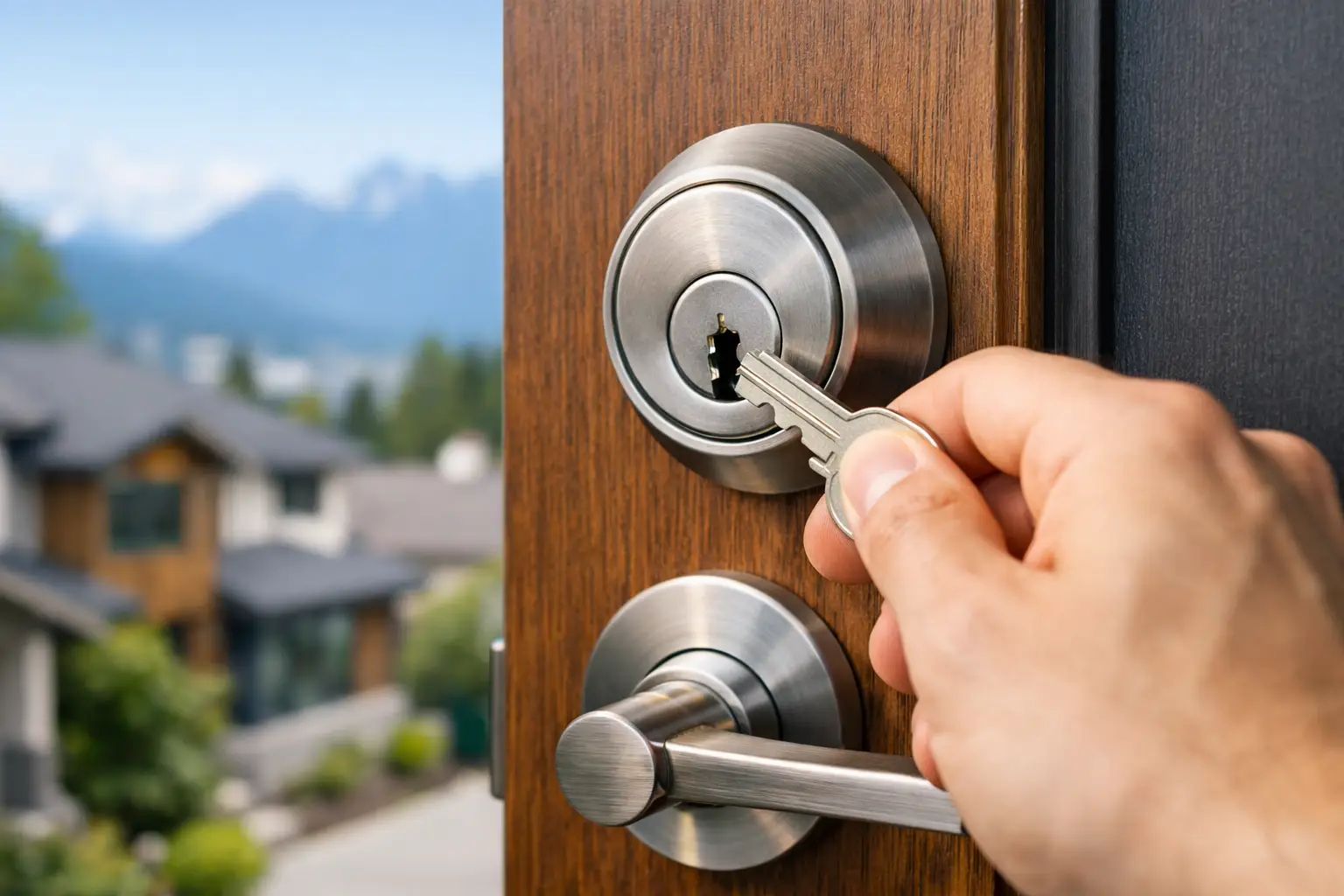
A deadbolt can look solid on the door and still leave a home vulnerable at its weakest point: the cylinder, strike plate, screws, door frame, or installation. This high security deadbolt review focuses on what Vancouver-area homeowners, renters, and property managers should actually look for before replacing a lock.
The right choice depends on the door, the building, who needs access, and the risks you are trying to reduce. A strong deadbolt is worthwhile, but it must work with a properly reinforced door and frame. Hardware alone cannot correct a warped door, loose strike, damaged jamb, or poor alignment.
What a High Security Deadbolt Review Should Test
A useful review should go beyond whether a lock feels heavy or has a popular name on the box. High-security performance comes from resistance to common forced-entry methods, controlled key access, dependable operation, and correct fitting on the door.
Start with the lock grade. In Canada, many residential deadbolts are assessed using ANSI/BHMA standards. Grade 1 is generally the strongest residential rating and is a sensible target for exterior doors where security is the priority. Grade 2 can suit lower-risk doors or rental units, while Grade 3 is typically basic hardware and may not be the best choice for a main entrance.
A grade is useful, but it is not the whole decision. It does not automatically mean the cylinder is highly resistant to picking, bumping, drilling, or unauthorized key copying. Ask what specific protections the model includes rather than assuming every Grade 1 deadbolt provides the same level of key control.
Cylinder and key control
The cylinder is where the key enters, and it deserves close attention. Standard pin-tumbler cylinders can be reliable, but they may offer limited resistance to manipulation or unrestricted key duplication. A higher-security cylinder may use security pins, hardened inserts, restricted keyways, or patented key systems that make copying keys more controlled.
Restricted keys are especially useful for rental properties, offices, strata-managed buildings, and homes with frequent service access. They help a property manager track who has keys and reduce the chance that a former tenant or contractor has copied one without permission. They are not a substitute for rekeying after occupancy changes, but they provide better control from the start.
Drill resistance matters as well. Look for hardened steel pins or plates protecting the cylinder and bolt area. These features are intended to slow destructive attacks, not make a door impossible to defeat. Given enough time and noise, most residential doors can be forced. The goal is to create meaningful delay and discourage opportunistic entry.
Bolt, strike plate, and door frame
A one-inch throw bolt is common on quality deadbolts. The bolt should extend fully into the strike plate and frame without binding. If it only catches partially because the door has shifted, its real-world performance drops sharply.
The strike plate and its fasteners are often more important than homeowners expect. A reinforced strike plate secured with long screws into the framing is far stronger than a small plate held in place by short screws that only grip the door jamb trim. On an exterior door, the strike should be fitted tightly, aligned correctly, and anchored into solid structure.
The door itself also needs to be considered. A high-security deadbolt on a hollow, cracked, or poorly fitted door will not provide the protection you expect. Older Vancouver homes may have settling, seasonal swelling, or previous repair work that affects alignment. Before installing upgraded hardware, inspect the jamb, hinges, weatherstripping, and gap around the door.
Comparing Common High-Security Deadbolt Options
There is no single best deadbolt for every property. The strongest option on paper may be inconvenient for a busy household, unsuitable for a fire-rated commercial door, or unnecessary for a low-risk secondary entrance.
A mechanical Grade 1 deadbolt with a restricted-key cylinder is often an excellent choice for a house, townhouse, or ground-floor suite. It has no battery dependency and offers straightforward operation in wet Lower Mainland weather. It also allows a locksmith to rekey the lock after a move, lost key, or staffing change without necessarily replacing all hardware.
A smart deadbolt can add convenience through codes, temporary access, audit history, or remote management. This can be helpful for rental owners and families who need to provide short-term access. The trade-off is that smart locks require battery maintenance, proper setup, and attention to physical security. A smart lock should still have a strong deadbolt, secure strike plate, and quality installation. Digital features do not compensate for weak door hardware.
A double-cylinder deadbolt requires a key on both sides of the door. It can prevent someone from reaching through nearby glass to turn the thumbturn, but it also creates an exit concern during an emergency. Local code requirements, door layout, and occupant safety must be considered before choosing this style. For many residential situations, reinforcing glass or changing the door configuration is safer than relying on a double-cylinder lock.
For commercial properties, the decision may involve master keying, restricted key systems, panic hardware, access-control compatibility, and staff turnover. A basic residential deadbolt is rarely the complete answer for a storefront, office, warehouse, or multi-tenant building. The lock should support the building's emergency exit requirements while giving the owner practical control over keys and access.
Installation Can Make or Break the Upgrade
Even a well-reviewed deadbolt can fail to deliver if it is installed poorly. Misaligned bolt holes cause sticking, encourage people to force the thumbturn, and place unnecessary stress on internal components. Loose mounting bolts, oversized holes, and a poorly fitted strike plate all weaken the system.
A professional installation begins with the door condition, not the lock package. The installer checks backset, door thickness, frame strength, deadbolt alignment, clearance around the trim, and whether the door closes naturally. If the door needs adjustment or the jamb needs repair, those issues should be addressed before the final lock fitting.
This is particularly important after a break-in attempt. Visible damage around the lock may be only part of the problem. The frame can split behind the strike plate, screws can pull out, and the door may no longer align. Replacing the deadbolt without repairing the surrounding structure can leave the same point of failure in place.
When to Rekey, Replace, or Upgrade
Rekeying is usually the right option when the hardware is in good condition but keys have been lost, a tenant has moved out, a relationship has ended, or access needs to be reset. The lock keeps its existing exterior hardware while the internal keying is changed.
Replacement makes more sense when a deadbolt is worn, damaged, low grade, difficult to operate, or incompatible with a new restricted-key system. It is also appropriate after a forced-entry attempt where the cylinder, bolt, door, or frame may have been compromised.
An upgrade is worth considering for a main entry door with basic builder-grade hardware, an exposed side or garage-entry door, a property with frequent key turnover, or a home where residents have concerns about unauthorized copies. For renters, approval from the landlord or property manager may be required before changing exterior locks. Keep communication clear and ensure the new hardware meets building requirements.
Practical Questions Before You Buy
Before selecting a deadbolt, confirm whether you need a single-cylinder, double-cylinder, mechanical, or smart model. Check the door thickness and backset, then look at the condition of the jamb and strike area. Consider who needs keys, whether keys should be restricted, and how quickly the lock can be rekeyed if access changes.
Also think about daily use. A lock that is technically secure but difficult for children, seniors, tenants, or staff to operate may create another problem. The best security upgrade is one that people will use correctly every day.
For homeowners and property managers in Vancouver and the Lower Mainland, NOW LOCKSMITH can assess the complete door and lock setup, not just replace the visible cylinder. A well-chosen high-security deadbolt, securely fitted to a sound door frame, gives you a practical layer of protection when it matters most.