





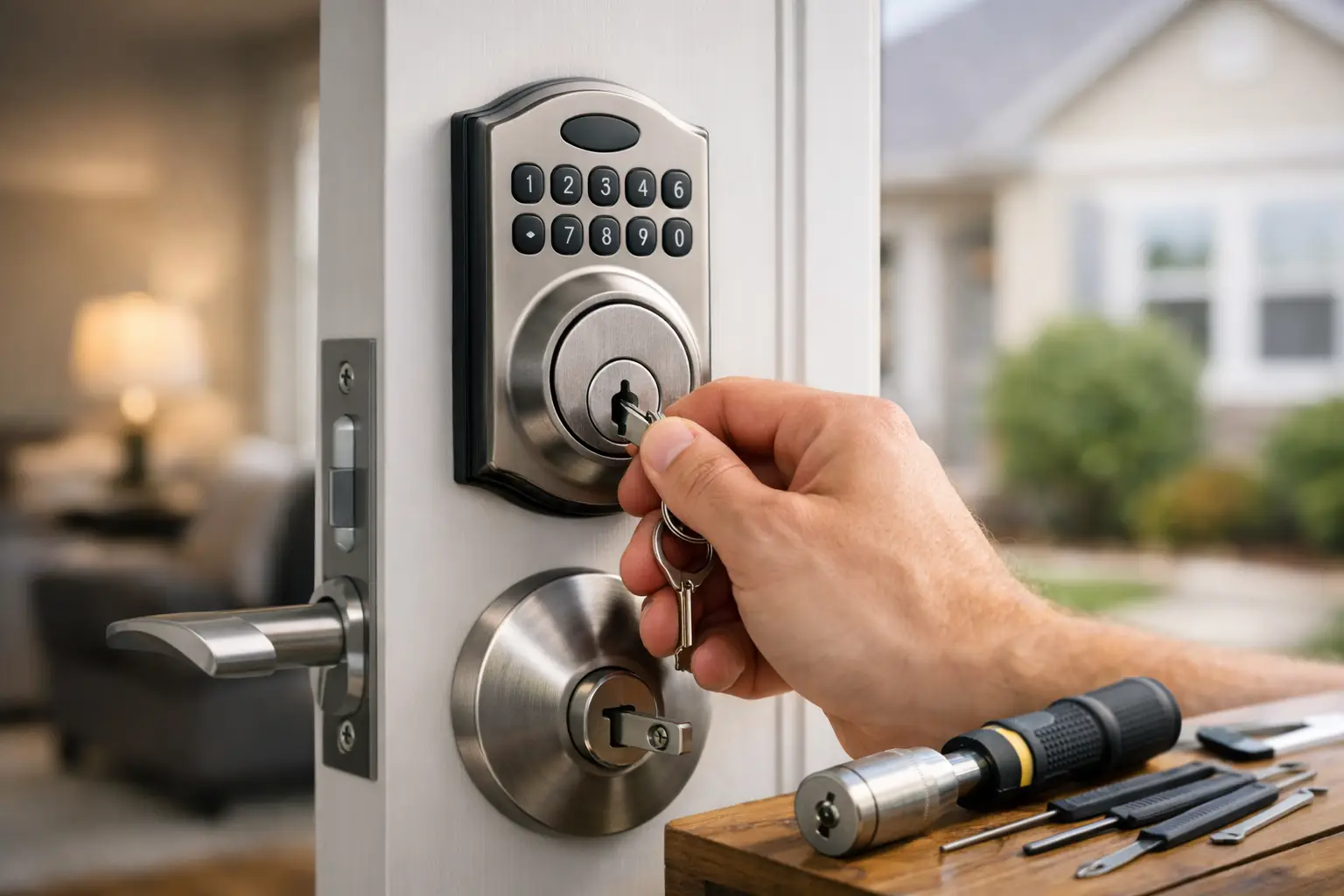
A front door can look perfectly secure while its lock is worn, poorly fitted, or keyed to people who no longer live in the home. This guide to residential lock upgrades helps Lower Mainland homeowners identify where their security is weakest and choose improvements that make practical sense for their property.
A lock upgrade is not always about buying the most expensive hardware. The right choice depends on your door construction, the condition of the frame, who needs access, and whether you are responding to a recent move, lost key, break-in attempt, or everyday concern about security. A professional locksmith can assess the full entry point, not just the lock on the door.
Start With the Doors That Matter Most
Most residential break-ins involve a door, which makes exterior entries the first place to focus. Your front door, back door, garage-to-home door, and any side entrance should all have dependable locking hardware. Basement doors, patio doors, and doors accessed from a shared hallway also deserve close attention.
Look beyond whether the deadbolt turns. A secure door needs a solid lock, a correctly installed strike plate, long screws that reach the framing, and a frame that is not split or loose. A strong deadbolt fitted to a weak jamb can still fail under force. If the door shifts, drags, or does not latch cleanly, fixing that alignment should be part of the upgrade.
For condos and rental properties, there may be building rules around exterior hardware or key systems. Check with the strata, landlord, or property manager before changing locks. That does not mean you have to accept outdated security, but it may affect which options are approved.
Rekeying vs. Replacing Your Locks
Rekeying changes the internal pins of a compatible lock so the old key no longer works. It is often the sensible choice after buying a home, moving into a rental, losing a key, or ending a tenancy. The exterior lock can stay in place if it is in good condition, but control over old keys is restored.
Replacing the lock is the better option when the hardware is damaged, loose, outdated, difficult to operate, or not suited to the door. It is also worth replacing locks when you want a higher-security cylinder, a new finish, a keyless entry option, or a matched set of locks throughout the home.
There is a cost difference, but rekeying is not automatically the best value. If a lock is near the end of its service life, rekeying it may only postpone a replacement. A locksmith can tell you whether the current hardware is worth keeping and whether it can be rekeyed to match other doors.
Choose a Deadbolt That Matches the Door
For most hinged exterior doors, a quality deadbolt remains a dependable foundation for home security. Single-cylinder deadbolts are common because they use a key outside and a thumb turn inside. They are convenient for quick exits, which matters during an emergency.
Double-cylinder deadbolts require a key from both sides. Some homeowners consider them for doors with nearby glass, but they can create a safety concern if a key is not immediately available during a fire or emergency. Local building requirements, the door layout, and household needs should guide this decision.
The deadbolt should have a substantial bolt throw and be installed at the correct depth in a solid door. Door material matters too. A hollow or deteriorated wood door may need repair or replacement before a better lock will provide its full benefit. Steel and fibreglass doors can also have installation limitations depending on their core and existing cutouts.
Upgrade the Strike Plate at the Same Time
The strike plate is the metal plate on the frame where the bolt enters. It is a small part with a major role. Standard short screws often only grip the trim, while longer structural screws can secure the plate into the wall framing.
A reinforced strike plate is especially useful on primary entry doors, but it must be installed accurately. If the bolt does not enter smoothly, homeowners may force the key or thumb turn and wear out the lock prematurely. Proper alignment protects both the hardware and the door frame.
Consider Smart Locks for the Right Reasons
Smart locks can be useful for busy households, rental suites, caregivers, and homeowners who regularly need to provide temporary access. Depending on the model, access may be controlled through a keypad, phone app, fob, or temporary code. That can eliminate the need to distribute spare keys.
The trade-off is that smart locks need more attention than a conventional deadbolt. Batteries need changing, users need to manage codes properly, and the lock must suit the door and existing bore holes. Some systems depend on a connected hub or internet service for remote functions, while others work at the door without a connection.
Choose a smart lock with a physical key override where appropriate, and keep the mechanical key accessible to trusted household members. Avoid sharing one code with everyone. Separate codes make it easier to remove access for a contractor, cleaner, guest, or former tenant without changing the entire system.
Smart hardware is not necessary for every home. A well-installed mechanical deadbolt with controlled keys can be the simpler, more reliable option for households that do not need remote access or code management.
Do Not Overlook Patio, Sliding, and Garage Doors
A residential security plan is only as strong as its easiest entry point. Sliding patio doors are often overlooked because they have a factory latch, but that latch may not be enough on its own. An auxiliary lock, properly fitted security bar, or anti-lift device can make the door more difficult to force or remove from its track.
Garage doors need attention as well, particularly if the garage connects directly to the home. The interior door between the garage and house should be treated as an exterior entry and protected with a suitable deadbolt or lockset, subject to fire-safety requirements. Keep remotes out of visible vehicles, and change keypad codes if a remote has been lost or stolen.
For secondary doors, the best solution depends on how frequently they are used. A rarely used basement door may benefit from a durable deadbolt and frame reinforcement. A side door used daily needs hardware that is secure but convenient enough that household members will actually use it correctly.
Improve Key Control After a Move or Security Concern
Keys are easy to copy, pass along, and forget about. After moving into a home, do not assume that only the seller has a key. Previous owners may have given keys to family, neighbours, contractors, dog walkers, cleaners, or tenants. Rekeying exterior locks is a straightforward way to reset access on day one.
The same applies after a lost key, stolen purse, separation, tenant turnover, or break-in attempt. If there is any uncertainty about who may have access, act promptly rather than waiting for a problem. For homes with several exterior doors, having compatible locks keyed alike can reduce the number of keys you carry without reducing security.
Avoid hiding spare keys under mats, rocks, planters, or outdoor fixtures. A secure key safe may be appropriate for some households, especially when caregivers or service providers need access, but it should be installed discreetly and managed carefully.
When a Lock Repair Is Enough
Not every issue calls for a full replacement. A lock that sticks may be affected by seasonal door movement, loose screws, a misaligned strike, or a worn key rather than a failed cylinder. Forcing the key can turn a manageable repair into a lockout or a broken key extraction.
Call for an assessment if you notice a deadbolt that will not extend fully, a handle that droops, a key that only works after repeated attempts, visible damage around the cylinder, or a door that no longer closes properly. Prompt repair can restore security and prevent a late-night emergency.
For homeowners across Vancouver and the Lower Mainland, NOW LOCKSMITH can provide residential lock repairs, rekeying, and new lock installation when security cannot wait. A qualified locksmith can also help after an emergency lockout without causing unnecessary damage to the door or hardware.
A Practical Upgrade Plan for Most Homes
If you are unsure where to begin, start with the front door and work outward. Inspect the deadbolt, latch, strike plate, frame, hinges, and key control. Then review the back door, garage entry, patio door, and any door that is less visible from the street.
Prioritize work based on real risk, not just appearances. A new designer handle will not solve a loose frame, while a modest deadbolt upgrade and reinforced strike plate can make a meaningful difference. If you have recently moved, rekeying should usually come before cosmetic changes.
The best residential lock upgrade is one that fits the door, supports safe exit from the home, and gives you confidence about who has access. If a lock feels unreliable or you are no longer certain where the keys are, arranging service now is easier than dealing with a failed lock when you are trying to get home.