





A key can change hands faster than most homeowners realize. A former tenant may still have one, a dog walker may have borrowed one years ago, or a contractor may have copied one during a renovation. This guide to residential lock rekeying explains how to restore control of your home’s keys without automatically replacing every lock on the door.
For homeowners, landlords, and property managers across Vancouver and the Lower Mainland, rekeying is often one of the quickest ways to deal with an access concern. It is practical, cost-conscious, and effective when the existing lock hardware is still in good working condition.
What residential lock rekeying means
Rekeying changes the internal pin configuration inside a lock cylinder so that the old key no longer works. The lock can remain on the door, but it will operate with a new key cut to match the revised configuration.
This is different from changing a lock. Replacing a lock means removing the existing hardware and installing a new lockset, deadbolt, or electronic option. Rekeying keeps the exterior hardware in place and changes who can gain entry with a key.
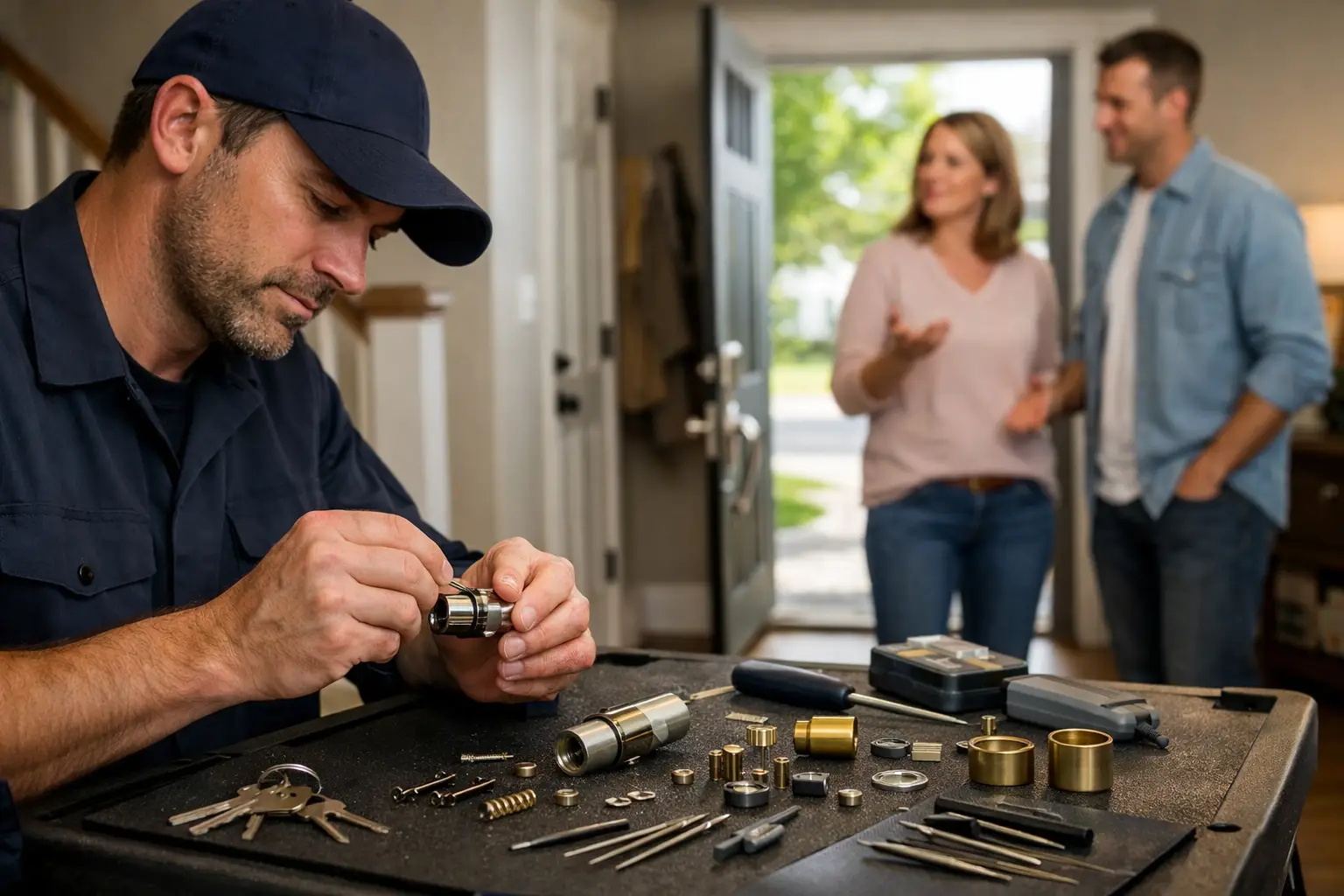
A professional locksmith removes the cylinder, disassembles the pin chamber, matches it to a new key, tests the operation, and reinstalls the lock. Done correctly, the door should lock, unlock, and latch smoothly with the new key while every old key becomes useless.
When should you rekey your home locks?
The strongest reason to rekey is uncertainty. You do not need proof that a key was copied or lost to make a sensible security decision. If you cannot account for all existing keys, rekeying gives you a fresh start.
Common situations include moving into a newly purchased home, taking possession of a rental property, ending a tenancy, losing a key ring, or separating from someone who had regular access. It also makes sense after completing renovations, especially if several tradespeople were given keys during the project.
Rekeying can be a good choice after a break-in attempt too, but only if the lock was not damaged and still provides appropriate protection. If the deadbolt is loose, the cylinder has been forced, the strike plate is compromised, or the hardware is old and low quality, replacement and repair may be the safer route.
For a landlord or property manager, rekeying between occupants is a straightforward way to manage access. The timing matters: arrange it as soon as the prior resident has fully vacated and before a new resident receives possession. This avoids confusion and helps maintain a clear key-control process.
Rekeying versus replacing locks: how to choose
Rekeying is usually the better option when the current lock is reliable, properly fitted, and suited to the door. It costs less than replacing good hardware and lets you eliminate old keys without changing the appearance of your entry door.
Replacement is worth considering when you want stronger security, different functions, or better convenience. A basic deadbolt may be due for an upgrade if it is worn, difficult to turn, mismatched with the door, or not providing the protection your household needs. You may also want to replace locks if you are moving to a smart lock, keyless keypad, or high-security restricted-key system.
There is also a middle ground. A locksmith may recommend rekeying a functioning lock while replacing a damaged or inferior lock elsewhere on the property. Front doors, garage-entry doors, side doors, patio doors, and detached garages should all be assessed based on their condition and how they are used.
Why key control matters as much as the lock
A solid deadbolt is only useful when you know who has the keys. Many households accumulate extra copies without keeping track: one in a drawer, one with a neighbour, one with a relative, and another that was never returned.
After rekeying, decide how many keys are genuinely needed and record who receives each one. Avoid hiding a spare key in an obvious spot outside. A trusted neighbour, secure lockbox, or carefully managed backup plan is usually safer than placing a key under a mat, planter, or loose rock.
If several exterior locks can be keyed alike, one key may operate them all. This is convenient for homeowners who use multiple entrances, but it has a trade-off. Losing that one key affects every matching lock. Some people prefer a separate key for a shed, basement suite, or side gate to limit access if a house key goes missing.
Can you rekey a lock yourself?
Some standard locks can be rekeyed with a compatible kit, patience, and the correct tools. However, the job is more exact than it first appears. Pins must match the new key precisely, springs are small and easy to lose, and an incorrectly assembled cylinder can jam or fail to turn.
The larger issue is compatibility. Not every lock can be rekeyed, and different brands use different keyways, pin systems, and cylinders. A kit that appears to fit may not give you a secure or reliable result. Older locks can also reveal hidden wear once they are removed from the door.
DIY rekeying may suit someone who understands lock hardware and is working on a spare cylinder. For a primary entry door, a rental turnover, or a situation involving lost keys, professional service removes the guesswork. A locksmith can identify the lock type, rekey compatible cylinders, flag hardware that should be replaced, and test the door as a complete system.
What a locksmith checks during a rekey service
A rekey appointment should involve more than cutting a new key. The locksmith will generally verify ownership or authorized access, inspect the lock and door, confirm whether the hardware can be rekeyed, and check that the latch and deadbolt engage properly.
Door alignment is particularly relevant in Lower Mainland homes, where seasonal moisture and normal settling can affect how a door closes. A deadbolt that requires lifting, pulling, or pushing the door to lock may have an alignment issue. Rekeying will change the key operation, but it will not correct a misaligned strike plate or a warped door.
The locksmith should also test every newly cut key, confirm that old keys no longer work, and review whether other entry points need attention. This is the right time to ask about garage access doors, patio locks, mailbox locks, and any doors shared with a secondary suite.
Rekeying after a lockout or lost key
A lockout and a rekey are related but separate services. If you are locked out, the immediate priority is safe entry without unnecessary damage. Once you are back inside, consider whether the missing key creates a security risk.
If your keys were lost near your home, attached to identifying information, or taken from a vehicle that may reveal your address, rekeying promptly is a sensible precaution. If the key was lost far from home with no identifying details, the risk may be lower, but it still depends on your comfort level and the type of property.
For urgent situations, NOW LOCKSMITH provides 24/7 residential locksmith support across Vancouver and surrounding Lower Mainland communities. Fast help matters when you are locked out late at night, but it also matters when you need to secure the home right after access has been compromised.
Do not forget every exterior entry point
Rekeying only the front door may leave other accessible entrances using the old key. Walk around the property and identify every lock that protects the home or provides a route into it. That can include a back door, side door, attached garage, basement entrance, gate, storage room, and mailbox.
Not every lock needs to use the same key, and not every lock needs rekeying. A patio door may use a different locking mechanism, while a garage door opener may need its own reset. The goal is not to create a complicated system. It is to make sure old access methods are no longer overlooked.
A practical rekeying plan for homeowners
Start by deciding why you are rekeying: a move, a lost key, an occupant change, or general peace of mind. Then identify all doors and locks that need attention, including any areas where a former keyholder could enter.
Before service, gather the keys you still have and make note of any locks that stick, feel loose, or do not latch correctly. Let the locksmith know if you want multiple locks keyed alike or if you prefer separate keys for specific areas. These details help ensure the finished setup matches how your household actually uses the property.
Once the work is done, distribute new keys deliberately and store any spare securely. If your circumstances change again, rekeying is usually easier and less costly than waiting until a key-related concern becomes an emergency.
A home should not feel uncertain because an old key might still be out there. When access has changed, taking action early gives you a clear, practical way to protect the people and property behind your door.