





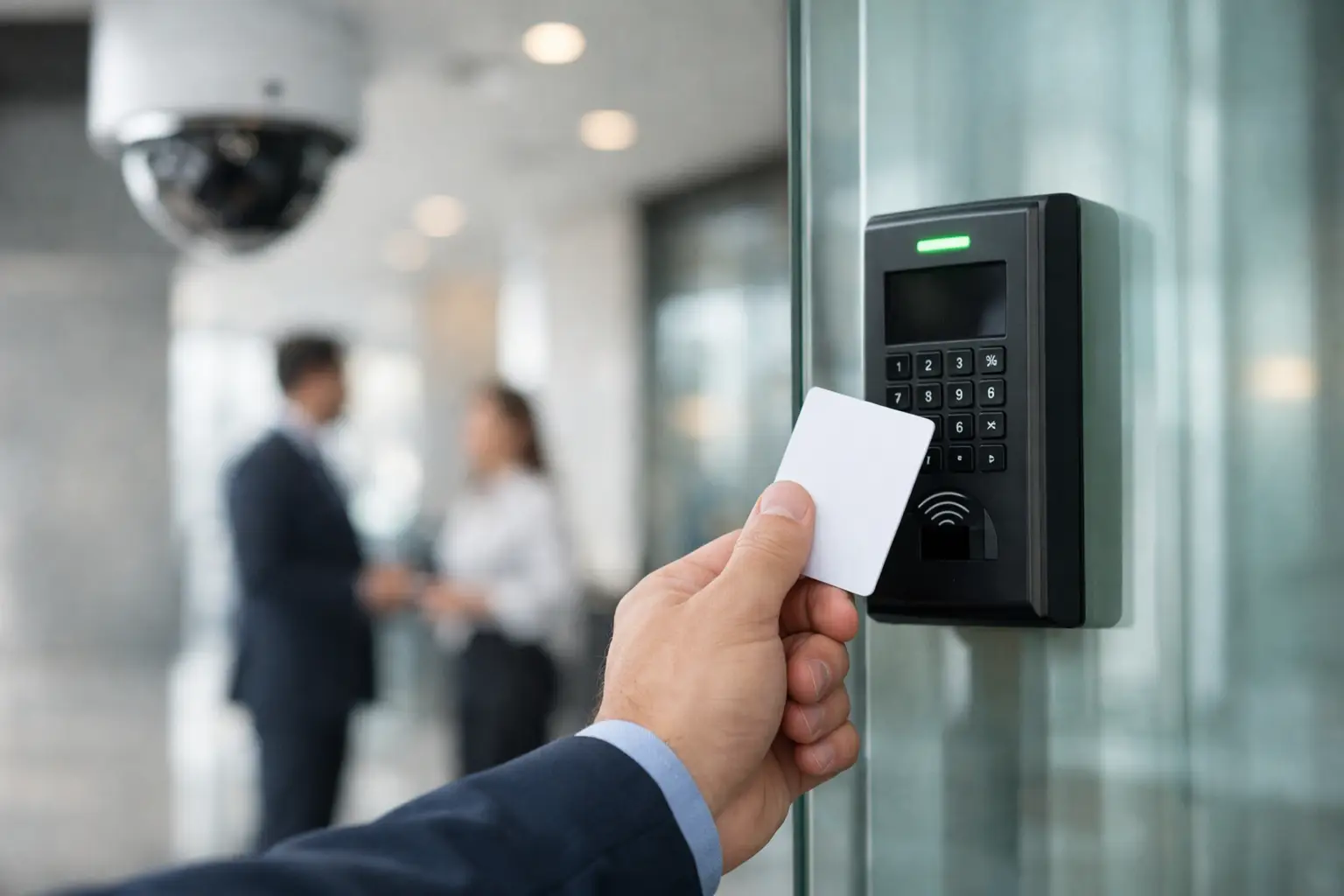
If you have ever had to rekey an office after a staff change, deal with a missing key, or respond to a back door that will not lock at closing, you already know why a guide to business access control matters. For Vancouver-area businesses, the right setup is not just about security. It is about who gets in, when they get in, and how quickly you can fix a problem when access breaks down.
Business access control sounds technical, but the goal is simple. You want the right people to enter the right areas at the right times, without slowing down daily operations. That can mean traditional keys, restricted key systems, keypad locks, card readers, fobs, smart locks, panic hardware, electric strikes, or a mix of several tools working together.
The best system depends on your building, your staff, your hours, and your risk level. A retail shop in Burnaby has different needs than a warehouse in Surrey, a medical office in Richmond, or a small professional office in Coquitlam. There is no single setup that fits every property, and that is where many businesses make expensive mistakes.
What business access control really covers
Access control is broader than the front door. It includes exterior entry points, interior offices, storage rooms, server or IT closets, staff-only areas, after-hours access, and emergency exit paths. In many businesses, weak points are not the main entrance. They are side doors, shared tenant entrances, delivery doors, and older locks that no longer match current use.
A good system should answer a few basic questions. Who needs access? Which doors matter most? What happens if a key is lost or an employee leaves suddenly? How fast can you restore security after a problem? If your current setup makes those answers unclear, it is probably time to review it.
A practical guide to business access control options
Traditional keyed locks still have a place in commercial security. They are familiar, cost-effective, and often the right choice for lower-risk doors or smaller businesses. The issue is control. Standard keys can be copied, shared, or lost without any record. If staff turnover is frequent, that becomes a real liability.
Restricted key systems give you more control without fully moving into electronics. Key duplication is limited, and master key structures can be designed so managers, cleaners, and staff each have the access they need. For many offices and mixed-use buildings, this is a strong middle-ground option. It is simpler than a fully electronic system, but much easier to manage than ordinary keys.
Keypads and smart locks can work well on select doors, especially where code changes are easier than recovering physical keys. But convenience comes with trade-offs. Codes can be shared. Batteries need maintenance. Some products are better suited to light commercial use than heavy daily traffic. A business that sees constant employee and customer movement needs hardware built for that level of use.
Card, fob, and credential-based systems offer more detailed control. You can assign access by person, by door, and by schedule. If someone loses a credential, you deactivate it instead of changing the whole lock. That saves time and can reduce long-term costs, especially in businesses with many staff members or multiple entry points.
For higher-security sites, electronic systems can also create an audit trail. That matters if you need to know who entered a room and when. But not every business needs that level of reporting, and not every building is easy to wire for it. In older commercial properties across the Lower Mainland, installation conditions can affect what is practical.
How to choose the right setup for your site
Start with how the property is actually used, not how you wish it were used. If employees enter through the back, that door deserves just as much attention as the front. If deliveries happen early, your system has to support that routine safely. If contractors come and go, temporary access needs to be easy to issue and easy to remove.
Think in layers. The exterior perimeter is the first layer. Interior restricted areas are the second. Sensitive assets such as cash rooms, records rooms, medicine storage, or equipment areas may need a third layer. A common mistake is spending heavily on one impressive front entry system while leaving secondary doors protected by weak or failing hardware.
Traffic volume matters too. A small office with six employees can usually work with simpler hardware than a busy storefront or multi-tenant commercial unit. Heavy-use doors need commercial-grade locks, closers, hinges, and exit devices. If the door itself is misaligned or damaged, even a high-quality lock may not perform properly.
Common problems businesses run into
One of the biggest issues is patchwork security. A business grows over time, different contractors change different locks, and eventually nobody is sure which keys open what. That creates confusion during staff changes and emergencies. It also increases the chance that old keys are still circulating.
Another problem is choosing convenience over reliability. Consumer-grade smart locks may look attractive, but they are not always designed for busy commercial doors. A lock that works fine on a quiet interior office may fail early on a main staff entrance used dozens of times a day.
Then there is emergency planning. Access control is not only about keeping people out. It must also allow safe exit during a fire or other emergency. That is why door hardware, panic bars, closers, and code compliance all matter. Security and life safety have to work together.
When rekeying is enough and when it is not
Not every business needs a full system replacement. In some cases, rekeying is the right move. If the main problem is lost keys, staff turnover, or uncertainty about who still has copies, rekeying can restore control quickly. It is often the fastest and most cost-effective fix for a smaller property with otherwise sound hardware.
But rekeying has limits. If your business needs time-based access, staff-specific credentials, audit tracking, or easier control across multiple doors, you may have outgrown a key-only setup. The same is true if your locks are worn, your door hardware is failing, or your current system causes frequent lockouts and service calls.
Why installation quality matters as much as the hardware
A well-chosen lock can still fail if it is installed on a warped door, paired with the wrong closer, or fitted without proper alignment. In commercial settings, small errors lead to daily frustration. Doors stick, latches do not catch, strikes wear out, and staff begin propping doors open to avoid the hassle. At that point, the security plan on paper no longer matches what happens on site.
Good access control should feel dependable in daily use. Staff should not need workarounds. Managers should not have to guess whether a lock will hold after hours. When hardware, doors, and frames are all working together, the system is easier to trust.
Planning for lockouts, failures, and after-hours issues
Even the best system can fail at the worst time. Batteries die. Keys snap. Credentials are lost. Doors jam just before opening or right after closing. For a business, that means lost time, delayed staff access, and in some cases lost revenue.
That is why support matters as much as selection. If a lock or access point fails after hours, you need a path to restore entry and security quickly. For many commercial clients, especially those operating late or early across Vancouver and surrounding cities, 24/7 locksmith support is not a luxury. It is part of the access control plan.
NOW LOCKSMITH works with businesses that need both immediate lock service and practical commercial security upgrades, whether that means repairing a failed lock, rekeying after a staffing change, or improving how access is managed across the property.
What to ask before you change your system
Before you invest in new business access control, ask a few grounded questions. Are you trying to solve a security risk, a key management problem, or a daily operational headache? Do you need stronger hardware, better key control, or more flexible user access? Are your highest-risk doors actually the ones getting the upgrade?
It also helps to think about the next two to three years. If your team is growing, if turnover is high, or if you expect to add restricted areas, build for that now. A cheaper short-term fix can become expensive if it has to be replaced too soon.
The right access control setup should make your business easier to run, not harder. When entry is controlled, hardware is reliable, and help is available when something goes wrong, you spend less time reacting and more time focusing on the work in front of you. That is usually the clearest sign you chose well.