



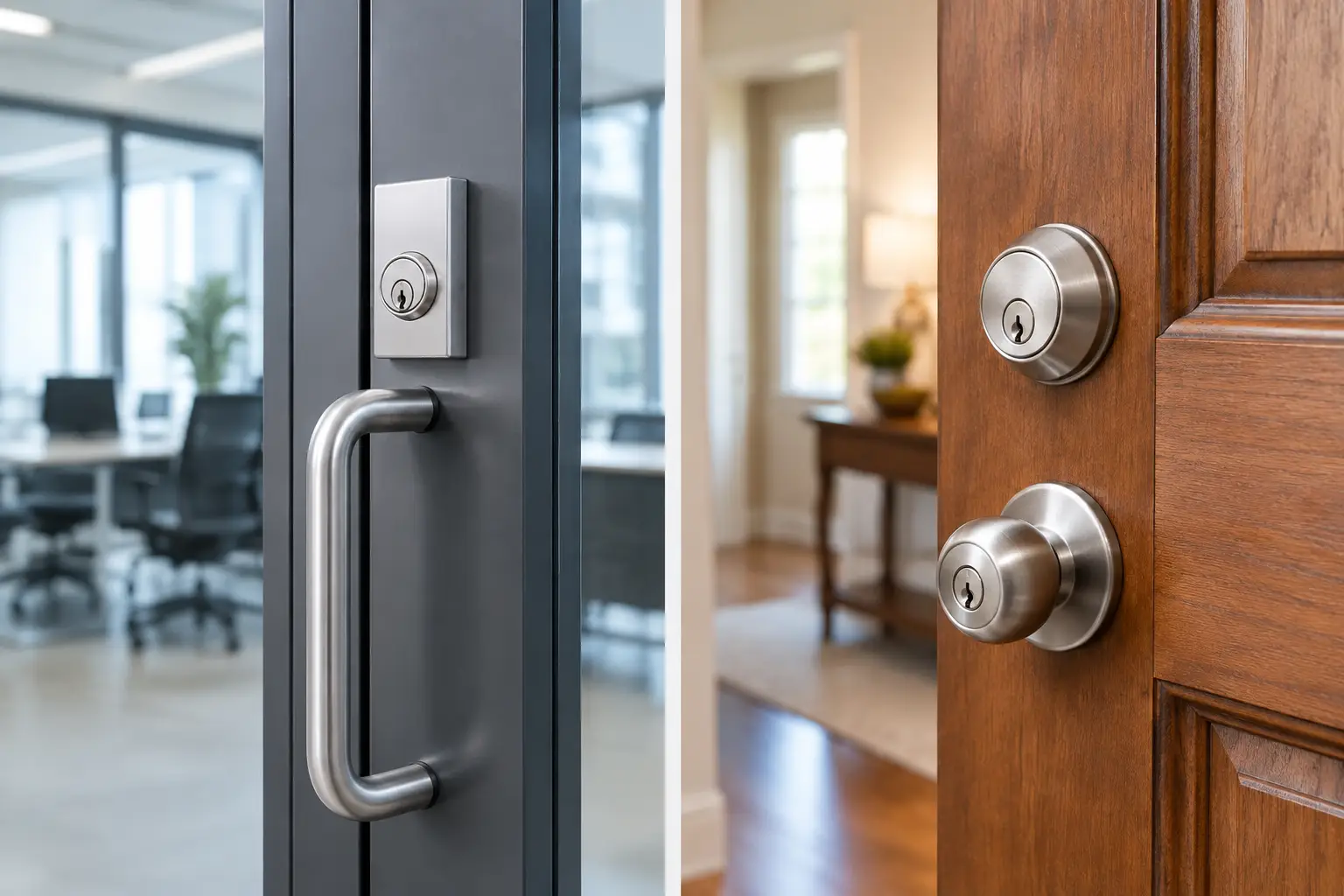
A front-door lock may look similar whether it is installed on a house, office, or retail unit, but commercial locks vs residential locks are built for very different demands. A family home usually needs reliable everyday security and convenient entry. A business may need to control staff access, withstand constant traffic, meet fire-code requirements, and protect inventory, equipment, or confidential information.
Choosing the wrong hardware can create expensive problems. A residential-grade lock on a busy storefront door may wear out early or fail when the door is under pressure. On the other hand, installing an overly complex commercial system on a private home can add cost without improving practical security. The right choice depends on the door, the people using it, and what is at stake if access is lost.
Commercial Locks vs Residential Locks: The Core Difference
Residential locks are designed primarily for lower-traffic exterior doors. They focus on keeping a home secure while allowing household members to enter easily with keys, keypads, or smart-lock credentials. Most are installed on single-family homes, condos, suites, garages, and interior doors.
Commercial locks are designed for higher use, more users, and stricter operating requirements. They are common in offices, warehouses, apartment common areas, strata buildings, clinics, restaurants, retail stores, and industrial properties. The hardware must often handle repeated opening and closing throughout the day, while allowing an owner or manager to control who has access.
That does not mean every business needs the most expensive lock available. A small professional office with one exterior door has different needs than a multi-tenant building or busy shop. A qualified locksmith can assess the door, frame, hinges, traffic level, and existing hardware before recommending a solution.
Durability and Door Hardware Requirements
The biggest practical difference is duty rating. Commercial door hardware is made for frequent use. Lever handles, door closers, panic bars, mortise locks, and commercial deadbolts are built to tolerate repeated cycles and stronger forces than typical residential hardware.
Residential locks are suitable for normal home use, but they are not intended for dozens or hundreds of entries every day. A residential latch may become loose, misaligned, or difficult to operate sooner when used on a customer-facing door. This can lead to lockouts, a door that will not latch properly, or a security gap after business hours.
The door itself matters just as much as the lock. Many commercial doors are steel, aluminum, glass storefront systems, or fire-rated wood doors. Their lock preparation, backset, thickness, and frame design can differ from a residential wood door. Forcing the wrong lock onto the door can weaken the installation or damage the hardware.
Lock Grade Is Not the Whole Story
Lock grades can help compare strength and durability, but they are only one part of the decision. A high-quality deadbolt cannot compensate for a weak strike plate, loose hinges, a damaged frame, or a door that does not close squarely.
For a commercial property, the complete opening should work together: lock, latch, closer, hinges, strike, frame, and access system. If one component is failing, the door may become hard to secure or impossible to open at the worst time.
Access Control and Key Management
Homes generally have a small number of users. A homeowner may give keys to family, a tenant, a cleaner, or a trusted neighbour. A keyed deadbolt, keypad lock, or smart lock often provides enough control.
Businesses have a more complicated access problem. Staff may change, contractors may require temporary access, and managers may need to secure certain rooms differently from others. Commercial locks can support restricted key systems, master keying, keyless entry, card or fob access, and audit-capable electronic systems.
Master keying can be useful in commercial settings because it allows selected keys to open specific doors while a manager key opens multiple areas. However, it must be planned carefully. Poorly designed master key systems can create unnecessary access risks or make future changes difficult.
Electronic access control is helpful when keys are frequently lost or staff turnover is high. Instead of rekeying every affected door after an employee leaves, access can often be removed from a fob, card, or code. Still, electronic systems require proper installation, power planning, programming, and ongoing maintenance. They are not always the best option for a small property with simple access needs.
Safety Codes and Emergency Exit Needs
Commercial properties often have requirements that do not apply to a typical home. Exit doors may need panic hardware so occupants can leave quickly during an emergency. Fire-rated doors must retain approved hardware and cannot be modified carelessly. Some buildings also require door closers, accessible lever handles, or specific locking arrangements.
A common mistake is adding a deadbolt or secondary lock to a commercial exit door without considering safe egress. If people cannot exit easily from the inside, the door may create a serious safety issue. The same concern applies to gates, rear exits, and doors in restaurants, warehouses, and public-facing businesses.
Residential properties can also have safety concerns, especially rental suites and multi-family homes. But commercial hardware decisions are more likely to affect employees, customers, tenants, and emergency evacuation procedures. When in doubt, have the opening inspected before changing the lock.
Security Needs Are Different Too
A residential exterior door usually needs protection against opportunistic break-ins and unauthorized entry. A quality deadbolt, reinforced strike plate, properly fitted door, and controlled key access can provide a strong foundation. Homes with frequent deliveries, short-term occupants, or multiple residents may benefit from a keypad or smart lock that allows codes to be changed.
Commercial security often involves more targeted risks. A retail business may need to protect cash, stock, and a rear entrance. An office may need to secure files, server rooms, or staff-only areas. A property manager may need durable locks across multiple units and a way to respond quickly after a tenant move-out.
Some commercial locations need added protection such as high-security cylinders, restricted keys, access control, door alarms, or reinforced storefront hardware. But higher security should match the actual risk. Installing costly hardware without addressing poor lighting, weak doors, or uncontrolled key copies may not solve the real problem.
When Residential Hardware Can Work at a Business
There are limited cases where residential-style hardware may be suitable. A low-traffic home office, private storage room, or small secondary door may not need heavy commercial equipment. The lock must still fit the door correctly and must not interfere with emergency exit requirements.
However, a main entrance, shared building door, storefront, office entry, or high-traffic gate should generally use commercial-grade hardware. These openings experience more wear and carry greater responsibility if they fail. Saving money on the initial installation can cost more later in repairs, lockouts, lost business time, or security incidents.
When to Repair, Rekey, or Replace a Lock
A lock does not always need replacement. Rekeying is often the right response after lost keys, a tenant change, employee turnover, or a concern that someone may still have a copy. The lock remains in place, but the old key no longer works.
Repair may be possible when a lock sticks, a latch does not catch, a key turns roughly, or a door has shifted out of alignment. These issues can sometimes be corrected by adjusting the strike, repairing the lock, or servicing the door hardware.
Replacement is usually the better option when the lock is severely worn, damaged after a break-in attempt, incompatible with the door, or no longer appropriate for the property’s use. If a business has outgrown a basic keyed lock, replacing it with a properly planned commercial system can improve both security and day-to-day access.
Get the Right Lock for the Door You Have
The best lock is not simply the strongest one on the shelf. It is the hardware that fits your door, your traffic level, your access needs, and your safety requirements. For homes, that may be a dependable deadbolt and a rekey after a move. For businesses, it may mean commercial-grade hardware, a master key system, or access control that can change with your team.
If a lock is damaged, a key is missing, or a door will not secure properly, do not wait for a complete failure. NOW LOCKSMITH provides 24/7 locksmith support across Vancouver and the Lower Mainland for urgent lockouts, repairs, rekeying, and new residential or commercial lock installations. A prompt inspection can help restore access and give you a security solution that makes sense for your property.