





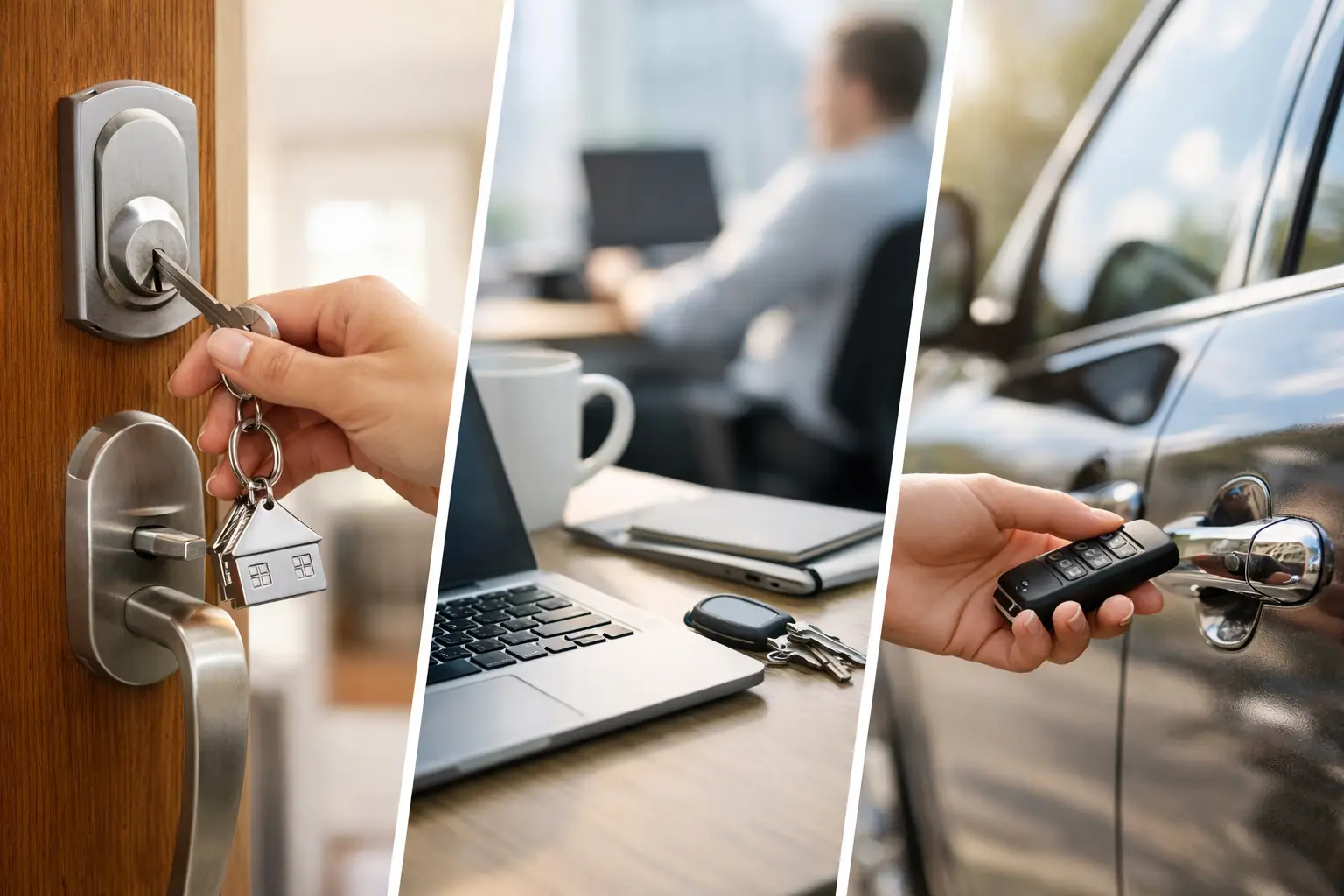
A lockout rarely happens because someone is careless. It happens during a rushed school drop-off, a late closing shift, a rainy commute, or the moment a door closes behind you with the keys still inside. The best ways to prevent lockouts are simple, but they need to fit your property, routine, and the people who need access.
For homeowners, drivers, renters, and business owners across Vancouver and the Lower Mainland, the goal is not to carry more keys or make access complicated. It is to create reliable backups without weakening security.
Best Ways to Prevent Lockouts Before They Happen
The most effective approach is to plan for the moments when routines break down. A spare key, an updated contact list, or a properly maintained lock can turn a stressful lockout into a minor inconvenience.
Build one dependable spare-key plan
A spare key should be accessible when you need it, but not accessible to anyone walking past your property. Leaving a key under a mat, planter, fake rock, or vehicle wheel well is not a secure plan. These are the first places a person with bad intentions will check.
Instead, leave a copy with a trusted nearby friend, family member, or neighbour who is usually available. For residents in condos or rental buildings, confirm whether building management keeps an emergency access key and what identification is required before they will release it. Do not assume they can help after hours.
A lockbox can work for some households, particularly where caregivers, cleaners, or contractors require occasional access. Choose a solid, weather-resistant model, mount it out of obvious view, and change the code whenever a worker or tenant no longer needs access. A lockbox is convenient, but it should never become a forgotten weak point.
Make keys part of your leaving routine
Most home and vehicle lockouts occur at transition points: leaving for work, unloading groceries, taking out garbage, or getting children inside. Create a fixed place for keys at home, such as a hook near the main exit or a bowl on a console table. Avoid moving keys from room to room.
Before closing the door, use a brief check: phone, wallet, keys. It may sound basic, but a repeated habit is more reliable than trying to remember where you set your keys down five minutes earlier.
For vehicles, do not place keys on the seat, centre console, or trunk while loading items. Keep them in a zipped pocket, bag compartment, or in your hand until the vehicle is locked. Many modern vehicles reduce the risk of locking a fob inside, but those systems are not perfect. Battery issues, damaged fobs, and manual locking can still create a problem.
Keep access credentials current
Keys are only one form of access. Many homes, offices, parkades, and apartment buildings use fobs, keypad codes, garage remotes, and access cards. Treat these items with the same care as keys.
Replace worn fob batteries before they fail, especially before travel or winter weather. Store a backup garage remote somewhere secure inside your home, rather than in a vehicle parked outside. If your building uses a keypad, make sure everyone who genuinely needs entry knows the current code. When a roommate, employee, contractor, or tenant moves on, change codes and recover issued fobs promptly.
Prevent Residential Lockouts Without Reducing Security
A home should be easy for authorized people to enter and difficult for everyone else. The right solution depends on the household. A single homeowner may only need a well-managed spare key, while a busy family or rental property may benefit from more structured access control.
Maintain doors, locks, and keys
A key that sticks or a deadbolt that needs force is not just inconvenient. It is an early warning that the lock, key, door alignment, or strike plate may need attention. Vancouver-area rain and seasonal temperature changes can affect wood doors and hardware alignment, making a previously smooth lock difficult to use.
Do not force a key or turn it aggressively. A broken key inside the cylinder can quickly become an emergency call. Have worn keys copied before they bend or crack, and arrange lock repair when the hardware starts binding, spinning, or failing to latch properly.
Check exterior doors occasionally as well. A door that does not close squarely may tempt someone to leave it unlocked because locking it feels difficult. Correcting the alignment protects security and reduces the chance of being stranded outside with a key that will not turn.
Choose smart locks for the right reasons
A keypad or smart lock can reduce the risk of leaving keys behind. It can also give property managers and families more control over who enters and when. Temporary codes are useful for guests, cleaners, and service providers, particularly when you do not want to distribute physical keys.
There are trade-offs. Smart locks need battery checks, and some models can be affected by app settings, connectivity issues, or poor installation. Select a quality lock with a physical key override, keep the mechanical key in a secure location, and test the lock before relying on it as your only entry method. Technology helps, but it should not be your only backup.
Keep Your Business From Being Locked Out
Commercial lockouts affect more than one person. A lost key can delay staff, customers, deliveries, and opening procedures. In retail, restaurants, offices, warehouses, and strata-managed spaces, a clear access policy prevents confusion when a keyholder is unavailable.
Assign primary and backup keyholders for every location and document who has keys, fobs, alarm codes, and master credentials. Store this information securely and update it when roles change. If one manager holds the only opening key, the business is one missed call away from a costly delay.
For properties with several staff members, restricted key systems or electronic access control can be worth the investment. They make it easier to issue, remove, and track access. The right setup depends on the size of the operation and the level of security required. A small office may need controlled key copies, while a larger facility may need individual access credentials and an audit trail.
Do not tape keys under desks, above door frames, or near loading doors. These shortcuts are easy to forget and easy to find. A secure key cabinet, managed by designated staff, is a safer alternative.
Reduce the Risk of Automotive Lockouts
Vehicle lockouts often happen far from home, late at night, or in poor weather. A little preparation matters, especially for commuters and drivers travelling between Vancouver, Surrey, Burnaby, Langley, Richmond, and other Lower Mainland communities.
Keep your main vehicle key or fob on a separate ring from bulky items that can be set down and forgotten. Replace the fob battery when range becomes inconsistent. If your vehicle has a physical emergency key inside the fob, learn how to remove and use it before an urgent situation arises.
A spare vehicle key is useful, but storage matters. Keeping it inside the same vehicle defeats the purpose. A trusted person may hold it, or you can keep it in a secure location at home. For families sharing a vehicle, confirm that each regular driver knows where the spare is kept and how to access it.
If the key is lost, damaged, or locked inside, avoid prying open a door or using improvised tools. Modern vehicles can have sensitive weather stripping, side airbags, wiring, and electronic locking components. A failed attempt can turn a straightforward lockout into expensive vehicle damage.
Plan for Children, Seniors, and Pets
Some lockouts need immediate action. A child, senior, or pet locked inside a vehicle or home can be a safety emergency, particularly in heat, cold, or distressing circumstances. Call emergency services immediately when there is an immediate risk to life or health. Do not delay while trying to find a spare key.
For households with children, use handles and locks they cannot accidentally engage from inside without adult help. Practise the household plan: where keys live, which neighbour can assist, and whom to call. Clear planning is especially helpful for caregivers who may not know every building code, lock type, or alarm procedure.
A lockout does not have to become a security compromise or a long wait outside. Keep a secure backup, maintain the locks you rely on, and give the right people a clear way to access the property. If a problem still happens, NOW LOCKSMITH is available 24/7 across Vancouver and surrounding Lower Mainland communities to help restore access safely.