



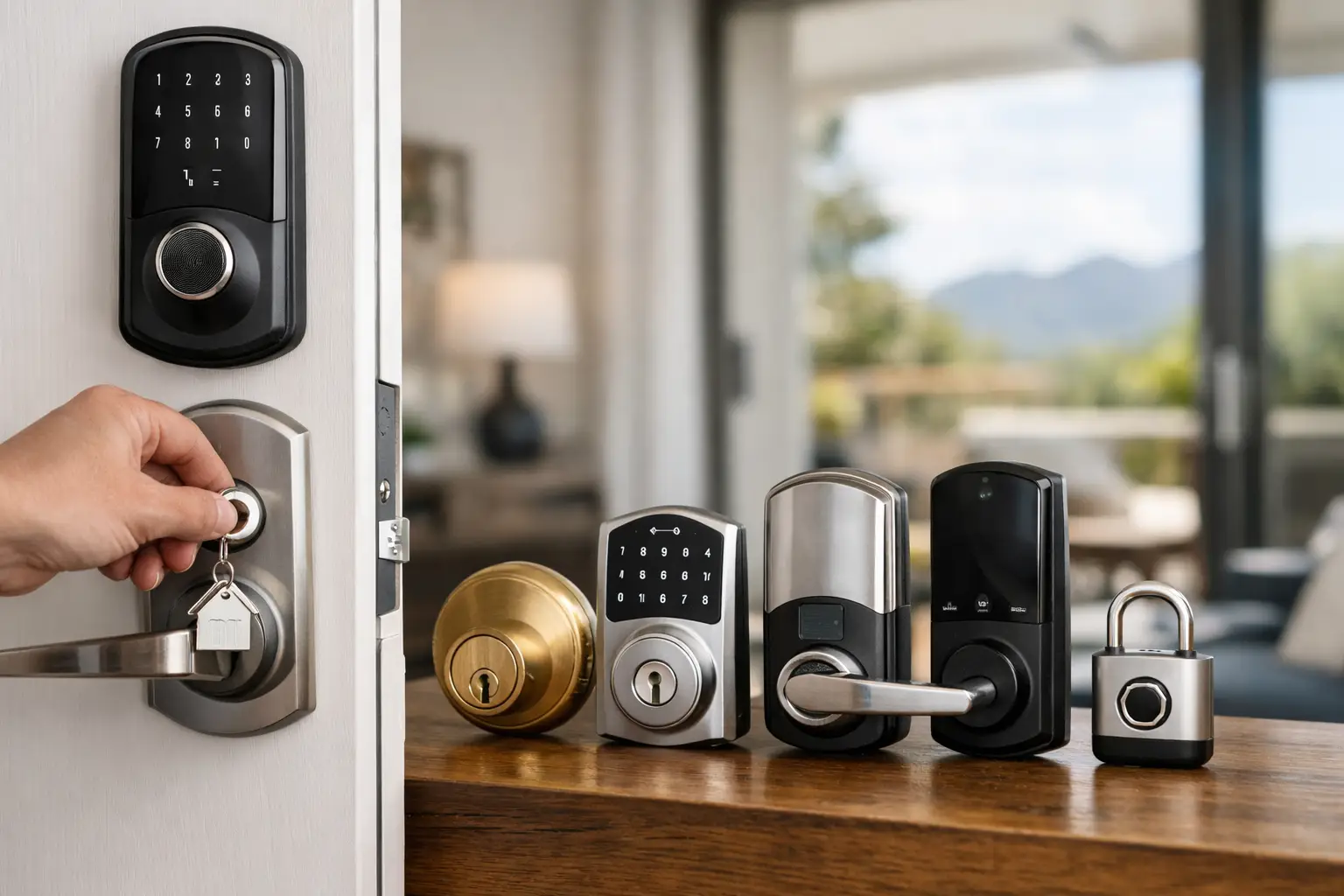
A tenant moves out on Friday, the new tenant arrives Saturday, and the front-door key is still unaccounted for. That is when a lock decision becomes a property-security issue, not a maintenance detail. The best locks for rental properties make turnover easier, protect the next resident, and stand up to frequent daily use without creating unnecessary access problems for owners or managers.
For Vancouver-area rentals, the right choice depends on the unit, the building, and how many people need access. A detached house, a strata condo, a small apartment building, and a commercial-residential mixed property do not have identical security needs. The goal is not to buy the most complicated hardware. It is to install dependable locks that suit the door, meet building requirements, and can be managed quickly when occupancy changes.
What makes a lock suitable for a rental?
Rental locks need to do more than keep a door closed. They need to be durable enough for repeated tenant use, practical to rekey or replace, and appropriate for the door’s construction. A quality deadbolt on a solid, well-fitted door is usually more valuable than an expensive lock installed on a weak frame or loose strike plate.
Think about access before choosing hardware. Will a property manager, cleaner, contractor, or emergency contact need entry? Does the building use a master-key system? Is the rental in a strata with rules about exterior-door hardware? These details affect whether a traditional keyed lock, a rekeyable cylinder, or an electronic option makes the most sense.
Security also has to work with safe exit. Any lock on an occupied residential unit should allow someone inside to leave quickly without needing a key. Do not add double-cylinder deadbolts or other hardware that could complicate emergency exit unless it has been specifically assessed for the property and applicable requirements.
1. Grade 1 or Grade 2 single-cylinder deadbolts
For most rental houses, suites, and apartment entry doors, a single-cylinder deadbolt is the dependable starting point. It locks with a key from outside and uses a thumb turn from inside. This is straightforward for tenants, familiar to service providers, and easy to replace when needed.
Look for hardware rated Grade 1 or Grade 2 under ANSI/BHMA standards. Grade 1 is intended for heavier use and is often a strong choice for common doors or high-traffic rentals. Grade 2 is commonly suitable for standard residential entry doors when paired with a solid door, proper screws, and a reinforced strike plate.
The deadbolt should have a one-inch throw and a properly aligned bolt. If the bolt only catches the edge of the strike, the lock may appear secure while offering far less resistance than it should. Installation quality matters as much as the lock itself.
2. Keyed entry lever sets for convenience
A keyed lever set can work well on a rental’s main door when paired with a deadbolt. Lever handles are easier to operate than round knobs, especially when a tenant is carrying groceries, holding a child, or has limited hand strength. They are also common on accessible entrances.
A lever handle alone should not replace a deadbolt on an exterior residential door unless the hardware and door assembly are specifically designed for that level of security. In most cases, the lever controls the latch while the deadbolt provides the primary protection.
Choose a commercial-style lever for properties that see heavy use, such as shared housing, small multi-unit buildings, or offices with residential units above. It costs more upfront, but flimsy handles often become a repeat repair call after a few tenant cycles.
3. Smart locks with keypad access
Smart locks are useful when key handoffs are slowing down your turnover process. A keypad lets you issue a unique code for a tenant, cleaner, contractor, or showing agent, then remove that code when access is no longer needed. This can be especially practical for furnished rentals, suites managed remotely, and properties with frequent maintenance visits.
The trade-off is that smart locks need more attention than conventional deadbolts. Batteries must be checked, tenants need clear instructions, and the lock must be compatible with the door thickness, backset, and existing deadbolt preparation. Not every electronic lock works well in Vancouver’s wet weather if the exterior portion is exposed.
For rental use, favour a keypad model with a physical key override and a clear low-battery warning. Avoid relying on a phone app as the only method of entry. A tenant with a dead phone, lost connection, or unfamiliar app should still be able to get inside safely. If the lock connects to Wi-Fi, reset access permissions at every turnover and ensure the outgoing tenant no longer controls the account.
4. Rekeyable deadbolts for faster turnover
A rekeyable lock cylinder is one of the most practical options for landlords and property managers. Instead of replacing the full lock whenever a key is lost or a tenant leaves, a locksmith can change the keying so the old key no longer works. This protects the next resident while reducing unnecessary hardware replacement.
Some lock systems allow a landlord to rekey using a special tool and new key. Others require professional rekeying. The best option depends on how many units you manage and whether the property uses a broader key-control plan. For a single rental, professional rekeying between tenancies is often simple and reliable. For multiple units, consistent keying can save considerable time.
Do not assume that collecting all keys is enough. Copies may have been made, keys may have been shared, and one missing key can create uncertainty. Rekeying after a change in tenancy provides a clean security reset.
5. Restricted keyways and master-key systems
For larger rental portfolios, apartment buildings, or properties with regular staff access, a restricted keyway can provide better control over copies. These systems are designed so keys cannot be casually duplicated at every hardware counter. That does not make them invulnerable, but it creates a more controlled process for issuing replacement keys.
A master-key system can allow one authorized key to access multiple doors while each tenant key opens only their own unit. This is useful for property managers, but it needs careful planning. Poorly designed master-key systems can become confusing, expensive to modify, and difficult to secure when keys are lost.
This option is best handled by a locksmith who can document the system, label keys clearly, and plan for future vacancies. It is generally more than a single-unit landlord needs, but it can be worthwhile for a growing multi-unit property.
6. Reinforced strike plates and door hardware
The lock is only one part of the entry system. A strong deadbolt attached to a weak strike plate is a common security gap. For exterior rental doors, use a reinforced strike plate secured with long screws that reach the wall framing, not just the door jamb trim.
Check the door itself as well. Warped doors, loose hinges, damaged frames, and large gaps around the latch can all reduce security and cause lock failures. On a rental turnover inspection, test the door from both sides. It should close without force, latch smoothly, and allow the deadbolt to extend fully.
If a tenant reports that a key is difficult to turn, address it early. Forcing a key can break it in the cylinder or damage the lock. Often, the issue is door alignment rather than the key itself.
Choosing the best locks for rental properties
For a standard long-term rental, a quality Grade 1 or Grade 2 single-cylinder deadbolt with a keyed lever and reinforced strike plate is usually the most sensible combination. It is familiar, durable, affordable to service, and easy to rekey between tenants.
A smart keypad deadbolt is often the better fit when you manage several access codes, handle short-term or furnished rentals, or cannot be present for every key exchange. A rekeyable system works particularly well where turnovers are frequent but a fully electronic setup is not necessary. Larger buildings may justify restricted keys and a professionally planned master-key system.
Before ordering hardware, confirm the door type, existing hole sizes, backset, handing, fire-rating requirements where applicable, and any strata rules. Changing exterior hardware without checking building requirements can lead to avoidable replacement costs.
Make turnover security part of the routine
Every change in tenancy should include more than cleaning and a walk-through. Account for issued keys, rekey or change access credentials, inspect the deadbolt and strike plate, and test the door before the incoming tenant receives possession. If a key has been lost, a lock has been damaged, or there has been a break-in, act right away rather than waiting for the next scheduled maintenance visit.
For electronic locks, delete old user codes and app access, add the new tenant’s code, and replace batteries before move-in. For keyed locks, record how many keys were issued and keep any manager keys under controlled access. Avoid hiding spare keys outdoors, where they are often found quickly.
A locksmith can also identify problems that are easy to miss during a turnover, including worn cylinders, loose door frames, misaligned bolts, and hardware that has been installed incorrectly. NOW LOCKSMITH provides 24/7 lock repair, rekeying, and new lock installation for rental properties across Vancouver and surrounding Lower Mainland communities.
A good rental lock should not become the centre of attention. It should work quietly, let authorized people in, let residents out safely, and give the next tenant confidence that yesterday’s keys no longer open tomorrow’s home.