




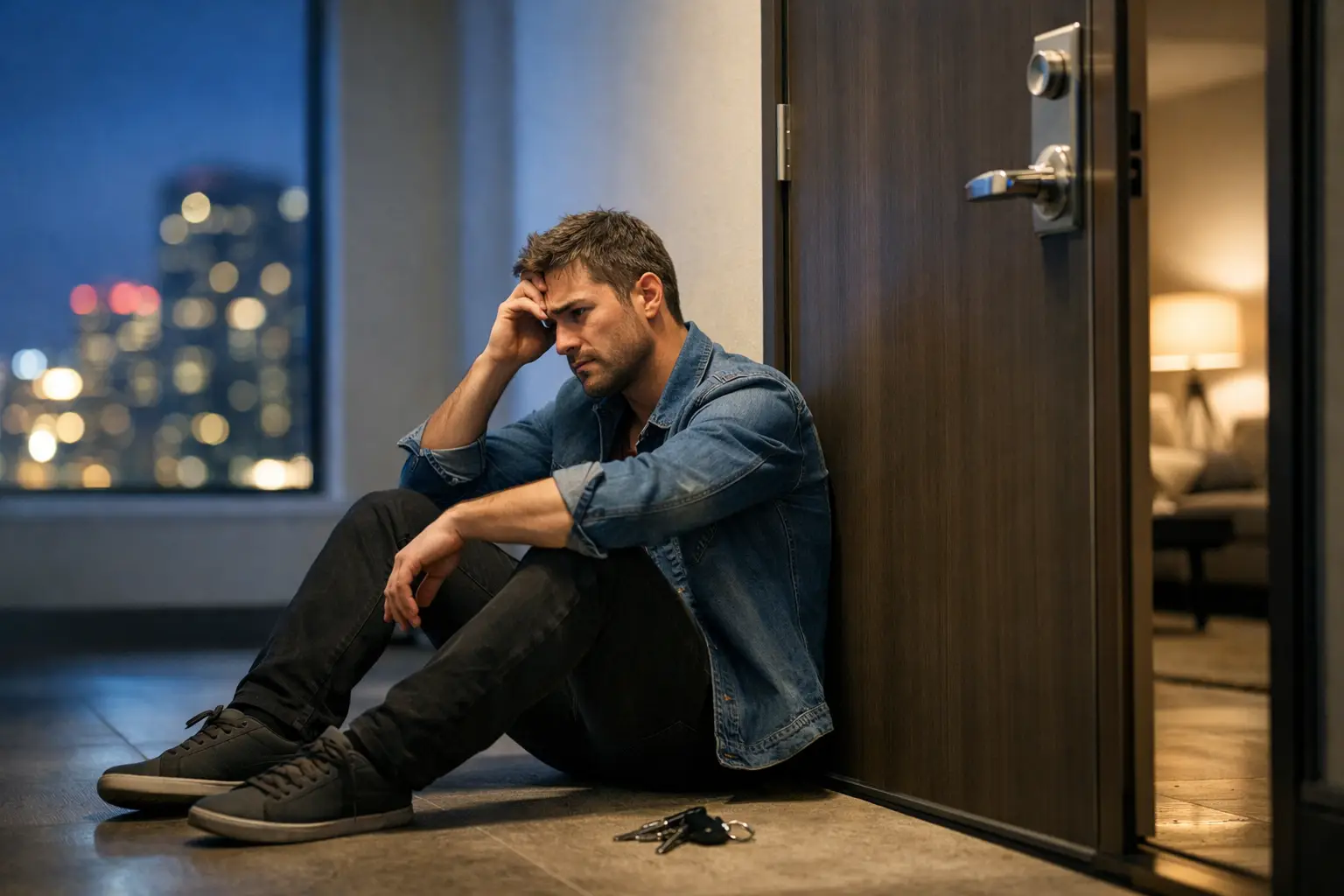
It is 11:40 p.m., raining, and you are standing in a hallway in socks because the door clicked shut behind you while you took out the garbage. That is the kind of apartment lockout after hours example most renters do not think about until it happens. At that point, the questions become immediate: who can help, how long will it take, and will the lock need to be replaced?
For most people in Vancouver and the Lower Mainland, an after-hours apartment lockout feels bigger than it sounds. Building access, unit access, tenant rules, and personal safety all come into play at once. The situation is stressful, but it is usually straightforward when handled properly.
A realistic apartment lockout after hours example
A renter in Burnaby gets home just before midnight. They carry groceries in one trip, leave the unit door slightly open, then the latch catches when they shift a bag. Their phone, wallet, and keys are inside. The building front door is still accessible because a neighbour lets them back in, but their own apartment is locked.
They first text the roommate, but there is no answer. They then check whether the property manager has an emergency number. Voicemail. At this point, they need entry without damaging the door, frame, or lock, and they need it handled by someone who can verify occupancy before opening the unit.
A qualified emergency locksmith is called. Over the phone, the locksmith asks for the address, building type, whether the customer is locked out of the main building or only the suite, and whether identification is available inside the apartment. The locksmith also asks if there is another way to confirm residency, such as a lease copy on email, a neighbour who knows the tenant, or building staff who can verify the unit.
Once on site, the locksmith confirms the situation, checks the lock type, and uses the least destructive method available. In many apartment lockouts, the door can be opened without drilling the lock. If the hardware is damaged, if the key broke inside, or if the lock has failed mechanically, replacement may be necessary. But in a simple latch-out, a careful opening is often enough.
That is a typical apartment lockout after hours example - urgent, inconvenient, but usually solvable quickly with the right help.
What usually causes an after-hours apartment lockout
Most late-night lockouts are not dramatic. They happen because people are tired, distracted, or rushing. A door closes behind you when you grab food delivery, take out recycling, walk the dog, or check the mail. In some cases, the key is lost while commuting home. In others, the lock itself is the problem.
Older apartment hardware can stick, misalign, or fail without much warning. If a key turns poorly for weeks and then suddenly stops at night, that is no longer just a lockout. It may be a lock repair issue that has been building for a while.
Buildings also add another layer. Sometimes the resident can get into the lobby but not the suite. Other times the tenant is locked out of both, which may require building access coordination before the unit can even be reached. That is why apartment lockouts are different from a standard house lockout.
Why verification matters
A professional locksmith should not simply open any apartment door because someone asks. In a multi-unit building, identity and occupancy matter. The technician may ask for ID, lease details, confirmation from building management, or another reasonable proof that you live there.
That can feel inconvenient when you just want back inside, but it protects residents and property. A trustworthy locksmith balances fast response with proper verification.
What to do right away if you are locked out late at night
Start with the safest option, not the fastest guess. If you are in a shared hallway or outside the building, move to a well-lit area. If weather, security, or personal safety is a concern, stay close to neighbours, concierge staff, or a secure entrance where possible.
Then check the obvious options. Call a roommate, family member, landlord, or property manager if they may have a spare. If your building has an emergency maintenance line, try that next. Be realistic about timing, though. Many property managers are not set up for immediate midnight access, especially if the issue is only your suite door.
If there is no quick building solution, call a 24/7 locksmith. Explain clearly whether you are locked out of the building, the apartment, or both. Mention if children, pets, medication, or a stove issue is involved, because that changes urgency.
Do not try to force the door. Credit card tricks rarely work on properly installed deadbolts, and improvised entry attempts often damage the latch, frame, weatherstripping, or strike plate. A cheap online trick can turn a simple lockout into a repair job.
What to expect from an emergency locksmith visit
A good after-hours response starts with clear communication. You should expect a rough arrival window, a basic description of what the technician will need to verify, and an explanation that price can depend on the lock type and the actual cause of the lockout.
On site, the locksmith assesses the door before doing anything else. Apartment doors vary widely. Some have standard knob-and-deadbolt setups. Others use mortise locks, electronic hardware, restricted key systems, or fire-rated door assemblies that need careful handling.
The goal is usually non-destructive entry first. That protects the lock and gets you back inside faster. If non-destructive entry is not possible, the locksmith should explain why before moving to drilling or replacement.
In some situations, entry solves only half the problem. If the key is lost and there is a security concern, rekeying or replacing the cylinder may be the smarter next step. If the hardware failed, repair or replacement may be necessary before the door can be secured properly for the night.
Cost depends on the real issue
People often ask for a flat after-hours price over the phone. Sometimes that is possible, but often it depends on whether the call is a simple lockout, a broken key, a failed cylinder, damaged hardware, or an access issue involving the building itself.
The cheapest option is not always the best one. A rushed or careless opening can leave the lock unreliable, which is a problem you do not want at 1:00 a.m. or the next morning when you try to leave for work.
Renters, landlords, and property managers each have a role
If you rent, your lease may say who handles lockouts and who pays. In some buildings, lockout service goes through management first. In others, the tenant arranges service directly, especially outside office hours. It depends on the building rules and the type of hardware installed on the suite door.
Landlords and property managers usually care about two things: secure access and avoiding damage. That is why a professional locksmith is often the practical solution after hours. It restores entry while reducing the risk of broken doors, bent frames, or compromised locks.
For property managers, repeated late-night apartment lockouts can also point to a bigger issue. If several units have aging hardware, sticky deadbolts, or poor door alignment, preventative repair is often less costly than repeated emergency calls.
How to reduce the chance of it happening again
Most apartment lockouts are preventable, but only if the routine changes. A spare key with a trusted person in the same city helps. So does carrying keys before stepping into the hallway, even for a short task.
If your lock has been sticking, do not wait for it to fail after business hours. A lock that feels rough, loose, or misaligned is already giving notice. Getting it checked earlier is usually faster and less expensive than dealing with an emergency later.
For buildings with frequent tenant turnover, upgraded hardware can also help. Better key control, properly fitted cylinders, and durable residential locksets reduce avoidable lockouts and security problems. This is where a service company like NOW LOCKSMITH can make a difference across Vancouver and nearby communities by handling both the emergency call and the follow-up repair or replacement.
When an after-hours lockout is more urgent than usual
Some calls need immediate priority. If a child is inside alone, a vulnerable adult cannot open the door, a pet may be at risk, or a cooking appliance was left on, say that right away when you call. Those details matter.
The same goes for suspicious circumstances. If your keys were stolen, not just misplaced, the lockout is also a security incident. Getting back in is one step. Making sure the old key no longer works may be the more important one.
Late-night apartment lockouts are never convenient, but they do not have to become chaotic. The right response is simple: stay safe, confirm your access options, and get professional help that treats both entry and security seriously. If it happens to you, the best next step is the one that gets you back inside without creating a bigger problem at your own door.