





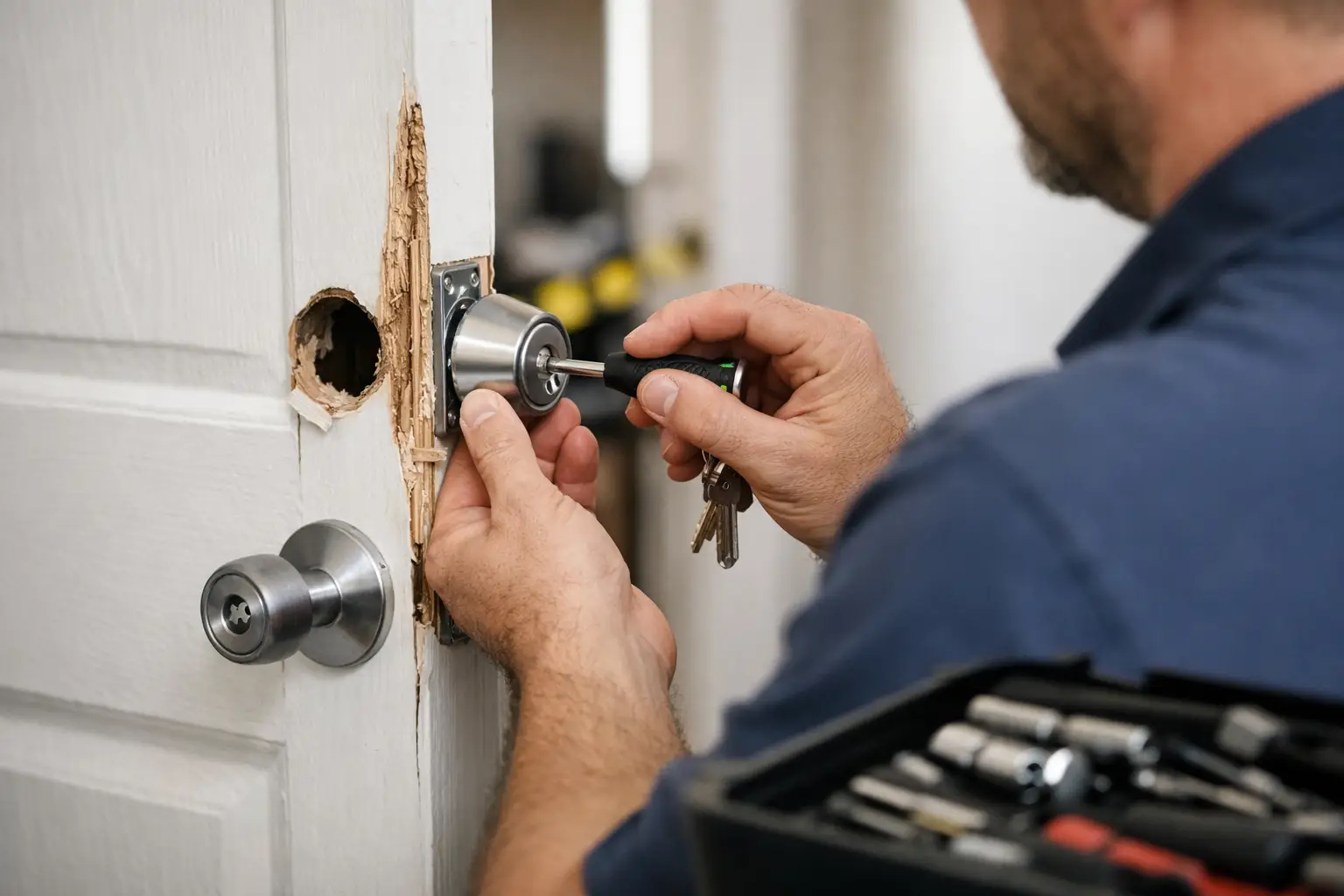
The door is closed again, but that does not mean the property is secure. After break in lock replacement is often the first job that needs to happen once police have attended, damage is documented, and everyone inside is safe. Whether it is a house, condo, storefront, office, or rental unit, the lock hardware that was forced, bypassed, or weakened should be treated as compromised until a locksmith checks it on site.
Why after break-in lock replacement matters
A break-in rarely affects only one part of the entry point. People often focus on the obvious damage like a broken deadbolt, bent latch, or split door frame. The problem is that forced entry can also shift strike plates, crack mounting points, loosen screws inside the door, and damage the cylinder in ways that are not immediately visible.
That is why replacing only the piece that looks broken is not always enough. If the door no longer closes squarely, if the latch does not seat cleanly, or if the frame is split, the new lock may still perform poorly. Security after a break-in depends on the full condition of the opening, not just the keyway.
For homeowners and renters, the priority is restoring personal safety quickly. For business owners and property managers, there is also a practical issue - you may need to secure inventory, protect staff access, and prevent another entry attempt the same day.
What should be checked first
Before any repair begins, the entry point should be inspected as a system. That means looking at the lock, the door, the frame, the hinges, and the strike area together. In many break-ins, the weakest point is not the lock body itself. It is the wood around the strike, the short screws in the frame, or an older commercial door that has been pulled out of alignment.
A proper inspection usually answers a few urgent questions. Is the existing lock safe to use at all? Can the door be secured temporarily the same day? Does the frame need reinforcement before new hardware is installed? Is there a second entry point that was also tampered with, such as a back door, patio slider, garage side door, or gate lock?
If keys were stolen during the incident, the issue is wider than visible damage. Even if the lock still turns, rekeying or replacement becomes necessary because access may now exist beyond the broken entry point.
After break in lock replacement for homes
In residential properties, the right fix depends on the type of lock and the condition of the door. A standard deadbolt that has been forced may need full replacement, especially if the cylinder is damaged or the bolt no longer throws smoothly. If the hardware is still structurally sound but there is concern about stolen keys, rekeying can be enough. The difference matters because one option addresses physical damage, while the other addresses key control.
Front doors are not the only concern. A burglar may test rear doors, basement entries, patio doors, and garage access points. In condos and townhomes, unit doors may require fire-rated hardware or specific replacement standards, so it is important to match the building requirements instead of installing whatever is available fastest.
For renters, lock changes can involve the landlord or property manager, but urgent security should not be delayed. If the unit cannot be secured properly after the incident, emergency locksmith service is often the fastest way to stabilize the property while approval for permanent hardware is handled.
Commercial lock replacement after a break-in
For commercial properties, after break-in lock replacement can be more complicated. A storefront may use an Adams Rite style lock, narrow stile hardware, panic devices, mortise cylinders, or access control components. Office suites may have restricted key systems, master key setups, or doors tied to building fire and life safety rules.
That is why a quick hardware swap is not always the best answer. Businesses need to know whether the existing setup should be replaced like-for-like, upgraded, or reconfigured. If employee keys were taken, a rekey of affected doors may be required beyond the main damaged entrance. If the break-in happened through a rear service door, that hardware may need heavier duty components and frame reinforcement to reduce the chance of a repeat incident.
Downtime also matters. A business that cannot lock up properly may not be able to reopen safely. In those cases, temporary securing work followed by permanent installation can be the most practical approach.
Repair or replace - it depends on the damage
Not every break-in means every lock must be replaced. Sometimes the correct solution is a targeted repair with rekeying. Other times, replacement is the only sensible choice because the hardware has been twisted, drilled, snapped, or loosened beyond trust.
A few common examples help. If the key still works but a suspect may have copied or stolen it, rekeying may solve the security risk without changing the full lock. If the deadbolt face, latch assembly, or cylinder has visible impact damage, replacement is usually the safer route. If the frame is split, reinforcement and strike repair may matter just as much as the lock itself.
There is also a cost trade-off. Rekeying is usually less expensive than full replacement, but it only makes sense when the existing hardware is in good condition. Spending less on the wrong fix can leave the door vulnerable.
Upgrades worth considering after a break-in
A break-in often reveals what the original hardware was missing. This is the time to decide whether you want to restore the same setup or improve it.
For homes, that may mean moving from a basic lock to a higher security deadbolt, adding longer frame screws, reinforcing the strike area, or replacing weak auxiliary locks on side and rear doors. For businesses, it may mean changing to commercial-grade hardware, restricted keyways, better door closers, reinforced storefront components, or audit-friendly access control where appropriate.
That does not mean every property needs the most expensive lock available. The right setup depends on the door type, the building use, and the actual risk. A detached home, a managed condo building, and a retail storefront all have different security needs.
Timing matters more than most people think
After a break-in, many customers ask if the lock replacement can wait until the next day. Sometimes it can, but often it should not. If the door does not latch securely, if the frame is damaged, or if the current key control is compromised, delay increases the risk of a second incident.
Emergency locksmith service exists for exactly this reason. Fast response helps restore control before nightfall, before staff leave a commercial unit unattended, or before residents try to sleep in a home that no longer feels secure. Across Vancouver and the Lower Mainland, this is one of the most common reasons people call for urgent help.
What to expect during the service call
A professional after break in lock replacement visit should be straightforward. The locksmith assesses the visible and hidden damage, explains whether repair, rekeying, or replacement is the best fit, and secures the property as quickly as possible. If specialty hardware is involved, a temporary secure solution may be installed first, followed by the permanent part once the correct hardware is confirmed.
The goal is not just to make the door close. The goal is to restore dependable security with hardware that fits the opening properly and performs as intended. In urgent situations, clear communication matters just as much as speed.
For local homeowners, businesses, and property managers, NOW LOCKSMITH handles emergency lock replacement, repairs, and rekeying across Vancouver and surrounding communities on a 24/7 basis.
How to make the next break-in harder
No lock can promise absolute prevention, but better hardware and correct installation can make forced entry more difficult and more time-consuming. That matters. Most break-in attempts rely on speed, weak framing, poor alignment, or outdated locks that fail under pressure.
A stronger deadbolt, reinforced strike, properly secured frame, and tighter key control can improve security significantly. For commercial sites, reviewing back entrances, service corridors, employee key access, and closing hardware is often just as important as fixing the front door.
If there is one thing to remember, it is this: after a break-in, restoring access is only half the job. Restoring confidence starts when the door, frame, and lock all work together the way they should.