



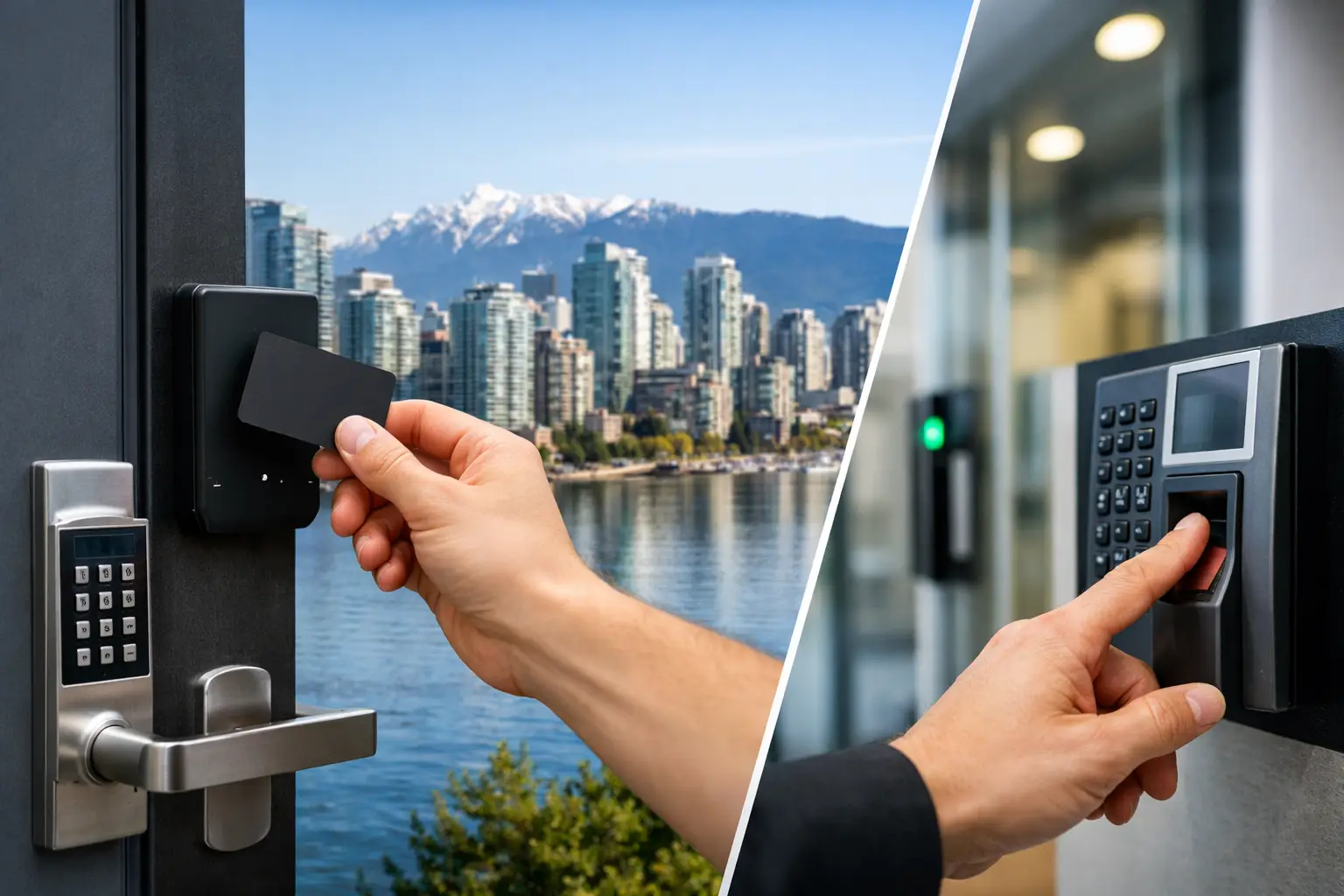
A front door key passed between tenants, an employee who never returned a fob, or a damaged office lock can quickly become a security problem. Access control gives Vancouver property owners a clearer way to decide who can enter, when they can enter, and what happens when access needs to change. The right setup protects people and property without making everyday entry difficult for residents, staff, customers, or visitors.
What Access Control Means for Your Property
Access control is any system that manages entry to a home, vehicle area, office, retail unit, strata building, warehouse, or restricted room. It can be as straightforward as a properly installed deadbolt with restricted keys, or as advanced as a credential-based door system with schedules and audit records.
For many homes, mechanical locks and controlled key distribution are enough. A homeowner may want to rekey the locks after moving in, repair a loose deadbolt, and limit how many copies of a key are in circulation. For a business, the need is often greater. Staff turnover, multiple doors, delivery access, and sensitive areas can make a single shared key an unreliable solution.
The goal is not to add technology for its own sake. It is to create an entry process that fits the property, the people using it, and the consequences of unauthorized access.
Choosing the Right Access Control Setup
The best system depends on the type of property and how frequently access changes. A small office with three employees has different needs than a medical clinic, a retail location, or a multi-unit rental property. Before selecting hardware, consider who needs entry, which doors need protection, and how quickly you may need to remove access.
Traditional keyed locks remain a practical choice for many doors. They are familiar, dependable, and can be rekeyed when keys are lost, stolen, or not returned. However, every physical key that remains unaccounted for creates uncertainty. If several people have had access over time, rekeying is usually safer than hoping old copies no longer exist.
Electronic locks can use PIN codes, key cards, fobs, mobile credentials, or a combination of methods. Their main advantage is control. Instead of changing the lock when an employee leaves, a manager may be able to remove that person’s credential. Some systems also allow different access times, such as limiting cleaning staff to evening hours or restricting storage rooms to authorized personnel.
There are trade-offs. Electronic hardware needs correct installation, power planning, and regular maintenance. Battery-operated locks should be checked before batteries fail, while wired systems need professional attention when wiring, readers, strikes, or door alignment are involved. A poorly fitted door or worn latch can cause problems regardless of how advanced the credential system is.
Access Control for Homes and Rental Properties
Homeowners often need a balance between security and convenience. A front entry deadbolt, garage access, side gate, and basement suite may each require a different approach. Rekeying after a purchase, tenant change, separation, lost key, or contractor project is a sensible starting point because it ensures old keys no longer work.
For rental properties, property managers should also consider turnover. A system that requires full lock replacement after every tenancy can become costly. Rekeyable cylinders or properly managed electronic credentials may reduce disruption while keeping control of who has access.
Smart locks can suit some households, particularly when family members, caregivers, dog walkers, or short-term guests need scheduled entry. They are not the best answer for every door. Exterior hardware must be compatible with the door, weather exposure, and existing locking requirements. A locksmith can assess whether the lock and door frame are suitable before installation.
Access Control for Commercial Buildings
Commercial properties commonly need more than a front-door key. A business may have separate access needs for employees, managers, suppliers, cleaners, stock rooms, server rooms, cash offices, and rear exits. Giving everyone the same key may be convenient at first, but it makes changes difficult when roles shift.
A well-planned commercial access control system separates areas by risk. Staff can enter the doors they need for their work, while sensitive rooms remain restricted. Managers can retain broader access, and temporary credentials can be issued for contractors or service providers rather than handing over a permanent key.
Door hardware matters as much as the credential method. A card reader cannot compensate for a weak frame, damaged closer, misaligned latch, or inadequate panic hardware. Exterior doors, fire-rated doors, and emergency exits need solutions that preserve safe egress while controlling entry from the outside. This is where professional installation is particularly valuable.
Common Entry Points That Need Attention
Businesses sometimes secure the main entrance while overlooking the doors that are used less often. Rear delivery doors, staff entrances, storage rooms, parkade gates, shared utility rooms, and rooftop access can all create weak points. Homes can have similar issues with garage-to-house doors, basement entrances, sheds, and side gates.
Reviewing each entry point helps avoid spending the whole budget on one visible door while leaving another route vulnerable. The right approach may involve upgraded locks on some doors and credential-controlled access on others.
Installation and Maintenance Make the Difference
Access systems work best when the door itself is in good condition. A lock that sticks, a latch that does not fully engage, or a sagging door can cause lockouts and premature hardware failure. Before installing new equipment, check the door alignment, hinges, strike plate, frame condition, and closing action.
For electronic systems, plan for normal failures before they happen. Know who has administrator authority, where backup keys are kept, how batteries are monitored, and what staff should do if a credential stops working. Businesses should avoid having only one person who understands the system. If that person is away during an urgent issue, access can become a costly delay.
Keep access records current. Remove credentials promptly when an employee, tenant, contractor, or roommate no longer needs entry. Review who has master keys, fobs, codes, and app permissions. This routine is often more valuable than adding another layer of hardware.
When You Need Fast Access Control Help
Some problems cannot wait until business hours. A broken key, failed electronic lock, damaged commercial door, lost master key, or tenant lockout can leave a property exposed or prevent people from entering safely. In those situations, the priority is to restore access without creating further damage or compromising the security of the door.
A locksmith can assess whether the immediate solution is rekeying, lock repair, lock replacement, emergency entry, or a broader access control upgrade. For commercial sites, it may also be necessary to secure the property first and schedule a permanent repair once the immediate risk is under control.
NOW LOCKSMITH provides 24/7 locksmith support across Vancouver and surrounding Lower Mainland communities for residential, commercial, and automotive access issues. Whether the problem is a damaged lock at a home or a staff access concern at a business, timely on-site service helps reduce downtime and restore peace of mind.
Plan Access Before It Becomes an Emergency
The best time to review entry security is before a key goes missing or a lock fails. Walk through the property, identify who can enter each door, and consider whether that level of access still makes sense. Small changes, such as rekeying after turnover or repairing a door that does not latch properly, can prevent a much more urgent problem later.
If access at your home or business no longer feels controlled, arrange an assessment and address the weak point while you still have time to choose the right solution.